
Representational Photo

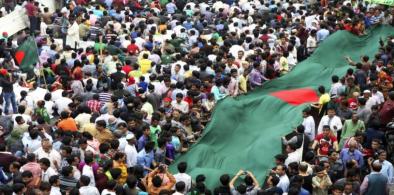
Bangladesh Drifting Into A Nexus Of Military Dependency And Proxy Competition? Ominous Consequences For India, South Asia

Taken together, these developments should ring alarm bells. The convergence of foreign military-industrial interests, Islamist political forces, and great-power rivalry risks turning Bangladesh into an epicenter of proxy competition and ideological confrontation. For a nation that has paid dearly for its independence and pluralistic identity, the cost of such entanglements may prove far higher than the short-term gains promised by arms deals and infrastructure projects.

Between Treaty And Truth: Sri Lanka's Conflict-Related Sexual Violence And Limits Of International Law

Sri Lanka's case highlights the central weakness of the ICC’s complementarity principle. The Rome Statute grants jurisdiction only where states are unwilling or unable genuinely to carry out the investigation or prosecution. Sri Lanka maintains functioning judicial institutions, conducts some prosecutions, and has established reparations frameworks, thereby technically satisfying the ability threshold while systematically failing to deliver accountability for conflict-related crimes.

Davos: Noise, Narratives, And The Reality Beneath

If Davos had a clear centre of gravity this year, it was technology—not geopolitics. The tech industry arrived in force, underscored by high-profile appearances from Elon Musk and Nvidia CEO Jensen Huang. The message was unmistakable: this is where attention, ambition, and capital are converging. With extraordinary sums being poured into artificial intelligence, unease among lenders and investors is understandable. Yet many executives were keen to reassure markets that fears of an AI bubble were overstated.

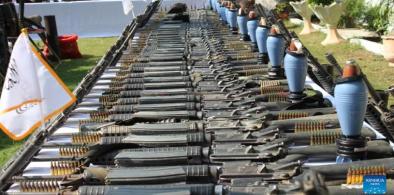
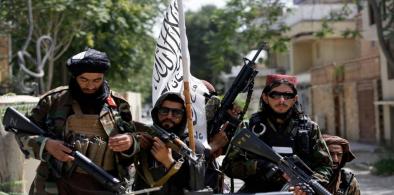
Abandoned U.S. Weapons Empowering Terrorists, Undermining Pakistan’s And Regional Security

Strategically, these developments underscore the importance of regional counterterrorism cooperation and rigorous monitoring of cross-border arms flows. The proliferation of foreign-supplied weapons into Pakistan not only strengthens terrorist organizations but also threatens regional stability. Each attack executed with U.S.-origin rifles or advanced tactical gear reinforces the need for Pakistan’s zero-tolerance policy against militancy while exposing the organized external support networks that continue to embolden groups like the TTP.

More on Spotlight

The inverted world of global espionage– where no one talks the walk

There is an interesting development of note in the US, which casts a shadow on free speech and political asylum in the Western world, with a direct bearing on the alleged covert intelligence operations by India in the North American continent. 

Bangladesh's elections will impact regional security and connectivity

The upcoming election will also define Bangladesh’s relations with great powers, namely the USA, India, and China

Water security in South Asia: Need for ratification of UN water convention

No other country in the world comes close to the hydro-hegemony that China has established. From Pakistan-occupied Kashmir to Myanmar’s troubled Kachin and Shan states, China has widened its dam building to disputed or insurgency-torn areas despite local opposition.

Nuclear power is the future for Pakistan

Germany's experience with nuclear energy serves as a valuable lesson, prompting Pakistan to intensify its pursuit of nuclear energy as a practical avenue for its energy needs

Chronic water scarcity in South Asia increasing children’s vulnerability

In 2022, an overwhelming 45 million children lacked access to basic drinking water services in South Asia, according to UNICEF

The pre-emptive Hamas assault on Israel has a bitter lesson for India

With the LoC and now even LAC active around the year conventional artillery might be supplemented with Hamas-type rockets, both by China and Pakistan, Pakistan in particular. India's vital military establishments and civilian targets are right across the LoC and vulnerable to such strikes. A few jihadis from Pakistan have already threatened India with a similar strike.

War and environment: Cutting carbon footprints of militaries to save ailing climate

In Afghanistan, in addition to emitting millions of tons of carbon dioxide during the conflict, the US military footprint contributed more directly to the immediate destruction of the Afghan environment.

In a changing world order, international relations will be more issue-based than bloc-based

In a multipolar world, the relationships will be defined by the requirements in each separate space like security, economy, etc rather than gravitating wholesome to defined blocs.

Israel bans Lashkar-e-Taiba: Time for concerted global action

With the Hamas attack on the Israeli music festival on October 7, it is no surprise that Israel, after years of not acting against the LeT, took action this year. It is possible that this gesture was initiated to garner support from India, which could eventually lead to India banning Hamas as well.

Hopes and expectations from COP28: The world is at a tipping point on climate change

What happens in COP28 on Dubai’s climate conference battleground in the first half of December 2023 may not result in bloodshed but its consequences could be drenched in blood, mass migration, and starvation.

Sri Lanka's emerging mall cities: Urban spaces where modernity and tradition intersect

The evolution of mall cities in Sri Lanka represents a complex and multidimensional transformation that intertwines economic, technological, environmental, and social dimensions. 

Himalayan tunnel collapse raises many questions: Was this a manmade disaster?

Why then after 18 years we have had to get foreign help and equipment for the Silkyara tunnel rescue? Should this equipment and capability not be with the National Disaster Response Force (NDRF)? 

US’s flagrant double standards in dealing with anti-India terrorism

Both Ottawa and Washington have historically been rather lackadaisical, if not downright conniving, in their dealing with India’s decades-long attempts to act against the Khalistan movement’s violent underpinnings in the two countries.  

Sri Lanka's hi-tea culture: A new marker of class signalling in the digital era

Overall, whether one opts for the casual charm of hi-tea platters or the indulgent variety of hi-tea buffets, Sri Lanka's hi-tea culture seamlessly blends British colonial influences with local traditions, adding a unique and culturally rich touch to this eating-out experience.

South Asia's unacceptably high road fatalities: Need to bring about changes in emergency-care system

The South Asian region is home to an estimated 1.7 billion people, representing around 25 percent of the world’s population and also accounts for 25 percent of the world’s road crash fatalities.