
Jantar Mantar and the Crisis of Policing

Jantar Mantar and the Crisis of Policing: Why India Needs a Citizens’ Police

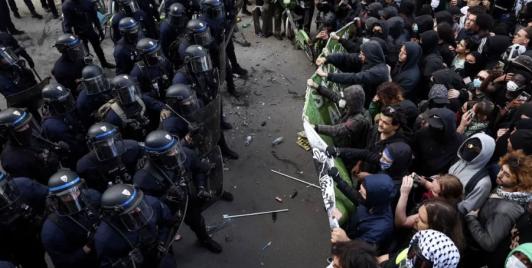
The Republic does not need a police force that teaches citizens to fear the State. It needs a citizens' police that gives them reason to trust the Constitution. Because the young person standing behind the barricade is not an enemy of the Republic. Sometimes, he has travelled more than a thousand kilometres simply because he still believes enough in Indian democracy to show up.

Will the “Tax Shock” Kill the Sri Lankan Economy?

As Sri Lanka relies heavily on indirect taxes, even government (short term) efforts to stimulate economic activities will automatically reduce the living standards of low and middle income households. This is because any increase in economic activity results in a disproportionate increase in taxes. 

Can India's Student Protests Spur Reform in its Broken Education System? A View From Afar

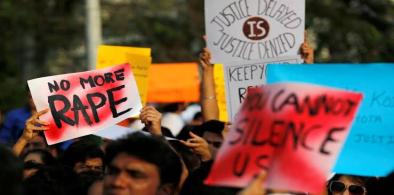
The sheer visual impact of the brutality of July 20 Jantar Mantar police action revealed yet again a society in profound ferment. It is not clear whether the government of Prime Minister Narendra Modi realizes the lasting damage such unbridled brutality does to India’s image. Irrespective of the merit of the cause of the protest—and it is obvious that this one is grounded in a legitimate cause—government at every level in India desperately needs to completely transform policing. 

A Cry of Anguish; a Sad Day for Democracy, but a Glimmer of Hope

Democracy is not just about voting every five years. Democracy is about the ability to look your government in the eye and say “you are wrong” — without fear of being beaten for it.And yes, July 20 was a sad day for democracy. It was sad to see brutal force used against young citizens. It was sad to see the Delhi Police behave in a manner that shames the uniform.

More on Public Policy and Governance

Right to Walk: India's Civic Agencies Now Liable to Deliver Primary Dignity to Pedestrians, but Policy Implementation a Question Mark

Data from India's ministry of road transport and highways show that road crashes claim around 175,000 lives each year, with pedestrians bearing a disproportionate share of the toll. In 2024, as many as 36,526 pedestrians were killed, representing 20.6 per cent of all road fatalities.

Calling out India’s Dirty Harrys: Crying Need for Bureaucratic Reform

India must also deglamorise its bureaucracy. Bureaucrats occupy oversized office spaces, are allotted luxury housing, use oversized vehicles, get large numbers of support staff and personal assistants who work like personal valets and concierges. Political leaders across the globe carry their own bags. Here bureaucrats get servants to have their boots polished. This must clearly stop forthwith.

How Ladakh Is Taking Democracy to Its Remotest Areas: India Pioneering New Model of Governance in Strategic Region

Few regions in India have such an extensive and layered system of representation. Ladakh is therefore not merely creating new councils. It is building a new model of governance based on geography, identity, participation and national interest. It is taking democracy beyond the main towns 

Enforcing 'Ethnic Unity' in China: New 'National Identity' Law has Implications for Dalai Lama Succession and Tibetan Diaspora

From the Indian perspective, the extraterritorial jurisdiction clause directly implicates the Tibetan exile community residing in India, potentially exposing CTA officials, Dharamsala based researchers and Tibetan advocacy networks to a Chinese claim of jurisdiction.

The Ahmedabad Terror Verdict: A Strategic Milestone in the Evolution of the Indian State

The Ahmedabad verdict should not be viewed merely as the culmination of one terrorism trial. It represents the maturation of India's institutional capacity to confront terrorism through both security and law. Over the past two decades, India has steadily strengthened its counter-terrorism architecture

From Muziris to Modern Shipbuilding, a Reassertion of India's Maritime Identity

The revival of shipbuilding has become a central pillar of national policy, extending across defence, commerce and industrial development. Indian shipyards today construct aircraft carriers, submarines, destroyers, offshore patrol vessels and a wide range of commercial vessels.

Ayodhya Temple Scandal in India Signals Systemic Decay

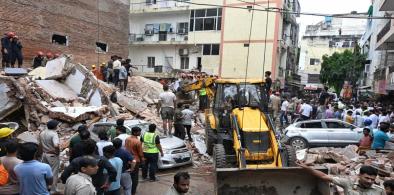
The scandal at Ayodhya is not a new low really. It is all too expected as the slippery slope of a journey focused only on the ends without caring for the means. The collapse at Ayodhya is thus a logical culmination of a system of leadership, governance and capture of power that believes in and lives by the edict that results matter and how we get to the results does not.

The Hidden Tax: Road Accidents Drain Over 3% of GDP From India and Sri Lanka Every Year; Generative AI Could Win it Back

The core data architecture — a national road safety data lake, AI-powered enforcement, multilingual public awareness — is replicable at any scale, in any South Asian language, in any South Asian urban or rural road environment. The technology does not need to be reinvented for Dhaka, Kathmandu or Karachi. It needs to be validated in Colombo and Delhi first.

India's Graduate Unemployment Crisis: Need to Redesign Degrees, Give Social Dignity to Trade Skills

The deeper problem is India’s graduate unemployment crisis. Millions of young graduates are not working, earning or acquiring experience, but preparing for competitive exams. The government job has become a lottery ticket; the coaching class has become a waiting room

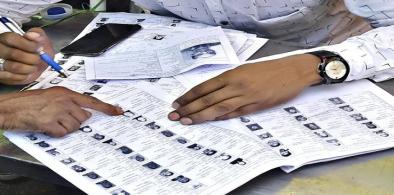
Electoral Revision and the Crisis of Citizenship in India: Democracy is Measured by its Protection of the Vulnerable, not by Exclusion

India is neither Nazi Germany nor Myanmar, and historical comparisons should never be employed simplistically. However, comparative political sociology reveals a recurring lesson: when citizenship becomes tied to ideological notions of national authenticity, minorities disproportionately bear the burden of proving belonging.

Will the Cockroach Eventually Take to the Streets? Defining Political Question Haunts World's Largest Democracy

The BJP is winning elections at the level of the state through sophisticated identity coalitions and institutional leverage. Gen Z is winning the internet through a combination of genuine grievance, cultural fluency, and the particular humor of people who have been told they are useless and decided to make art out of it.

A Mature Democracy Must be Confident Enough to Hear Youth Anger: Domestic Unrest can Become Global Politics in Hours

Democracies need dissent. Young Indians have every right to demand credible examinations, transparent recruitment, accountable institutions and a responsive government. To delegitimise all youth anger as foreign manipulation would be intellectually lazy and politically dangerous. But it is equally naive to pretend that geopolitics ends at the border of domestic protest.

Making Workplaces Safer in South Asia: Prevention Less Costly than Catastrophe

Workplace accidents impose costs far beyond the immediate loss of life and injury. Families lose breadwinners, enterprises suffer productivity losses, projects face delays and governments incur healthcare and compensation costs. The social consequences can be particularly severe for migrant and informal workers

Is Delimitation Becoming a Penalty for Good Governance for India's Southern States?

For decades, these states invested heavily in women’s education, public health, industrialisation, literacy and population control. Fertility rates in many southern states have already fallen below replacement levels. In contrast, several northern states lagged behind for years on precisely these indicators. If parliamentary representation now shifts overwhelmingly toward states with higher population growth, the message becomes deeply perverse: governance discipline weakens political power.

Denial of Voting Rights to Undertrials: Blinds Spots in India's Democracy

At its heart, the challenge to Section 62(5) is a test of constitutional sincerity, of whether the Indian Republic truly believes that citizenship endures even behind bars. Enacted in the infancy of the republic, the provision has long outlived its moral logic. It collapses the distinction between confinement and culpability