


Representational Photo

India Needs A Strong Political Culture That Upholds Democratic Values

It may be argued that invoking the Bhutanese king’s principled stance as a reference point for a country as vast and diverse as India is deeply flawed—or, at best, a theoretical abstraction. Yet the fact remains: the ethos of good governance knows no geographical boundaries. If the highest leadership of a small, landlocked nation with limited resources could believe in, and strive towards, such ideals, why should our country fall short of visionary leadership, especially when it is far larger and endowed with greater capacities, opportunities, and strategic advantages?

India Needs To Get Real With The US and China

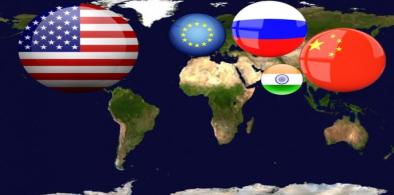
In this backdrop, opening up India fully to Chinese, including inviting the Chinese delegations, is akin to arranging visits of KFC owners to poultry farms! The hubris that this was to familiarize two big political parties and two economic powers with each other must have amused Beijing endlessly. Finally, insecurity is palpable in India’s handling of China and the US.  About time we get over this.

Somnath Temple: Instrumentalizing History As A Political Tool

History is not a tool to divide society and perpetuate the injustices of the past. It is there to show us what wrongs have happened in the past which should not happen again. We need to march towards a just society where all live the life of dignity and respect, a society where all of us enjoy equal citizenship rights.

Sri Lankan Government In A Fix Over Proposed Education Reforms: PM Under Pressure

Public opposition towards the reforms escalated after a web link to a gay dating site was found in one of the lessons in the grade six English language module.  This website was subsequently blocked by the regulator for internet users in Sri Lanka.  The lesson was intended to teach ten-year-old kids how to make online friends.

More on Perspective

‘Just Transition’ Process in India’s Coal Industry: Need for a Greater Role for Workers

Importantly, coal reserves are concentrated in economically disadvantaged states, where people rely directly on mining jobs and indirectly on linked activities. Thus, while the closure of coal-based assets is central to a long-term transition, it will be highly disruptive for both the sector and local communities if the transition is not implemented with inclusive stakeholder participation.

Cloud Seeding: Unsure Science, Political Gimmickry

The most important thing to do in cities like Delhi is to plant more trees. There should be a major campaign to plant trees. Each One Plant One could be a good slogan for such a campaign. A green and healthy city normally has an average of > 35% area of city covered by trees and forest. Indian cities have < 10-15% tree cover. This single act of planting more trees in cities can reduce air pollution substantially 

Indian Foreign Policy: Rooted In Moral Conviction In Strategic Autonomy And Multilateralism

India, as a founding member of the NAM and an active participant in the SCO, continues to uphold the values of equality, liberty, justice, and non-violence in international relations. The recent SCO Summit (Tianjin, 2025) and improving India–US ties — including President Trump’s conciliatory gestures on trade — reflect India’s growing confidence and self-reliance in global diplomacy.

Is Globalization Flawed, Or Is It Its Implementation?

Research shows that globalization boosts economies, improves job opportunities, reduces conflict, and increases trade. However, it also widens income gaps and harms the environment. These challenges can be managed through effective institutions and public policies focused on education, health, and sustainability—not by rejecting globalization.

World Needed A Rare ‘Earth Deal’, Not Another Rare-Earth Deal!

The world needed the two largest emitters to show courage in Busan — especially when one of them, China, has already shown how ecology and economics can go hand in hand. Instead, they chose commerce over conscience.And the message to developing nations is painfully clear: When climate ambition competes with commercial bargaining — climate loses.

Taliban's Patriarchy And The Hindutva One: What Is Similar And What Is Different

Every form of politics that cloaks itself in religion tends to preserve feudal values and promote hostility toward the “other.” Even Christian fundamentalism reinforces patriarchal norms. Nazi Germany, too, confined women to the three Ks—Kirche, Küche, Kinder (Church, Kitchen, Children). As we condemn patriarchy and the denial of human rights, we must recognize that all sectarian nationalisms—those rooted in religious or racial superiority—share these regressive traits.

Rethinking Affirmative Action in India’s Universities: Needed Structural Reform, Not Symbolic Arithmetic

Reservation in education has achieved moral legitimacy and expanded access, but it has also created new inequalities and stagnation. Its future lies not in expansion or abolition, but in redefinition. Affirmative action must evolve from symbolic arithmetic to structural reform, grounded in data and fairness.

Are Corporates Driving India’s Ladakh Policy?

In Ladakh, it is not just 150 sq km of pasture land allotted to corporates for solar power projects, but also the mining on land of corporate choosing. Why bother about the ecology, environment and disasters? 

UAE Bank's Acquisition of Indian Bank: A New Paradigm In Growing UAE–India Cooperation

If executed smoothly, this transaction will serve as a template for future cross-border collaborations, especially within the framework of CEPA and the broader India–UAE economic corridor. It demonstrates that when capital, strategy, advisory prowess and bilateral ambition converge, remarkable outcomes follow. 

Afghanistan-Pakistan Truce And The Regional Conundrum

With nine terrorist camps destroyed by India in Op Sindoor, the Lashkar-e-Taiba (LeT) and Jaish-e-Mohammed (JeM) camps in Pakistan are being relocated deeper inside – in the Khyber Pakhtunkhwa region. This could bring them in conflict with the TTP, unless they decide to join hands. Notably, Pakistan has formed an alliance between the LeT and the Islamic State Khorasan Province (ISKP or ISIS-K)

2025 Economics Nobel Prize: Can India Offer Its Own Development Model?

A possible model based on Spirituality + Technology = Sustainability and Happiness may help in reducing greed, provide equitable distribution of resources and provide a new paradigm of development not only for India but for mankind. Once the mighty engine of innovation starts in India then the Darwinian evolution of the disruptive model of Phillipe Aghion and Peter Howitt will follow.

India’s Silent Crisis: Ignoring Mental Health Can Prove Costly

According to the World Health Organization, neglecting mental health could cost India over $1 trillion in lost economic output over a decade. That figure isn’t just about hospitals or medication; it represents absenteeism, reduced innovation, and the quiet burnout that drains motivation from classrooms, startups, and boardrooms alike.

Sri Lanka’s Delicate Tightrope Walk Between Asian Powers

The island-nation’s strategic location in the Indian Ocean has placed it at the centre of intensifying geopolitical competition and rivalry between China and India. Sri Lanka’s experience in balancing its own priorities and needs with the competing interests and concerns of India and China through the lens of project financing has largely succeeded despite occasional hiccups

Theatreisation Of Military In India: No Need To Copy Foreign Models

Theatreisation of military, while conceptually appealing, is not a one-size-fits-all solution. India’s strategic geography — with two contiguous adversaries, interlinked land-sea challenges, hybrid threats, and extraordinarily diverse terrain — does not lend itself to neat theatre divisions.

India’s AI Journey: Transforming Fiscal Management For A Developed India

AI is proving to be more than just a digital tool; it is becoming a fiscal multiplier. By tightening compliance, improving revenue forecasts, preventing leakages, and guiding expenditure, AI is reshaping India’s fiscal landscape. Recent tax reforms under the GST regime adjusting slabs to reduce rates on essentials while taxing luxury goods higher were made possible through AI-driven fiscal analytics.