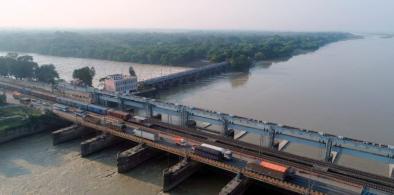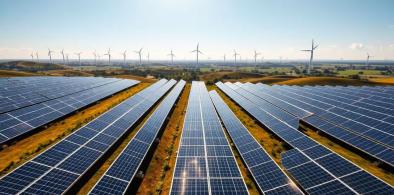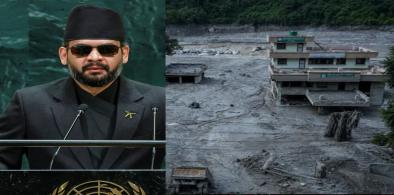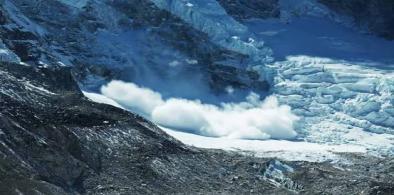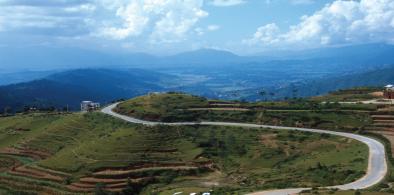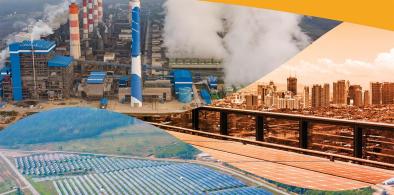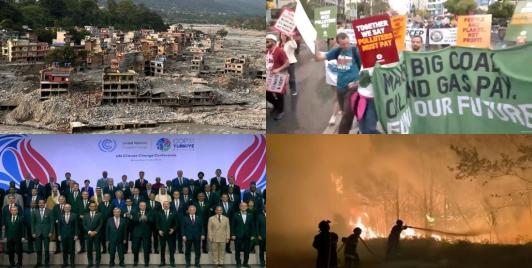
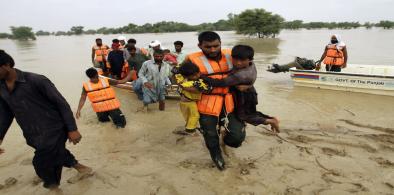
Clockwise, L-R: Devastating flash floods in Nepal, August 2026. Photo by Pratibha Tuladhar; protestors at COP31 in Antalya, Turkiye, call for polluters to pay. Screenshot: Democracy Now; world leaders gather at the UN Climate Change Conference, Antalya, Turkiye, November 2026; fighting wildfires across France and Spain, July 2026. Screenshot: France 24.

Will COP31 Heed Nepal and South Asia's Call?

Nepal, along with Bhutan and Kyrgyzstan, has formally called for mountain and climate change to be added as an agenda item in the COP31 process. Bangladesh, India, and Pakistan are set to push for more climate grants, greater support for adaptation, and faster access to loss and damage funding. 

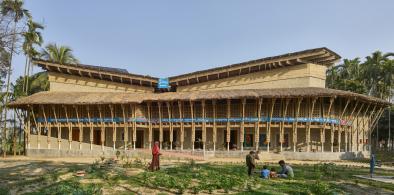
How Bangladeshi Women Are Building a Climate-Resilient Rural Economy as Folk Architects

The global community is currently searching for viable ways to address the effects of climate change; the women of the Bengal delta have been engaged in a silent, yet persistent economic revolution that provides a proven, empirically supported model for other vulnerable countries around the world.

Pakistan's Skills Machine Should now Train for Flood Resilience

The September agreement by the Pakistan PMO gives these decisions a home: one partner leads research and evidence, the other brings delivery through its four pillars - education, employment, engagement and environment - and its Digital Youth Hub and nationwide Youth Development Centres, with private-sector partners expected to create internship and employment pathways. 

COP31: Can Antalya Become the Point of Return?

Antalya's final decisions will matter. So will the credibility of finance, the protection of vulnerable communities and the direction of the energy transition. But the deepest test is whether COP31 leaves countries with more capacity to implement what they have promised.

More on Climate, Sustainability and Energy

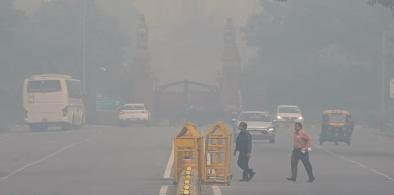
Why Is India Failing in the Fight Against Air Pollution?

For which we need a central body, headed by the Union Environment Minister and senior state functionaries heading each state council. We should identify airsheds, formulate a unified airshed policy, addressing them at their origin, thus nipping the malady in the bud.

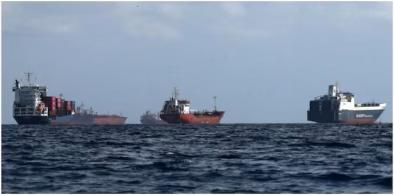
India's Oil Diplomacy: Navigating the Gulf Crisis With Strategic Autonomy

India's cultivated access to alternative energy suppliers, including Russia, the United States and producers in Africa, provided flexibility when the Gulf route became severely disrupted. The diversification was the product of sustained procurement changes over several years, rather than an achievement of the crisis period alone.

The Ganga Is More Than a Bilateral Dispute: Sustainable Water-Sharing is the Key

The expiration of the 1996 treaty is more than a diplomatic deadline between the two parties. It tests whether India and Bangladesh can move from sharing a scarce water supply to managing the common risks that affect its availability. 

South Asia’s Green Transition: Need for Regional Cooperation to Capture Value

Pakistan has used imported solar technology to respond to immediate energy costs. Bhutan and Nepal can earn from renewable electricity. Bangladesh and Sri Lanka have established export-oriented manufacturing capabilities. India is attempting to develop a broader advanced manufacturing base. 

Himalayan Disasters Need a Himalayan Solution: The Case for a Regional Alliance to Mitigate Risks

Nepal's PM proposed a "Himalayan Climate Resilience Mechanism, led by Nepal, India and China. Through this mechanism”, the countries could “share satellite data and expertise.” This could be a good initiative, as it would help predict disasters and prepare for them. 

Rethinking Climate Security in South Asia - Through AI

South Asia’s climate risks are shared across countries. Rivers such as the Ganga, Brahmaputra and Indus do not respect national boundaries, and torrential rains in one country can lead to floods in another. Satellite data, flood forecasts and flood warnings could, therefore, be shared to enhance disaster preparedness across the region.  

When the Himalayas Warn Us: Balancing Ecology, Development and Human Security

The disasters at Kedarnath and Nepal should therefore be read not simply as tragedies of the past or isolated episodes of extreme weather. They are warnings from a changing mountain system. The question before South Asia is whether we will continue to respond to each disaster after it occurs, or whether we will listen to what the mountains are telling us beforehand.

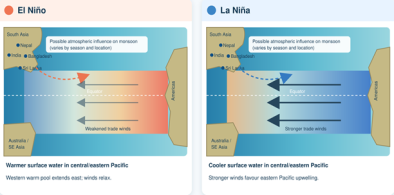
Months Ahead of the Monsoon: Can AI Give Us an Earlier Warning About El Niño?

AI may genuinely extend the horizon over which seasonal climate risk can be estimated.  For communities across South Asia living under the influence of the monsoon, a longer view could mean the difference between a farmer adjusting her planting in time and a family receiving a flood warning too late to act.

Livelihoods, Employment and Environmental Management in South Asia’s Hilly Regions: Lessons from ADB’s New Investment in Bangladesh

The broader lesson for South Asia is equally important. Hilly regions cannot be developed simply by transferring lowland infrastructure models into mountainous terrain. Investment has to respond to local economic systems, geography and environmental risks. 

Ethanol, AI and Agriculture: India's Triangular Chokehold Centred on a Depleting Resource

The UN's 2026 report warns that “long-term water use has exceeded renewable inflows and safe depletion limits,” leaving some water supplies beyond recovery. As the world’s largest groundwater extractor, India sits at the centre of this reckoning

South Asia’s Carbon Opportunity Is Bigger Than Credits

The larger economic choice for South Asia is therefore broader than whether to participate in carbon trading. The region can remain primarily a supplier of relatively inexpensive mitigation outcomes, or it can also develop the technology, professional capacity, financial products and verification systems that determine what those outcomes are worth.

Earth has Spoken! But are we Listening?

On top of that is our own unsustainable living that is creating large-scale havoc on the planet. They include construction of large dams, roads, and tunnels in the fragile Himalayan region. These activities together with the melting of glaciers due to global warming are bound to create worse natural disasters in the coming years.

South Asia’s Renewable Transition: Energy Security, Geopolitics and the BRICS Factor

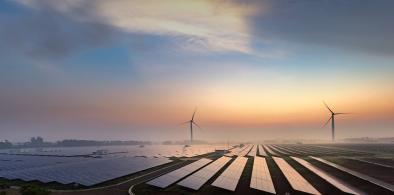
The regional opportunity is particularly significant in electricity. Nepal and Bhutan can potentially export hydropower; India can provide the scale of demand and investment required to create a regional electricity market; Bangladesh can become an important electricity consumer; and Sri Lanka and Pakistan can expand solar and wind. Greater cross-border electricity trade could allow countries to exploit complementary renewable resources and reduce the need for expensive domestic backup capacity.

The Himalayas Need a Common Language of Warning: Emergency Cooperation Must be Institutionalised Into Durable Regional Architecture

A genuinely regional approach could eventually include - besides Nepal, China and India - Bhutan and, where relevant, downstream institutions in Bangladesh. Organisations with established Himalayan expertise, particularly the International Centre for Integrated Mountain Development in Kathmandu, could offer scientific and institutional support.

The Himalayas are Sending a Warning: Need for Timely Trans-Border Sharing of Environmental Information

The Himalayas are not collapsing because humanity exists, but humanity is creating a warmer world in which the Himalayas are becoming less predictable. The real question is no longer whether climate change will alter the mountains. It already is. 

Newsletter Subscription

The subscriber's email address.
Stay informed - subscribe to our newsletter.