
“GDP in Bhutan and Nepal is projected to grow by over 5 per cent in 2025, but the economy of Bangladesh is expected to slow following unrest in mid-2024 and lingering political uncertainty”, it said
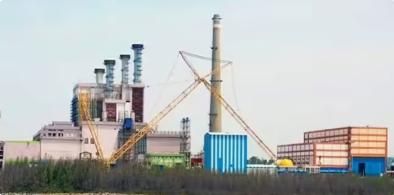
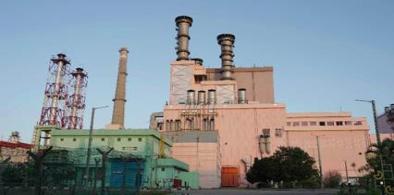
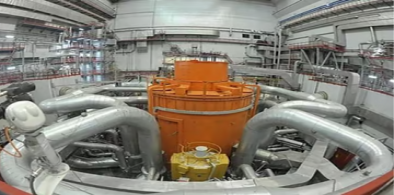
The reactor that has now gone critical at Kalpakkam, on the Bay of Bengal coastline in Tamil Nadu, is not the end of that journey. It is, more precisely, the end of the beginning. The real test is whether India can now scale fast breeder capacity rapidly enough to make a material difference to its energy-mix building on the Kalpakkam template, the industrial supply chains it has validated, and the engineering confidence it has earned.
If India and China choose collaboration by setting aside strategic suspicion in the climate domain, they could fundamentally reshape the trajectory of the 21st century, as they have already demonstrated individually through their pursuit of clean energy over the past decade. More importantly, such a coalition could revive the COP28 fossil-fuel phase-down pledge, which stalled at COP29 in Baku and appears to be drifting further at COP30 in Belém.
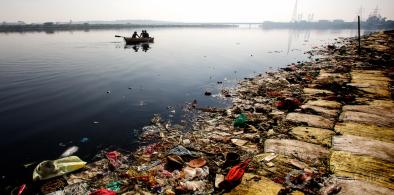
The Indus and the Ganges are dying slowly, and with them disappear species that evolved over thousands of years within these waters. If current patterns continue, future generations may inherit rivers that exist geographically but are biologically empty. South Asia still has an opportunity to reverse this trajectory, but only if environmental protection becomes a shared regional priority rather than an afterthought.
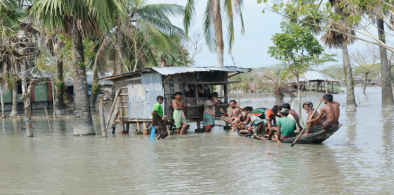
Climate migration isn’t just about the loss of land. It is about the loss of memory, culture and home. When people are driven out of the places where they were born, few things that matter are merely economic. Over the next decades, the world will confront a fundamental dilemma. Can humankind handle the climate crisis in a surer way? Or will the future consist of millions searching for a new place to call home?
“GDP in Bhutan and Nepal is projected to grow by over 5 per cent in 2025, but the economy of Bangladesh is expected to slow following unrest in mid-2024 and lingering political uncertainty”, it said
Now Islamabad will not have to rely on Beijing to protect its terrorists like the mastermind of the 26/11 Mumbai attacks, Sajid Mir, at the Islamic State and Al-Qaida Sanctions Committee, which designates individuals and groups associated with those two organisations as terrorists and imposes sanctions.
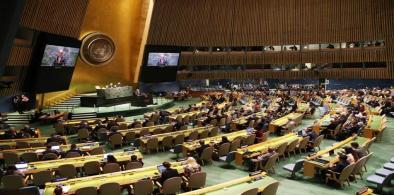
The General Assembly adopted by acclamation on December 6 the resolution moved by a core group of India, Liechtenstein, Sri Lanka, Nepal, Mexico, and Andorra, and joined by many others to declare the Winter Solstice Day the World Meditation Day.
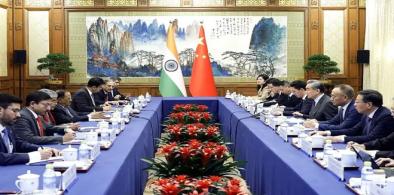
The resumption of the regular high-level meeting followed an agreement between Prime Minister Modi and China’s President Xi Jinping in Kazan, Russia in October.
UNSRC President Peter Dawkins said that through the exhibition they want to highlight Vivekananda’s relevance to “the core values and purposes and mission of the United Nations”.
United Nations Secretary-General Antonio Guterres hopes “good neighbourly relations” between India and China will be strengthened following their agreement on border de-escalation, his Deputy Spokesperson Farhan Haq said on Tuesday.“We certainly welcome any positive engagement between the nations of China and India, and we hope that process of good neighborly relations will be strengthened”, he said.
“India symbolises pluralism, diversity, and democracy. In contrast, Pakistan reminds the world of terrorism, parochialism, and persecution” the Indian diplomat said.
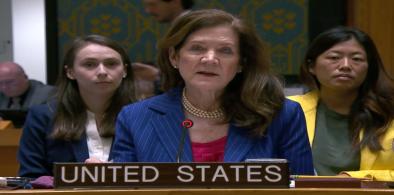
“Terrorist groups have enormously increased their capabilities by acquiring new and cutting-edge technologies, including drones and unmanned aircraft systems with cameras”, she said.
Gandhi's idea of satyagraha influenced Nelson Mandela in South Africa, and Martin Luther King Jr in the US were deeply influenced by Gandhi’s concept of Satyagraha “which teaches that truth and justice are not achieved through violence but through moral courage and peaceful dialogue”, Yang said in the message delivered by his chef de cabinet Ivor Fung at a meeting on Gandhian Values and UN Charter.
The UN membership has undergone a sea change since 1945 and the new realities need to be reflected in the permanent membership. Any proposal that does not address the issue of representation of the Global South, including Africa, Asia and Latin America, in the permanent category does a grave injustice to the aspirations of developing countries for equality.
“A premier example is our neighbour, Pakistan”, he said of the consequences it faces internally as a result of promoting terrorism. But “unfortunately, their misdeeds affect others as well, especially the neighbourhood”, he said
New Delhi, which has historically had close diplomatic and strategic ties with Moscow, is forging an independent path open to the West giving it room to be a conduit between the two countries for peace diplomacy.
The Cold War had some rules, but today “we are in a purgatory of polarity” where the world has not reached a state of multi-polarity and “more and more countries are filling the spaces of geopolitical divides, doing whatever they want with no accountability”’
India and several countries have been pushing for the adoption of the negotiating text and the the US adding its weight gives it added impetus.
“It is now time to move forward with the establishment” of the memorial honouring the more than 4,000 UN Peacekeepers who have made the supreme sacrifice”, he said, noting that 182 Indian peacekeepers have died “upholding the cause of international peace and security”.