

Raw Courage Amid Patriarchal Terror: Where Girls Have to Disguise as Boys to Survive in Taliban-ruled Afghanistan
The system under the Taliban regime treats girls as disposable items. They take away childhood experiences and destroy personal identities, creating permanent emotional scars. Yet these girls are not victims without agency. They are survivors carrying entire families on their small shoulders. Omid, Parvana, and every unnamed bacha posh are proof of Afghan, and Pashtun, resilience. The world must see them. The Taliban must hear us that no amount of disguises will hide the truth that women and girls are not lesser.
 Mar 11, 2026
I am a Pashtun girl, born and raised in Peshawar, where the echoes of Pashtunwali, our ancient code of honor, family loyalty, and resilience, still shape the rhythm of daily life. My father taught me that a daughter’s strength is quiet but unbreakable; yet even then I have felt the weight of a culture that sometimes values sons more visibly.
Across the border in Afghanistan, that weight has become a cruel necessity under the Taliban regime. When I read the NPR report published on March 9, 2026, about young girls being turned into “bacha posh”, literally “dressed like a boy”, my chest tightened with rage. This is not some distant tragedy. This is happening right next to us in our neighbourhood.
Matter of Survival
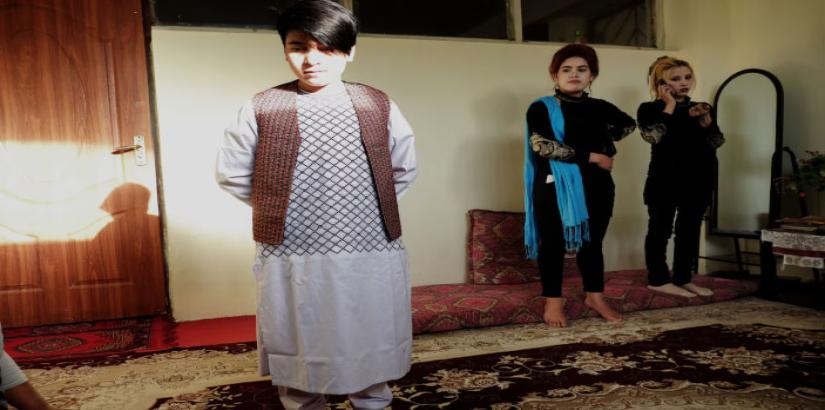
The practice is centuries old, rooted in Afghanistan’s deeply patriarchal society. Today, under the Taliban’s forceful regime, the reason is brutally simple, that of survival. Families with no sons, or no men available to work, dress a daughter as a boy so she can earn money, run errands, and even serve as a mahram, the male guardian women and girls are now forced to have just to step outside.
The Taliban regime’s Ministry for the Prevention of Vice and Promotion of Virtue has banned women from most public life without one. A bacha posh slips through that net. She can move freely, work in the markets, play in the streets, and keep her family from starving. As one mental health counselor explained, mothers with “lots of daughters and no sons” turn one girl into a son, not just for income, but for social status. Without one, families face whispers and shame.
Omid's and Parvana's Stories
I see this so clearly in the story of Omid, a 16-year old Afghan girl whose real name NPR withheld for her safety. She has been living as a boy since she was three. Her father died, leaving her mother with seven daughters and only one son. “She felt they needed another male in the family,” Omid’s mother decided; Omid started to act as the public representative of their household after she cut her hair and wore boys' clothing. She enjoys complete freedom to travel, work, shop, and play with local boys. The disguise has begun to break apart because she has reached the stage of puberty. The counselor explained that some bacha posh girls face difficulty meeting the strict feminine behavior expectations which society demands. They carry resentment together with identity wounds and psychological scars which never completely disappear.
This is not freedom. It is a desperate trade. A researcher from Human Rights Watch named Sahar Fetrat explained to NPR that the Taliban regime causes increased practice of prohibition which prevents women from working in any capacity. Eighty-five percent of Afghans now live on less than a dollar a day. Fetrat put it plainly that when women and girls have no choice but to disguise themselves just to survive, the Taliban still punishes them. There are no good options in a system built on “total female subordination.”
I first understood the raw courage behind this practice when I watched the 2017 animated film The Breadwinner, directed by Nora Twomey and executive-produced by Angelina Jolie. The story follows 11-year-old Parvana in Taliban-ruled Kabul in 2001. Parvana's father faces arrest while her family experiences starvation and her mother and sisters must remain indoors. Parvana cuts her hair, puts on her dead brother’s clothes, and steps into the streets as a boy named Aatish. She sells goods in the market, reads letters for illiterate men to earn coins, and even allies with another bacha posh girl named Shazia. The film displays terror, the risk of being caught, and the exhaustion of her performance which requires voice changes and body posture adjustments, but it also displays her joyful experience of running freely for the first time. I sat in my room in Peshawar, tears streaming down my face, because Parvana could have been any of us. Her story is Omid’s story. It is the story of thousands of girls today under the Taliban regime. When the credits rolled, I felt both heartbroken and proud, proud of these girls who refuse to let their families fall, even when the world forces them to erase themselves.
World Must See
The system under the Taliban regime treats girls as disposable items. They take away childhood experiences and destroy personal identities, creating permanent emotional scars. Yet these girls are not victims without agency. They are survivors carrying entire families on their small shoulders. Omid, Parvana, and every unnamed bacha posh are proof of Afghan, and Pashtun, resilience. The world must see them. The Taliban must hear us that no amount of disguises will hide the truth that women and girls are not lesser. We are the breadwinners, the guardians, the future.
(The author is an independent academic researcher with Masters in Peace and Conflict Studies from National Defence University, Pakistan. Her areas of interest include Conflict Analysis, Geopolitical Realities, Climate Change, and International Affairs. Views expressed are personal. She can be contacted at farwaaimtiaz@gmail.com )





Post a Comment