
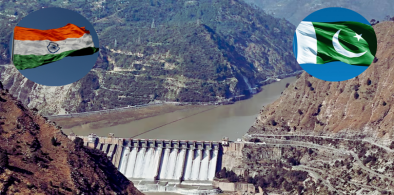
Representational Photo

Bangladesh Drifting Into A Nexus Of Military Dependency And Proxy Competition? Ominous Consequences For India, South Asia

Taken together, these developments should ring alarm bells. The convergence of foreign military-industrial interests, Islamist political forces, and great-power rivalry risks turning Bangladesh into an epicenter of proxy competition and ideological confrontation. For a nation that has paid dearly for its independence and pluralistic identity, the cost of such entanglements may prove far higher than the short-term gains promised by arms deals and infrastructure projects.

Between Treaty And Truth: Sri Lanka's Conflict-Related Sexual Violence And Limits Of International Law

Sri Lanka's case highlights the central weakness of the ICC’s complementarity principle. The Rome Statute grants jurisdiction only where states are unwilling or unable genuinely to carry out the investigation or prosecution. Sri Lanka maintains functioning judicial institutions, conducts some prosecutions, and has established reparations frameworks, thereby technically satisfying the ability threshold while systematically failing to deliver accountability for conflict-related crimes.

Davos: Noise, Narratives, And The Reality Beneath

If Davos had a clear centre of gravity this year, it was technology—not geopolitics. The tech industry arrived in force, underscored by high-profile appearances from Elon Musk and Nvidia CEO Jensen Huang. The message was unmistakable: this is where attention, ambition, and capital are converging. With extraordinary sums being poured into artificial intelligence, unease among lenders and investors is understandable. Yet many executives were keen to reassure markets that fears of an AI bubble were overstated.

Abandoned U.S. Weapons Empowering Terrorists, Undermining Pakistan’s And Regional Security

Strategically, these developments underscore the importance of regional counterterrorism cooperation and rigorous monitoring of cross-border arms flows. The proliferation of foreign-supplied weapons into Pakistan not only strengthens terrorist organizations but also threatens regional stability. Each attack executed with U.S.-origin rifles or advanced tactical gear reinforces the need for Pakistan’s zero-tolerance policy against militancy while exposing the organized external support networks that continue to embolden groups like the TTP.

More on Spotlight

Spreading extremism in Pakistan has ominous implications for region

Al-Qaeda's strategic plan involves aiding "persecuted" Kashmiri Muslims once their objectives in Pakistan are achieved. Shifting the jihadist threat toward Kashmir will also align with the ambitions of the Pakistani military. 

India’s stigmatized mental healthcare cries for prioritisation

In India's close-knit communities, mental health struggles often face a deafening silence. According to a study by Deloitte, over 70 per cent of Indians use derogatory terms for mental disorders and nearly 40 per cent voice fear of a neighbour seeking help for mental health issues.

Why India, with its huge backlog of unresolved cases, needs robo-judges

The recent passage of amended criminal laws in India highlights the challenges of human judges' adaptability, contrasting with the instantaneous application capabilities of robo-judges. COVID-19 accelerated technology integration in Indian courts, paving the way for the use of AI in judicial administration. 

Recounting Indian Navy's1971 valour: Questions before the nation

With the spectacular achievements of the Indian Navy in the 1971 war under the daring and decisive leadership of Admiral Nanda, he could well have been considered for being made Admiral of the Fleet. As this involves rectifying past oversights, there are already precedents.

BNP's miscalculation can prove costly for party and Bangladesh

The absence of a strong opposition can potentially pave the way for the ascendancy of authoritarian, dictatorial, or undemocratic forces within the country's political sphere. 

India and the European Union: Growing partners in technology

Both DPI and AI are data-driven and integral to future human development. In 2024, India and the EU are looking to formulate a unified approach towards these two cutting-edge aspects of technology.

Victory of independent candidates: A new message in Bangladesh's electoral politics

The large number of independent candidates winning in this election has shown new thinking in Bangladesh's politics. And the time may have come for political parties to rethink their candidate selection process.

The long march to Islamabad: Pakistan's persecuted Baloch community hit the road for justice

The judiciary, media, human rights activists and Baloch nationalist parties have almost exhausted their efforts in trying to persuade international institutions to intervene and end the sustained atrocities against the people of Balochistan.

The worsening water crisis: Need to adopt innovative water technologies

India’s mainland is endowed with a long coastline of over 5500 km. All the areas situated near this coastline can get clean drinking water through dew condensation.

Terrorism is a tactic of war; yet it defies a uniform definition

State-sponsored terrorism is often employed by smaller or weaker states to weaken bigger or stronger nations as it is more cost effective than traditional war. One of the most prominent examples of this could be the Kashmir issue between India and Pakistan

With non-state actors altering geostrategic realities, Underwater Domain Awareness is a strategic imperative for region

The drone attacks in the Arabian Sea recently are an indication of the high-tech means available to the non-state actors and it won’t take much time for them to acquire deadly underwater drones with explosives to carry out unimaginable attacks in a politically volatile IOR

What South Asia can learn from the ASEAN integration experience on labour mobility

The South Asian region has much to learn from the ASEAN experience in integrating investment, trade and movement of labour which includes a skilled workforce

Sand to sustainability: Dubai’s historic COP28

The word ‘just transition’ is not just about the historic climate injustice done to developing countries, but it also secures the rights and livelihood of workers working on old energy systems that would change to new systems

Why climate financing for green-energy transition imperative for Bangladesh, developing nations

Bangladesh and other low-income industrialised nations shouldn't be forced to transition to a non-carbon (net zero) economy on the same timelines. The international community should give Bangladesh, the country most affected by climate change, a high priority in receiving financial resources for both adaptation and mitigation.

The untold story of electric rickshaws in India

Even today the situation is no different. Most of the manufacturers make the rickshaw bodies here and fit them with imported motors, etc. from China.  This is how e-rickshaw manufacturing has proliferated in India.