High Commission of India hosted an Iftar in Dhaka

Cultural Diplomacy and Reviving Bangladesh–India Ties Beyond Political Divisions

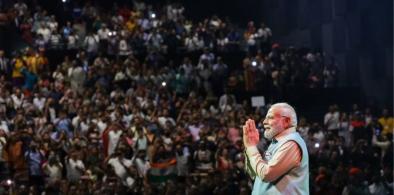
At the iftar gathering, attended by civil society members, ministers, bureaucrats and other distinguished guests, High Commissioner Verma emphasised the shared aspirations of Bangladesh and India. He stated that both nations stand at the threshold of a promising future as two vibrant and forward-looking societies. The event served as a platform to strengthen people-to-people connections and diplomatic goodwill between the two neighbours. By bringing together influential members of Bangladeshi society, the gathering reflected a clear intention to foster deeper engagement 

Raw Courage Amid Patriarchal Terror: Where Girls Have to Disguise as Boys to Survive in Taliban-ruled Afghanistan

The system under the Taliban regime treats girls as disposable items. They take away childhood experiences and destroy personal identities, creating permanent emotional scars. Yet these girls are not victims without agency. They are survivors carrying entire families on their small shoulders. Omid, Parvana, and every unnamed bacha posh are proof of Afghan, and Pashtun, resilience. The world must see them. The Taliban must hear us that no amount of disguises will hide the truth that women and girls are not lesser.

Khamenei's Assassination and a Fractured Iran: Regional and Global Ramifications of a War of Attrition

Khamenei’s assassination terminates an epoch of ideological confrontation, yet inaugurates profound uncertainty. Legally and normatively, it imperils protections for sovereign leaders; strategically and politically, it probes Iran’s institutional fortitude; religiously and narratively, it unveils unifying and divisive societal forces. Diplomatic containment—through intermediaries such as Oman or Qatar—must prioritise the transition's fragility without incitement. Absent such prudence, this strike risks catalysing a wider regional conflagration, where initial tactical triumphs yield enduring strategic costs.

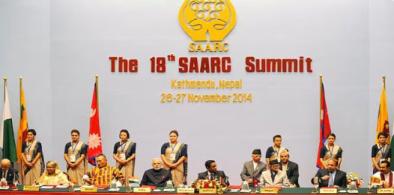
Reimagining a Cooperative South Asia: A Next-Gen Agenda to Revive SAARC

The revival of SAARC will not come from dramatic diplomatic breakthroughs. Instead, it will emerge through incremental cooperation in education, digital infrastructure, disaster response and trade facilitation. Crucially, the future of South Asian regionalism may depend on a generation that increasingly experiences the region not through borders but through shared digital, economic and cultural networks.

More on Spotlight

India should not shy away from public debate on religion

India is the origin of Sanatana Dharma (later Hinduism) philosophy, which also gave birth to Jainism, Buddhism and Sikhism. India, since millennia, has absorbed Zoroastrianism and Judaism. The other two Abrahamic religions Christianity and Islam came to the shores of India within decades of their founding in the Middle East and took root. With such pluralistic beliefs and one culture, India needs to debate religions to make societies aware of their evolution. 

Where comparisons end: How Hamas could be winning a war it should have lost

Interestingly, a comparison was drawn by Israel between the October 7 attack and the 26/11 Mumbai terror attack in the hope that there would be an unqualified understanding of Israel’s action. What this supposed comparison fails to recognize is that there is a significant difference. 

Saving the Great Indian Bustard: Landmark judgement can be leveraged for stronger climate change legislation

This judgment not only addresses the immediate concern of protecting the GIB but also provides a strategic framework for balancing ecological conservation with sustainable development.

Are migration fears driving curbs on international education? Pent-up demand will create new student markets

Apart from the substantial loss in revenue, international students, especially from India who are aspiring to study abroad, are seeking out alternative destinations that are more welcoming, such as Germany, Japan, Ireland, Israel and Russia. 

Sri Lanka's coming presidential election has implications for region; India better watch out

Just twenty years ago, India's neighboring countries, apart from Pakistan, were solely dependent on India. But now all the small countries except Bhutan are trying to identify themselves as neutral countries in the India-China rivalry.

An Indian TV series ignites cross-border cultural discourse over a romanticised bygone era

Even so, Bhansali’s project has evoked considerable interest in Pakistan since the word went out that he was once considering casting Fawad Khan and Mahira Khan, two of the top stars who have acted in Bollywood films. “Then, politics entered,” one of them rued.

Western media biases colour South Asia coverage: Need for greater journalistic empathy and objectivity

Despite the myriad challenges faced by Western journalists in covering South Asia, maintaining journalistic integrity is non-negotiable. This entails a rigorous commitment to fact-checking, corroborating information from diverse sources, and challenging ingrained biases.

Clash of Civilizations: Which will be the best-placed to lead the world?

India and China represent the future, America (West) the present, and Europe the past; Islam has a long way to go. 

Is Pakistan playing with fire by aligning clandestinely with the ISK?

The growing camaraderie between Pakistan’s military and the ISK  poses a threat to the entire South Asian region.

The Rohingya tragedy and global inaction: How much longer can Bangladesh carry the burden?

The encampments in Cox's Bazar have metamorphosed into hotbeds of militant activities, underpinned by the infusion of funds from the Middle East, Pakistan, and other nations, which are cynically utilized to perpetrate a nexus of militancy within these precincts.

How the Russian connection insulated India from oil shock and brought economic stability

The revival of trade relations with old friend Russia is  the turning point in India’s oil dependency on the Arab world. This has strengthened India’s resilience to oil shock to a considerable extent.

Indian elections: Is BJP paying for its overconfidence?

All in all, the issues on the agenda are very different from the issues that the BJP thought would be on the agenda. The finals could go down to the wire and there will be many lessons learned once the votes are counted and the results are declared.

When the Americans failed Afghanistan: Chronicle of the dramatic collapse of a nation

India, which found itself quite behind the curve like the US in gauging the rapidly changing political dynamics, first shut down its consulates and then its embassy just as the Afghan Republic collapsed on August 15, 2021. But once it realised it would be foolhardy to expect the revival of the Republic, it tacitly started mending fences with the Taliban, sending what it called a "technical team" to Kabul, resumed humanitarian aid, and discontinued diplomatic support to the embassy in New Delhi that was in the hands of representatives of the ousted Ghani government

Iranian president’s Sri Lanka visit is a pointer to Tehran's Indian Ocean ambitions

Before visiting Sri Lanka, Raisi visited Pakistan as part of his South Asian tour, and it is a salient factor that both Pakistan and China are equally important to the BRI as the Chinese have invested millions of dollars in both countries.

Sri Lanka's Aragalaya protests demonstrated nested sovereignty

This nerve centre of protests proved to be a fertile ground for new ideas and creative approaches to digital activism and served as a beacon of hope for many Sri Lankans seeking positive change.