
Since 2019, China has been building 628 dual-use military villages (termed ‘Xiaokang’ or ‘well-off’ villages) along the southern border of the Tibet Autonomous Region (TAR), including inside Bhutan and in Arunachal Pradesh, India.
At the iftar gathering, attended by civil society members, ministers, bureaucrats and other distinguished guests, High Commissioner Verma emphasised the shared aspirations of Bangladesh and India. He stated that both nations stand at the threshold of a promising future as two vibrant and forward-looking societies. The event served as a platform to strengthen people-to-people connections and diplomatic goodwill between the two neighbours. By bringing together influential members of Bangladeshi society, the gathering reflected a clear intention to foster deeper engagement
The system under the Taliban regime treats girls as disposable items. They take away childhood experiences and destroy personal identities, creating permanent emotional scars. Yet these girls are not victims without agency. They are survivors carrying entire families on their small shoulders. Omid, Parvana, and every unnamed bacha posh are proof of Afghan, and Pashtun, resilience. The world must see them. The Taliban must hear us that no amount of disguises will hide the truth that women and girls are not lesser.
Khamenei’s assassination terminates an epoch of ideological confrontation, yet inaugurates profound uncertainty. Legally and normatively, it imperils protections for sovereign leaders; strategically and politically, it probes Iran’s institutional fortitude; religiously and narratively, it unveils unifying and divisive societal forces. Diplomatic containment—through intermediaries such as Oman or Qatar—must prioritise the transition's fragility without incitement. Absent such prudence, this strike risks catalysing a wider regional conflagration, where initial tactical triumphs yield enduring strategic costs.
The revival of SAARC will not come from dramatic diplomatic breakthroughs. Instead, it will emerge through incremental cooperation in education, digital infrastructure, disaster response and trade facilitation. Crucially, the future of South Asian regionalism may depend on a generation that increasingly experiences the region not through borders but through shared digital, economic and cultural networks.
Since 2019, China has been building 628 dual-use military villages (termed ‘Xiaokang’ or ‘well-off’ villages) along the southern border of the Tibet Autonomous Region (TAR), including inside Bhutan and in Arunachal Pradesh, India.
Diplomatic efforts must be intensified to address the ongoing border situation with China and safeguard Bhutan's sovereignty. It is also imperative to address the unresolved Bhutanese refugee issue and protracted family separation among Bhutanese Americans.
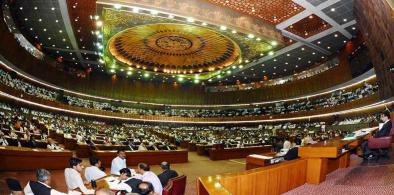
The time has come to drastically curb the unchecked and ultra-constitutional powers of the army chief, subject the intelligence agencies to public scrutiny and accountability, and limit their influence over domestic and foreign policy.
Much more violence could be expected in Manipur, with Meitei radicals waging all-out war against the Kuki-Zo, with Nagas fearing they would be the next target since the Arambai Tenggol alone outnumbers the tribals of Manipur hugely.
The Maldives has undergone a radical transformation. To see this as playing the India or China card would be a miscalculation. Indeed, the strategic narrative of what is going on is very different.
While the NPP’s visit to India exemplifies changes in its political understanding, it has an important dimension in Sri Lanka's domestic politics. New Delhi appears to have judged that the NPP coalition has the potential to play a decisive role in the upcoming presidential election.
The Pakistani military went all out to deliver this vote. Its idea to have direct control of the political situation to what it comprehends will bring stability to Pakistan’s crisis may be a pipe dream with a fractured verdict leaving Pakistan open to elements that will only compound its instability.
Rakhine's lack of effective government structure and civil order will continue to be a significant source of worry for the region, particularly in terms of humanitarian, security, economic, and political issues.
If the Nagas are drawn into the already raging ethnic conflict in Manipur, it would be catastrophic for the border state and have repercussions in the entire northeast of India. The decision to fence the entire India-Myanmar border and cancel the FMR could potentially lead to discontent in Nagaland and Mizoram.
The Maldives case is a vivid example that Beijing is not going to stop its power play in India's neighboring countries. China's aim is crystal clear: to question India's bid for regional leadership.
If India and China are changing, so are many other countries who realise the futility of trying to persuade a bunch of religious fundamentalists, now enjoying absolute power, to change their way of treating their people.
Besides youth, efforts have also been made to increase women’s inclusion in electoral politics. Section 206 of the Elections Act 2017 mandates at least 5 per cent women's representation in general seats. However, major political parties often award tickets to women for unwinnable seats and focus on swing constituencies.
Nobel Prize-winning economist Amartya Sen is a vehement supporter of granting land access to women and argues that economic empowerment is a critical step to realise the goal of gender equality and women’s empowerment.
Ironically, recent actions will be playing into the hands of China which has a lien on many insurgent groups in Myanmar, including Meitei and Kuki-Naga groups, which it would use to destabilize northeast India.
It is a risible state of affairs in Pakistan where a three-time prime minister, who could have been in prison for ten years without going into exile returns, even as another one, Khan, is sentenced to ten