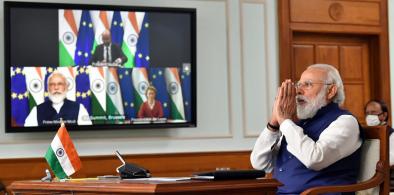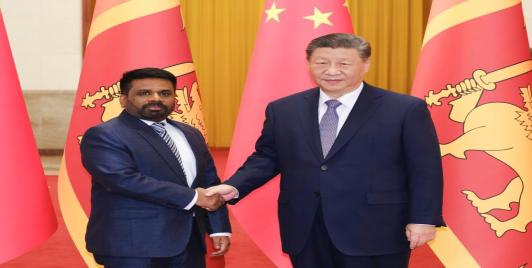
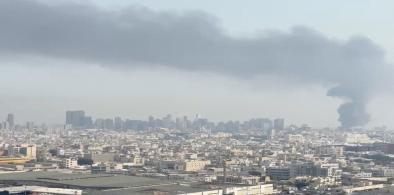
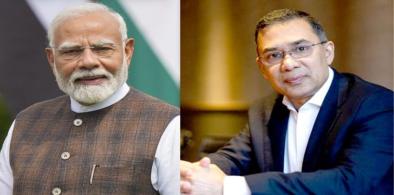
(L-R) António Costa President of the European Council, Narendra Modi, Indian Prime Minister, and Ursula von der Leyen, President of the European Commission at the EU-India partnership meet in New Delhi. Photo: Audiovisual Portal EU

Why Can't South Asia trade with itself? Tariff Shock Can be Turned Into Opportunity

South Asia’s tragedy is not geography or lack of industrial capacity. It is the failure to convert proximity into predictable partnerships. Trump’s tariff threats could remain episodic political theatre, or they could signal a more protectionist global environment. Either way, South Asia’s dependence on Western concessions exposes it to recurring uncertainty. Reviving SAFTA in spirit and substance would not eliminate trade with the West. It would diversify risk and embed value creation within the region.

Gulf War Strains Bangladesh's Economic Fragility, Test for New Government

The current war has exposed Bangladesh’s structural vulnerabilities: dependence on imported energy, fragile reserves, and narrow fiscal space. For the new government, the stakes are clear—stabilize fuel and food supplies now while building resilience through diversified energy, broader exports, and stronger social protection. Wars in the Gulf may be fought thousands of miles away, but their economic shockwaves reach Bangladesh within days. In the end, the crisis will be felt in three simple pressures shaping everyday life: oil prices, food costs, and migrant jobs.

Re-imagining Pakistan’s Human Capital Crisis: It Must Dismantle Policy Structures That Serve Elite Interests

This crisis did not emerge overnight. It is a product of neglecting the foundational capacity to invest in human capital, where Pakistan hardly puts less than 2% of its national GDP on human capital factors. Meanwhile, the regional peers like Bangladesh and India invest more in education and health, and Pakistan is still trapped in a cycle of short-term fiscal thinking, political instability, and elite capture that is systematically hollowing out the nation’s potential to rise and grow.

The Delhi Tightrope: Can India Lead BRICS without Triggering a Trumpian Trade War?

In 2026, the “strategic autonomy” that we so often discuss must evolve from a defensive crouch to a balanced offensive infrastructure play. India’s success will be measured by its ability to convince the Trump administration that a stable, digitally-sovereign BRICS is actually a better trade partner than a chaotic, bankrupt one.

More on Spotlight

Need for India to have a sound policy regime: Role of advisers is crucial

When the first COVID-19 case came to public notice in India in January this year, questions in concerned quarters have been raised as to why did it take almost two months to prepare for lockdown and that too with a notice of a few hours to leave many citizens unprepared and more so the migrant and the poor, writes Partha Pratim Mitra for South Asia Monitor

Post-COVID-19: RSS sees an ascendant India in changed world order

RSS remains quite optimistic about the way the new world order is going to pan out post-COVID-19. It feels that it is the beginning of a new golden era for India, writes Arun Anand for South Asia Monitor
India must relax lockdown in phases; economic activity must resume gradually

The consequence of continuing the lockdown, even under present conditions, could be grave, as the self-employed people like vendors, plumbers, auto drivers, small automobile workshops etc.  as well as  poor senior citizens, visually impaired/differently-abled people, who are millions in number all over the country, would be badly hit, writes N S Venkataraman for South Asia Monitor

Need for collective strategic action by SAARC to survive pandemic

The legitimacy of a regional organization like SAARC and others alike will be uncertain if strategic measures and procedures to control COVID-19 do not work in South Asia, writes   Maj. Gen Binoj Basnyat (retd)  for South Asia Monitor

Hindu-Muslim ties in the time of a pandemic

No one can predict what the trajectory of communal relations will be when it is clear that so much will change in the post-corona period not only with regard to Hindu-Muslim ties, but in every other field that the scene in India will be quite different from what it is today writes Amulya Ganguli for the South Asia Monitor

Right time to usher in reforms in India's Armed Forces

The armed forces, after decades of clamouring, have been accorded a historic opportunity to usher in change and reforms. It is imperative that this opening is utilized with sagacity and deliberate forethought writes  Admiral  Arun Prakash (retd) for the South Asia Monitor

US -Taliban peace deal: Peace for whom?

How much the talk of sharing power with the Taliban is realistic - that raises doubts, as it is impossible for the Taliban to be diverted from their ideology, writes Monira Nazmi Jahan for the South Asia Monitor

Nepal needs to show social solidarity in coronavirus lockdown

We, the people of Nepal should understand that if an unfortunate incident can befall one, it can befall others too. That’s why we all need to stand together, writes Jivesh Jha for the South Asia Monitor

India needs to brace for another lockdown

While the South Korean model of aggressive and maximum testing has proved successful; the world is also studying and appreciating the Indian model wherein a densely and an overpopulated nation with limited resources and a not very advanced health infrastructure has been able to control the exponential spread of the pandemic, writes Brig Anil Gupta for the South Asia Monitor

SAARC is back, but only to fight COVID-19

The question whether India’s initiative will develop into a SAARC minus Pakistan or lead to a revival of SAARC itself remains open,  writes Amb T P Sreenivasan (retd) for South Asia Monitor

Only a Biden presidency can strengthen Indo-US ties

This inability to get any meaningful trade agreement in place speaks volumes about India’s potential future relations with the US with Trump as president, writes Frank F Islam for South Asia Monitor

Time to review lockdown to stop economic shutdown

Lockdown cannot be an option to exercise indefinitely. We need to progressively lift it so that the economic costs will not overwhelm us, writes Mohan Guruswamy for the South Asia Monitor

55 years later, India returns favour to US, emerges as humanitarian force

It wasn't only a favour to the US, Brazil or Israel. India also decided to send HCQ  “to all our neighbouring countries who are dependent on our capabilities” and “some nations who have been particularly badly affected" by the pandemic, writes Arul Louis for South Asia Monitor

Is 'temporary' release of prisoners enough to halt spread of COVID-19?

In South Asia, India has, on the directives of its Supreme Court, constituted High Powered Committees in each state to define criteria for release of both sentenced and unsentenced prisoners, writes Madhurima Dhanuka for the South Asia Monitor

India could be staring at a human security catastrophe

India has about 450 million workers in the informal sector and about a third of them are in the migrant cluster. Even if it is estimated that half of this workforce is grappling with hunger, the numbers are mind-boggling, writes C Uday Bhaskar for South Asia Monitor