(L-R) António Costa President of the European Council, Narendra Modi, Indian Prime Minister, and Ursula von der Leyen, President of the European Commission at the EU-India partnership meet in New Delhi. Photo: Audiovisual Portal EU

Why Can't South Asia trade with itself? Tariff Shock Can be Turned Into Opportunity

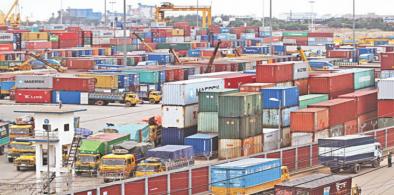
South Asia’s tragedy is not geography or lack of industrial capacity. It is the failure to convert proximity into predictable partnerships. Trump’s tariff threats could remain episodic political theatre, or they could signal a more protectionist global environment. Either way, South Asia’s dependence on Western concessions exposes it to recurring uncertainty. Reviving SAFTA in spirit and substance would not eliminate trade with the West. It would diversify risk and embed value creation within the region.

Gulf War Strains Bangladesh's Economic Fragility, Test for New Government

The current war has exposed Bangladesh’s structural vulnerabilities: dependence on imported energy, fragile reserves, and narrow fiscal space. For the new government, the stakes are clear—stabilize fuel and food supplies now while building resilience through diversified energy, broader exports, and stronger social protection. Wars in the Gulf may be fought thousands of miles away, but their economic shockwaves reach Bangladesh within days. In the end, the crisis will be felt in three simple pressures shaping everyday life: oil prices, food costs, and migrant jobs.

Re-imagining Pakistan’s Human Capital Crisis: It Must Dismantle Policy Structures That Serve Elite Interests

This crisis did not emerge overnight. It is a product of neglecting the foundational capacity to invest in human capital, where Pakistan hardly puts less than 2% of its national GDP on human capital factors. Meanwhile, the regional peers like Bangladesh and India invest more in education and health, and Pakistan is still trapped in a cycle of short-term fiscal thinking, political instability, and elite capture that is systematically hollowing out the nation’s potential to rise and grow.

The Delhi Tightrope: Can India Lead BRICS without Triggering a Trumpian Trade War?

In 2026, the “strategic autonomy” that we so often discuss must evolve from a defensive crouch to a balanced offensive infrastructure play. India’s success will be measured by its ability to convince the Trump administration that a stable, digitally-sovereign BRICS is actually a better trade partner than a chaotic, bankrupt one.

More on Spotlight

Visakhapatnam gas leak: Need for stricter enforcement of labour laws

While in these difficult times when there is a need for more workers' protection,  relaxation of labour laws may not be in the overall interest of workers and there is a need for a rethink on the entire issue, particularly after incidents such as the Visakhapatnam gas leak,  writes Partha Pratim Mitra for South Asia Monitor

Sri Lanka's rise in strategic importance in Chinese geopolitical calculus

Major power interest in Sri Lanka despite the COVID-19 pandemic was noticed  earlier  this year when Russian Foreign Minister Sergey Lavrov, US Principal Deputy Assistant Secretary of State for South and Central Asia, Alice G Wells, and China’s Foreign Minister Wang Yi,  all visited Sri Lanka in January to hold bilateral talks with the Sri Lankan government, writes Lt Gen P. C. Katoch (retd) for South Asia Monitor

The power of social media: It can win or lose a war today

India's immediate neighbours, especially China, and its client state Pakistan, are conducting social media war against it. Countering them is a challenge, especially against opaque, digitally isolated China, writes   Lt Gen P R Kumar (retd) for South Asia Monitor

Democracy in Nepal is under threat

The present regime in Nepal has been blamed for attempting to push through several controversial bills, including the Media Council Bill and Information Technology Bill, among others. The intention and some provision of the bills are against the basic notion of democracy, writes Ravi Nayak for South Asia Monitor

Aurangabad tragedy a scar on the Indian consciousness: Migrant workers need more State empathy

The 2011 census had revealed that India has as many as 453 million internal migrants and this includes both inter-state migrants and those within each state.  Absent credible national data for the last few years, some studies have suggested that this figure may now be in excess of 600 million, writes C Uday Bhaskar for South Asia Monitor

Bangladesh lowest in press freedom rankings in South Asia

Bangladesh ranked the worst position in any country in South Asia. Even it’s worse than war-ravaged Afghanistan, which has been placed at 122, Pakistan (145), India (142), Sri Lanka (127), Nepal 112, Bhutan (67), and Maldives (79), writes Aashish Kiphayet for South Asia Monitor

India needs to hit Pakistan economically; carry out limited military operations

With Pakistan in an economic mess more should be done to hurt its economy. Limited military means to do so remains a viable option, with all other unstated options open, writes  Lt Gen Syed Ata Hasnain (retd)  for South Asia Monitor

Bangladesh's paradox of reopening its garment industry: Time to end dangerous working conditions

Considering the working environment and densely populated area combined with shabby living conditions of the workers, Dhaka and its neighboring districts of about 2.87 million people could be the next hotspot of the coronavirus outbreak, write Dr. Mohammad Rezaul Karim and Dr. Mohammad Tarikul Islam for South Asia Monitor

India scores big with medical diplomacy, prepares to play larger role

In the wake of COVID-19, India, with its medical diplomacy, struck the right chords and made the best use of its soft power stature in this crisis and has been trying to fill the global leadership vacuum, writes V K Samudrala for South Asia Monitor

Strengthening of rural institutions a must to revive economy

The economic discourse in India in a little over two months has changed from one of confidently steering the economy through investment and consumption measures to one of the stimulus packages for the needy and the vulnerable by government and liquidity infusion by RBI for businesses and jobs to survive, writes Partha Pratim Mitra for South Asia Monitor

With theatres shut, artistes need urgent help for survival

We have to reach out across the country to help these performing artistes, backstage technicians, designers, cultural entities and their employees to endure the economic hardships caused by the forced closure of their operations due to the spread of COVID-19, writes Gautam Bhattacharya for South Asia Monitor

With Facebook-Jio mega deal, retailing in India enters a digital future

The future of India’s retail thus is increasingly digital. Post COVID-19, consumers especially in urban India are bound to change their behaviour, avoiding crowded bazaars and malls and preferring to shop online. Kiranas -- there are 12 million small and medium retailers employing 40 million people, writes Nadella Chandra Mohan for South Asia Monitor 

Will one see a paradigm shift in education? Virtual classrooms the new norm

With such positive initiatives towards a totally technology-driven and -leveraged communication culture, the day seems to be not very far when one will see a paradigm shift in education - from a brick-and-mortar education to a click-and-portal one, writes Ashim Kumar Goswami for South Asia Monitor

Why has Pakistan deployed LY-80 missiles near the India border?

Pakistan wants to fulfill several objects by placing LY-80 missiles near Indian borders, writes Jai Kumar Verma for South Asia Monitor

As China faces world's ire, time for India to rise

As many nations relocate their industries to newer locations, India should play its cards well and, with alacrity,  could be one of the preferred destinations for replacing China, writes Lt Gen Kamal Davar(retd)  for South Asia Monitor