
(L-R) António Costa President of the European Council, Narendra Modi, Indian Prime Minister, and Ursula von der Leyen, President of the European Commission at the EU-India partnership meet in New Delhi. Photo: Audiovisual Portal EU

Why Can't South Asia trade with itself? Tariff Shock Can be Turned Into Opportunity

South Asia’s tragedy is not geography or lack of industrial capacity. It is the failure to convert proximity into predictable partnerships. Trump’s tariff threats could remain episodic political theatre, or they could signal a more protectionist global environment. Either way, South Asia’s dependence on Western concessions exposes it to recurring uncertainty. Reviving SAFTA in spirit and substance would not eliminate trade with the West. It would diversify risk and embed value creation within the region.

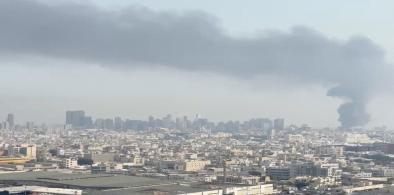
Gulf War Strains Bangladesh's Economic Fragility, Test for New Government

The current war has exposed Bangladesh’s structural vulnerabilities: dependence on imported energy, fragile reserves, and narrow fiscal space. For the new government, the stakes are clear—stabilize fuel and food supplies now while building resilience through diversified energy, broader exports, and stronger social protection. Wars in the Gulf may be fought thousands of miles away, but their economic shockwaves reach Bangladesh within days. In the end, the crisis will be felt in three simple pressures shaping everyday life: oil prices, food costs, and migrant jobs.

Re-imagining Pakistan’s Human Capital Crisis: It Must Dismantle Policy Structures That Serve Elite Interests

This crisis did not emerge overnight. It is a product of neglecting the foundational capacity to invest in human capital, where Pakistan hardly puts less than 2% of its national GDP on human capital factors. Meanwhile, the regional peers like Bangladesh and India invest more in education and health, and Pakistan is still trapped in a cycle of short-term fiscal thinking, political instability, and elite capture that is systematically hollowing out the nation’s potential to rise and grow.

The Delhi Tightrope: Can India Lead BRICS without Triggering a Trumpian Trade War?

In 2026, the “strategic autonomy” that we so often discuss must evolve from a defensive crouch to a balanced offensive infrastructure play. India’s success will be measured by its ability to convince the Trump administration that a stable, digitally-sovereign BRICS is actually a better trade partner than a chaotic, bankrupt one.

More on Spotlight

With the world in turmoil can India seize the historic moment?

India has a pool of talented diplomats but their skills will be expended on putting lipstick on a pig if the government at home promotes narrow, sectarian ideologies that are at variance with accepted international norms, writes  E. D. Mathew for South Asia Monitor

Modi @ 6: Popular and committed but is there a need to review statecraft?

Modi may not be getting the kind of feedback and reality check that is vital for effective and empathetic governance and this is where, apart from Chanakya, the Canute principle acquires relevance, writes C Uday Bhaskar for South Asia Monitor

Relocation of global supply chain: Bangladesh should seize the opportunity

From the South Asian Association for Regional Cooperation (SAARC) countries, India is emerging as one of the top alternative manufacturing destinations, writes Dr. Mohammad Rezaul Karim for South Asia Monitor

China understands and respects only the language of power

China is sure that India would initiate back-room talks and negotiate some face-saving device to disengage. But, there lies the danger, writes Brigadier Deepak Sethi (retd) for South Asia Monitor

International community should recognize Pakistan as a responsible nuclear state

Pakistan has used its Centres of Excellence to promote and share best practices in nuclear security through three affiliated institutes: the Pakistan Centre of Excellence for Nuclear Security (PCENS), the National Institute of Safety and Security (NISAS), and the Pakistan Institute of Engineering and Applied Sciences (PIEAS), writes Rabia Javed for South Asia Monitor

Pakistan's 'diminishing democracy': Where dissent is a crime

Thirty prominent human rights advocates and peace activists, who disagree with a lot that is happening in Pakistan. Either living at home, but most of them exiled abroad, participated in the conference titled Enforced Disappearances, State-sanctioned killings, & Diminishing Democracy in Pakistan, writes Mahendra Ved for South Asia Monitor 

Has Rahul Gandhi stolen a march on the BJP?

The BJP found itself on the back foot was when Congress leader Rahul Gandhi was pictured sitting on a pavement, talking to a group of migrants. It was a Haroun al-Rashid moment of a privileged person closely interacting with the unwashed masses, writes Amulya Ganguli for South Asia Monitor

Maldives will seek a balance in its foreign policy

With the support of the United Arab Emirates, the Maldives not only prevented Pakistan from targeting India as Islamophobic during the OIC meeting, but also defended India’s record as a democratic, multicultural society, writes Shubha Singh for South Asia Monitor

India should push for relocating WHO headquarters to New Delhi

This is a time when India should fashion itself as a new global health hub and provide global leadership in health. Pushing a new agenda for the WHO’s relocation from Geneva to India would make immense sense, writes Ram Krishna Sinha for South Asia Monitor

South Asia’s rubber farmers hit hard by COVID-19

From Bangladesh to India and to Sri Lanka, the natural rubbers producers are getting squeezed under lockdowns and social distancing. It is sounding the death knell of the region’s rubber economy,  writes K S Nayar for South Asia Monitor

Future challenge of banks: Bringing digital banking to the last man standing

Banks are generally very traditional in nature even though all the banks and financial institutions are going digital. Traditional nature change is again a challenge. The lockdown has come as a blessing in disguise as the changeover to digital systems can now pick pace, as it  becomes the need of the day, writes Ashim Kumar Goswami for South Asia Monitor 

Have Nepal's communists made it China’s proxy?

Indian policy towards Nepal has been lackadaisical. Belief of mutual Hindu traditions should be viewed in the context of power in Nepal lying with the communists for whom religion is anathema, writes Lt Gen P. C. Katoch (retd) for South Asia Monitor

Lessons from Cyclone Amphan: Need to rethink development strategy

The question that arises uppermost is that are we learning the right lessons from these recurring weather episodes or just concentrating  on immediate short-term disaster relief without taking any steps to make the regions ecologically sustainable and disaster resistant, writes Partha Pratim Mitra for South Asia Monitor

Will the sun shine again on Maldives tourism?

The coronavirus outbreak has hit the Maldivian economy hard, as travel restrictions and other preventive measures affected the country’s lucrative tourism industry, which contributes to the bulk of the island nation’s state revenue and foreign reserves, writes Kavita Bajeli-Datt for South Asia Monitor

A global partnership is needed to combat COVID-19

On April 23, 2020, in a virtual conference ‘Enhancing regional cooperation in South Asia to combat COVID-19 related impact on its economics’ organized by the World Economic Forum, Bangladesh PM Sheikh Hasina placed five-point proposals to combat this global crisis with collective responsibility and partnership from every society, writes Dr. Mohammad Tarikul Islam for South Asia Monitor