Bangladesh is strategically important to China for dominating the Bay of Bengal in conjunction with Myanmar, writes Lt Gen P. C. Katoch (Retd) for South Asia Monitor


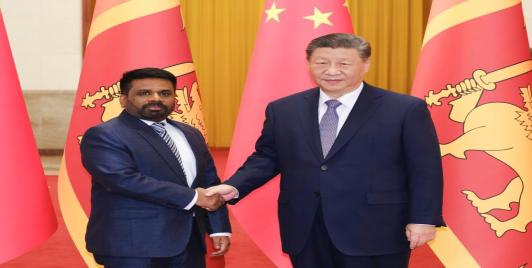
China’s growing influence on small countries thus extends far beyond trade and infrastructure. It shapes debates on governance, challenges democratic norms, and pressures sovereign states to align with Beijing’s priorities. For nations like Sri Lanka and Nepal, the dilemma is stark

Here is something that is perhaps not widely reported. According to this account, Iranian forces were able to destroy a significant part of the logistics infrastructure supporting these large carrier operations. They struck the central logistics hub in Bahrain very early in the conflict.

Bangladesh's Prime Minister need not visit India simply to keep relations cordial, but when engagement can advance its interests, refusing engagement becomes a cost of its own. The objective should be to preserve leverage through engagement, not to mistake rigidity for leverage.

However, the political situation has gradually begun to show currents that may move against Munir. The Supreme Court of Pakistan’s order to shift former Pakistan Prime Minister Imran Khan, Munir’s arch-rival, to a private hospital and the statement by the US Ambassador to India, Sergio Gor affirming that J&K is "an important part of India", reinforces the impression of classic temporariness and limited strategic relevance of Pakistan in US-Pak relations.
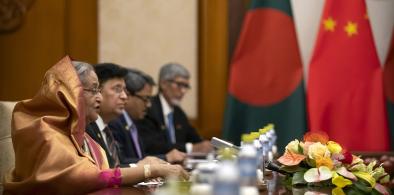
Bangladesh is strategically important to China for dominating the Bay of Bengal in conjunction with Myanmar, writes Lt Gen P. C. Katoch (Retd) for South Asia Monitor
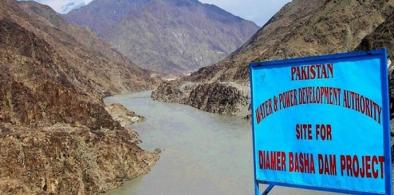
The Pakistan government claims that the Diamer-Bhasha dam project will generate 4,500 megawatts of electricity which will be much cheaper in cost. But the reality is that the world has much better, environmental-friendly, cheaper, and sustainable solutions to generate electricity, writes Muhammad Abbas Khaskheli for South Asia Monitor

Despite the US raising the ante with China over South China Sea and prioritizing freedom of the oceans, New Delhi remains wary of entering into a formal alliance with Washington, writes C Uday Bhaskar for South Asia Monitor

Ershad may have gone, but his shadow can still be seen in the political theatre of Bangladesh, writes Aashish Kiphayet for South Asia Monitor

It is to Rao's credit that within a short period of time he not only arrested the decline of his party but was able to unite the country on the most productive political platforms since the freedom movement - the pursuit of prosperity, writes Tarun Basu for South Asia Monitor

The southwest monsoon’s impact is felt throughout South Asia. Above-normal rainfall is likely over Pakistan, the Maldives, and Sri Lanka, while it could be less than normal in Bangladesh, writes N Chandra Mohan for South Asia Monitor
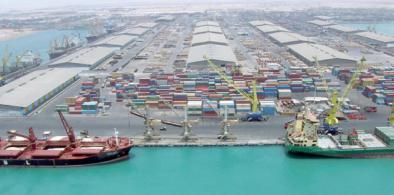
The Chabahar connectivity project envisages uninterrupted access and movement of goods and services via the sea route and road-rail facilities, making it cost-effective, convenient, and feasible for all parties and boosting the regional economy, writes Vishakh Krishnan Valiathan for South Asia Monitor

From lockdown, we learned that there is a big opportunity for cities to support non-motorised transport to achieve sustainable cities and a non-polluting environment, writes George Cheriyan & Amar Deep Singh for South Asia Monitor
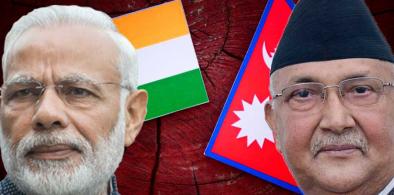
As India prepares for anti-Indianism 2.0 it will eventually have to also address the deeper Nepalese yearning for a sense of equality and mutual respect, writes Amb K V Rajan (retd) for South Asia Monitor

Two major national political parties that took turns in ruling the country for seven decades are about bite the dust, perhaps ending a healthy democratic system in which these two parties ensured a stable government and a strong opposition in parliament most of the times, writes Sugeeswara Senadhira for South Asia Monitor
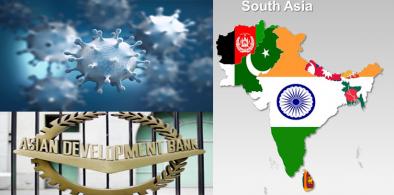
In terms of a more vulnerable population which is less well paid, Afghanistan, India, Bangladesh and Nepal are more vulnerable as compared to the rest of the countries of the region, writes Partha Pratim Mitra for South Asia Monitor

The signing of the India-EURATOM Agreement on research and development cooperation in the peaceful uses of nuclear energy will cover all aspects of research and technological development, writes Amb Bhaswati Mukherjee (retd) for South Asia Monitor

There is little doubt, therefore, that the opportunism of Indian politicians is a reason for the BJP’s success, writes Amulya Ganguli for South Asia Monitor

China will use its increased presence and influence in Iran and Afghanistan to target Indian interests, writes Lt Gen P. C. Katoch (retd) for South Asia Monitor
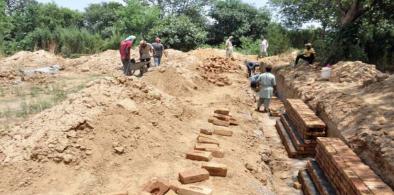
The government’s move on the temple, some media commentators suggest, is to show Pakistan in a better light in comparison with India, which is seen as being driven by Hindutva forces that are against India's religious minorities, writes Mahendra Ved for South Asia Monitor