Representational Photo

Bangladesh Drifting Into A Nexus Of Military Dependency And Proxy Competition? Ominous Consequences For India, South Asia

Taken together, these developments should ring alarm bells. The convergence of foreign military-industrial interests, Islamist political forces, and great-power rivalry risks turning Bangladesh into an epicenter of proxy competition and ideological confrontation. For a nation that has paid dearly for its independence and pluralistic identity, the cost of such entanglements may prove far higher than the short-term gains promised by arms deals and infrastructure projects.

Between Treaty And Truth: Sri Lanka's Conflict-Related Sexual Violence And Limits Of International Law

Sri Lanka's case highlights the central weakness of the ICC’s complementarity principle. The Rome Statute grants jurisdiction only where states are unwilling or unable genuinely to carry out the investigation or prosecution. Sri Lanka maintains functioning judicial institutions, conducts some prosecutions, and has established reparations frameworks, thereby technically satisfying the ability threshold while systematically failing to deliver accountability for conflict-related crimes.

Davos: Noise, Narratives, And The Reality Beneath

If Davos had a clear centre of gravity this year, it was technology—not geopolitics. The tech industry arrived in force, underscored by high-profile appearances from Elon Musk and Nvidia CEO Jensen Huang. The message was unmistakable: this is where attention, ambition, and capital are converging. With extraordinary sums being poured into artificial intelligence, unease among lenders and investors is understandable. Yet many executives were keen to reassure markets that fears of an AI bubble were overstated.

Abandoned U.S. Weapons Empowering Terrorists, Undermining Pakistan’s And Regional Security

Strategically, these developments underscore the importance of regional counterterrorism cooperation and rigorous monitoring of cross-border arms flows. The proliferation of foreign-supplied weapons into Pakistan not only strengthens terrorist organizations but also threatens regional stability. Each attack executed with U.S.-origin rifles or advanced tactical gear reinforces the need for Pakistan’s zero-tolerance policy against militancy while exposing the organized external support networks that continue to embolden groups like the TTP.

More on Spotlight

Rivers as network: Towards a pluriverse South Asia

The Indus, the Brahmaputra, and the Ganges, as well as the Kabul river basin, which is interconnected to South Asian nations, are perennial rivers that have shaped and influenced South Asia's history, politics, culture, economy, and civilizations for many millennia on a shared basis.

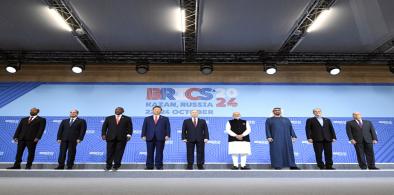
Will BRICS create a new balance in the global order?

If BRICS can truly identify issues of larger common interest and move forward on the basis of consensus, it can become the new leader of the post-Western world order where the NDB will be the primary competitor of the World Bank and IMF.

Why despite few returns India remains invested in Afghanistan

A few months back the members of the Taliban regime in Kabul attended a four-day ‘India immersion’ online course offered by the Ministry of External Affairs through IIM Kozhikode.  The course was part of the capacity-building assistance through the ITEC (Indian Technical and Economic Cooperation) programme to developing countries, including Afghanistan.

Can a Modi-Xi meeting at Johannesburg break the border standoff?

The Major General-level talks (initially described as confidence building) apparently aim for a conducive atmosphere when Modi comes face to face with Xi at Johannesburg for the BRICS summit August 22-24.

Will Bangladesh benefit by joining the RCEP? The pros outweigh the cons

If Bangladesh applies to join this year, it can be a member of RCEP from 2025 onward. Apart from Bangladesh, Nepal, and Sri Lanka are also reportedly eager to join the China-led trade bloc.

Hydropolitics of the Helmand River: Iran-Afghanistan water-sharing dispute could imperil regional security and ecology

The Helmand River water issue has the capacity to escalate into a protracted and intense conflict, drawing both countries into a state of violence.

Pakistan: Military rule by proxy continues and will continue

It is apparent the Pakistani military is the sole decision-maker for Pakistan and the arbiter of its destiny. The probability of a prolonged interim government under caretaker PM Kakar is a strong possibility during which time the Pakistani military will call the shots through its puppet figure. 

South Asia's overcrowded prisons: Lock-up culture needs to give way to reformation and empathy

Some South Asian countries have taken welcome steps toward the release of undertrial prisoners, including India, Pakistan, Nepal, Bhutan, and Bangladesh. These measures need to be implemented and applied consistently. Biraj Patnaik, Amnesty International's South Asia Director,  says, “South Asia’s prisons are a blight on the region’s conscience...

Another round of India-China military talks : Obfuscating ground realities?

The latest round of military-to-military talks was orchestrated to time with Prime Minister Narendra Modi attending the BRICS Summit in South Africa on August 22-24 and the G20 Summit in New Delhi on September 9-10, which Chinese President Xi Jinping is slated to attend.

Crisis-ridden Pakistan battles an Afghan dilemma

The ISKP’s current objective is to prevent the Taliban from accomplishing its objective as a government in Kabul and prevent it from fulfilling its promises to the Afghan people. In order to achieve this, ISIS/ISKP will continue to target not just Taliban fighters but also nations that may have alliances with the Taliban government, such as China, Russia, and Pakistan.

How the China factor influenced US-India ties in the last 76 years

As the US tries to break the stranglehold of China on its supply chains, especially in hi-tech, India is emerging as a venue for what is now called 'friendshoring' – developing manufacturing in friendly countries that can be reliable partners. From being a recipient of food aid from the US seven decades ago, India has emerged as a partner in defence, space, health and technology.

Bangladesh's shelter project for the homeless is a model of socioeconomic transformation

The project, like several other initiatives of Bangladesh PM Hasina, has caught the attention of the world's policymakers as the largest such rehabilitation project in the world.

The continuing tragedy of Manipur: Time for stern decisions to safeguard national security

With over 4000 weapons in unauthorized hands, the Manipur tinderbox can explode anytime. Firing at each other between the Meities and Kukis using an assortment of small weaponry is going on intermittently with the Manipur Police and security forces unable to effectively control the violence.

Climate crisis and women's vulnerabilities: Boosting climate resilience in India remains a challenge

Even if the role of women is overlooked or unacknowledged, they should continue to break barriers by fighting the challenges. Only then all gender-blind and biased, often spurious claims of men that they have greater roles and responsibilities in combating ill effects of the climate crisis will be replaced by women who are fighters of climate action, incandescent in their love, ardor and purpose to be changemakers.

Bastille Day marked the high point of burgeoning India-France strategic ties

It was after India’s second nuclear test in May 1998 that the India-France relationship warmed up. One major catalyst for this was that at a time when many nations were judgemental about India’s test, France’s stand was that it was India’s prerogative to conduct such a test based on the threats it faced.