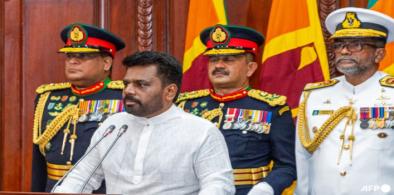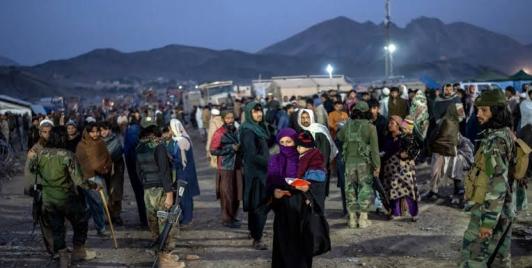
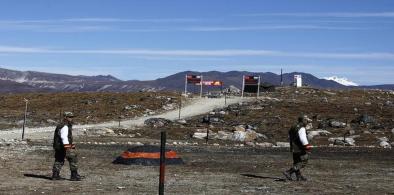
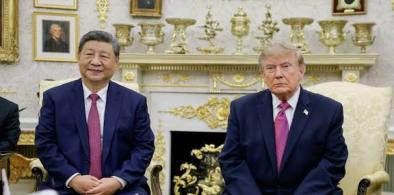
The global political and economic order is beginning to aggressively impact our region. It may effectively alter the balance of power and cordiality, especially within the South Asian neighborhood.
At the iftar gathering, attended by civil society members, ministers, bureaucrats and other distinguished guests, High Commissioner Verma emphasised the shared aspirations of Bangladesh and India. He stated that both nations stand at the threshold of a promising future as two vibrant and forward-looking societies. The event served as a platform to strengthen people-to-people connections and diplomatic goodwill between the two neighbours. By bringing together influential members of Bangladeshi society, the gathering reflected a clear intention to foster deeper engagement
The system under the Taliban regime treats girls as disposable items. They take away childhood experiences and destroy personal identities, creating permanent emotional scars. Yet these girls are not victims without agency. They are survivors carrying entire families on their small shoulders. Omid, Parvana, and every unnamed bacha posh are proof of Afghan, and Pashtun, resilience. The world must see them. The Taliban must hear us that no amount of disguises will hide the truth that women and girls are not lesser.
Khamenei’s assassination terminates an epoch of ideological confrontation, yet inaugurates profound uncertainty. Legally and normatively, it imperils protections for sovereign leaders; strategically and politically, it probes Iran’s institutional fortitude; religiously and narratively, it unveils unifying and divisive societal forces. Diplomatic containment—through intermediaries such as Oman or Qatar—must prioritise the transition's fragility without incitement. Absent such prudence, this strike risks catalysing a wider regional conflagration, where initial tactical triumphs yield enduring strategic costs.
The revival of SAARC will not come from dramatic diplomatic breakthroughs. Instead, it will emerge through incremental cooperation in education, digital infrastructure, disaster response and trade facilitation. Crucially, the future of South Asian regionalism may depend on a generation that increasingly experiences the region not through borders but through shared digital, economic and cultural networks.
The global political and economic order is beginning to aggressively impact our region. It may effectively alter the balance of power and cordiality, especially within the South Asian neighborhood.
Given its strategic location blended with the old maritime silk route legacy, China places Sri Lanka in the pole position of its maritime strategy.
The EU recognises that emerging countries such as Bangladesh have a great need for cash for infrastructure development and it will be hard to turn these states away from Chinese influence unless they are provided with financial tools to meet that demand.
It is indeed intriguing to question how Nepal and India, despite similar cultural realities, have displayed contrasting interpretations.
The world may have witnessed a cricket match, but for Afghans, it was a moment of glory, pride, and unity. Afghanistan once again proves that it is more than just a country; it is a resilient and hopeful nation on the rise.
Against the backdrop of the very intimate Qatar-US relations and the US-led West supporting Israel, the charge against Indian naval veterans of spying for Israel is absurd.
In conclusion, it may be said that while South Asia, Central and West Asia and Pacific Asia showed improvement in sustainability indicators for environment and energy in 2020, they did not do so well in social and governance indicators.
The COVID-19 crisis has showcased global cooperation and a shared sense of humanity. Nations collaboratively navigated the pandemic, emphasizing a collective response and coexistence during challenging times
The imposition of draconian laws in Bangladesh and the government’s strenuous efforts to defend itself against the smear campaign and attacks against journalists and media persons reflect a familiar picture across South Asian nations like India and Sri Lanka where electronic surveillance and stifling dissent have become all too common
As Durga Puja approaches and the country's Hindu communities prepare themselves to embrace their beloved goddess, the leaders of the Bangladesh Hindu, Buddhist, and Christian Unity Council, a religious minority organisation, are concerned about a possible outbreak of communal strife in the nation.
For India, IMEC is a strategic move to lessen dependency on its traditional trading partners while opening up a horizon of opportunities in markets ranging from technology to energy. Also, India is poised to countervail growing Chinese influence in South Asia if successful implementation of IMEC becomes possible.
Nepal’s participation in bilateral infrastructure projects with China exemplifies its aspiration for mutual economic growth. Yet its decision to distance itself from the GSI indicates its commitment to remain neutral, given its deep-rooted ties with India.
The talent pool that exists in the BIMSTEC - in countries like Bangladesh, Sri Lanka, and Thailand - can be channelized across areas of data analytics, underwater domain (acoustic signal processing) and for field deployment. Indian talent is known globally for its data analytics skills, and coupled with the underwater domain expertise, can work on the MSP-based digital transformation for the region.
The successful operation of the Rooppur plant will underscore the commitment of Bangladesh to responsible and secure nuclear energy utilization
History has shown that whenever Pakistan sought peaceful relations with India, India responded positively. This held true during democratic governments and even during dictatorships in Pakistan.