The younger generation of both countries is keen to forge stronger ties between these two Muslim-majority countries in the region, writes Mehjabin Bhanu for South Asia Monitor


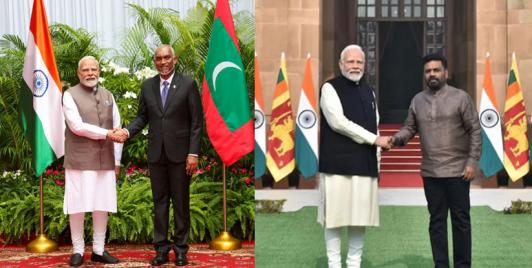
Under conditions of what is increasingly described as the "Great Fragmentation," Sri Lanka's geographic proximity to India should be viewed as a strategic advantage rather than a liability. Properly managed, this strategic reality could help transform Sri Lanka into a prosperous and stable nation.

The September 27 firing is therefore best seen as the beginning of a new phase in Pakistan’s naval modernization. The larger strategic question is still open. Whether Hangor changes the regional maritime balance will depend on what comes next
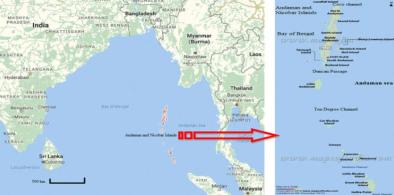
The Great Nicobar Island Development Project (GNIDP) is a mammoth venture by India to strategically strengthen its presence in the Andaman Sea and Southeast Asia with its own transshipment hub. The mega-infrastructure project spans approximately166.10 sq km covering about 15% of the total landmass of Great Nicobar Island at the southernmost tip of the Andaman and Nicobar archipelago.

An Emirati airline, an Indian captain, Israeli passengers, and Saudi authorities all played a part. India, re-elected to the ICAO Council last year, is well placed to push these standards into global aviation rules. The best tribute to Captain Machchhar is making sure the next crew never needs a hero.
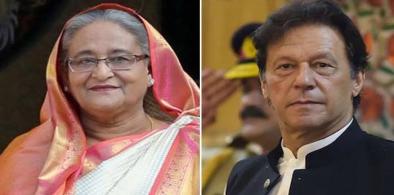
The younger generation of both countries is keen to forge stronger ties between these two Muslim-majority countries in the region, writes Mehjabin Bhanu for South Asia Monitor
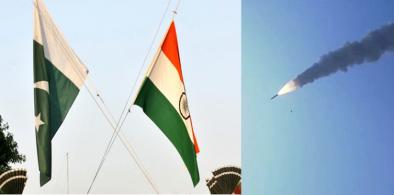
Fortunately, Pakistan never went ballistic and their reaction has averted what could have potentially led to a disastrous escalation, writes Maj Gen Jagatbir Singh (retd) for South Asia Monitor

Afghanistan owes a measure of its progress to the India cricket board and its generosity in providing to the embattled Afghan cricketers the use of ‘home’ grounds in India, writes Qaiser Mohammed Ali for South Asia Monitor
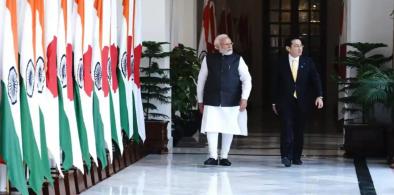
The Japan Bank for International Cooperation listed India as the most attractive investment destination, yet Prime Minister Fumio Kishida’s visit to Delhi failed to generate that investment buzz, writes S. Majumder for South Asia Monitor
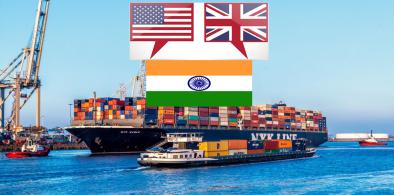
With its strategic position in the Indian Ocean, India has a vital role in America’s Indo-Pacific Strategy, writes Lt Gen P. C. Katoch (retd.) for South Asia Monitor
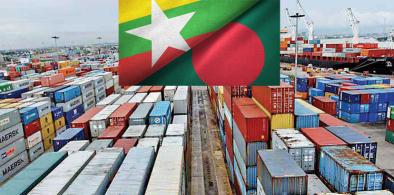
Enhanced ties between Bangladesh and Myanmar can contribute to the growth of trade and investment relations with ASEAN and BIMSTEC countries, writes Jubeda Chowdhury for South Asia Monitor

The international community needs to appreciate that against all odds and the trauma of partition, India’s culture is composite and represents her civilizational heritage, writes Amb Bhaswati Mukherjee (retd) for South Asia Monitor

After Basil Rajapaksa's current visit, Modi is likely to fly from New Delhi to Jaffna to mark the reopening of Palaly Airport for commercial operations, writes Sugeeswara Senadhira for South Asia Monitor

One of the major lessons of the assembly election results is that a fragmented opposition cannot take on the mighty electoral might of BJP-RSS, writes Dr Ram Puniyani for South Asia Monitor

Because of Dhaka’s economic success, Saudi Arabia now perceives Bangladesh as a lucrative investment destination, writes Hussain Shazzad for South Asia Monitor

It is a no-brainer that Arvind Kejriwal’s victory speech was sharply focused on issues of governance, writes Jagdish Rattanani for South Asia Monitor
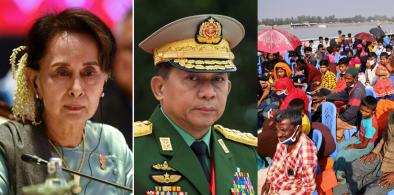
Tatmadaw, the Myanmarese junta, must be pressured to allow the Rohingya in Bangladesh to return to their homes with full dignity and civil rights, writes Kyaw Min for South Asia Monitor

The mystical traditions of South Asia transcend apparently rigid religious boundaries, write Priyanka Singh and Beena Sarwar for South Asia Monitor
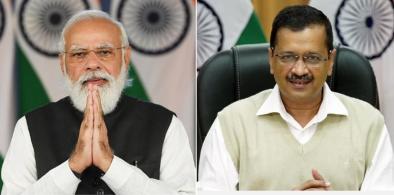
In the wake of the result in Uttar Pradesh, it is clear that 2024 is for Modi to lose since there does not appear to be any comparable singular figure who can defeat him, writes Mayank Chhaya for South Asia Monitor
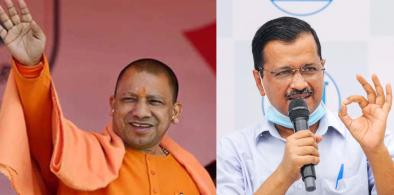
It is now almost a certainty that the AAP will replace the Congress as the BJP’s main challenger in Gujarat later this year, marking its emergence as a major alternative to the BJP at the national level, writes Amulya Ganguli for South Asia Monitor