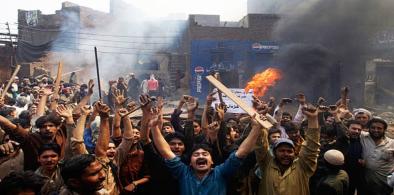

In the face of jihadi threats against it, it remains to be seen how China responds; or will it continue to fund and support nations like Pakistan that are the terror factories of many jihadist designs? writes Aparna Rawal for South Asia Monitor
The Pannun case in the US, the preceding Nijjar row in Canada, the unyielding diplomatic stances of their respective governments, and the coordinated, adversarial statements issued by the Five Eyes alliance, collectively triggered a quiet but intense counter-intelligence pivot by New Delhi.
One of the most durable strengths of India-US relations lies outside the government. The five million strong Indian diaspora has become an extraordinary bridge between the two societies. Indian Americans occupy influential positions in technology, academia, medicine, business and public administration. This human connectivity provides resilience that many bilateral relationships lack.
India and Australia are not building a grand alliance; they are building useful capacity. Indonesia, through its archipelagic geography, fits into that larger maritime dynamic. Taken together, these developments show how strategy is increasingly made through nodes, not narratives.
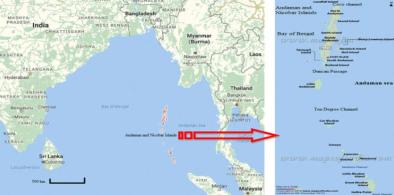
While China's leverage over India runs through an upstream river Beijing controls, India's leverage over China runs through a chokepoint India will now sit astride. The Strait of Malacca is a 930-km passage between the Malay Peninsula and Sumatra through which an approximate of 40–50 percent of global trade and 80 percent of China's crude oil imports transit.
In the face of jihadi threats against it, it remains to be seen how China responds; or will it continue to fund and support nations like Pakistan that are the terror factories of many jihadist designs? writes Aparna Rawal for South Asia Monitor
It is open to speculation what and how much India can do for the minority Tamils vis-à-vis Colombo, which is slowly again extending a hand of friendship to New Delhi after trying to prop up China as a counter, writes M R Narayan Swamy for South Asia Monitor
Beijing will try its level best to lure Maldives more into its debt trap and wean it away from India, writes Lt Gen P. C. Katoch (retd) for South Asia Monitor
Scarcely a day passes without news of a big-ticket acquisition or investment by Reliance or Adani biting into every lucrative business venture in India and South Asia, writes N. Chandra Mohan for South Asia Monitor
Chances are that the churn in Afghanistan may end up singeing those who take an intrusive interest in its affairs, writes Amb Rajiv Dogra (retd) for South Asia Monitor
The values that are glorified today ironically are those that were always held anathema by classical Hindu society - majoritarianism, intolerance, hatred, and revanchism, writes Tarun Basu for South Asia Monitor
Amid shortages of even essential goods and runaway inflation, Sri Lankan President Gotabaya Rajapaksa’s image has taken a solid beating, writes P. Jayaram for South Asia Monitor
Bangladesh – which has in recent times extended loans to Sri Lanka and the Maldives – is also home to about 1.1 million forcibly displaced Rohingya refugees from Myanmar, writes Samina Akhter for South Asia Monitor
If Afghanistan does not witness a modicum of internal stability, adherence to human values and shuns terrorism of all hues, not only the region but beyond too will be impacted adversely, writes Lt Gen Kamal Davar (retd) for South Asia Monitor
Hasina's visit to the Maldives is in keeping with Bangladesh's larger aspirations, writes Ozair Islam for South Asia Monitor
Fairness, sustainability and dialogue must be cornerstones of any climate change policy, not a dialogue bogged down by Westernized notions, write Nishtha Gupta and Aditya Matolli for South Asia Monitor

Whether Bangladesh is involved in the Indo-Pacific Strategy or Belt and Road, it must maintain peace and rule of law to reap maximum economic benefits from the Bay of Bengal, writes Pathik Hasan for South Asia Monitor

The China-Iran partnership scenario is not a product of coincidental political and trade decisions over the years, but rather a part of a carefully crafted policy, writes Ivaylo Valchev for South Asia Monitor

Support to the Pakistan Taliban and Afghan Taliban is rebounding on Islamabad as both Talibans don’t recognize Durand Line and want Pakistan to be Sharia-ruled, writes Lt Gen P. C. Katoch (retd.) for South Asia Monitor

The Killer Squadron traces its genesis to the 1971 war when it took part in operations that enabled the Indian Navy to dominate the Arabian Sea, crippling the Pakistan Navy, writes Col Anil Bhat (retd) for South Asia Monitor