Bose was very clear that in independent India equal opportunities should be thrown open to all, irrespective of caste, creed or religion, writes Ram Puniyani for South Asia Monitor
The Pannun case in the US, the preceding Nijjar row in Canada, the unyielding diplomatic stances of their respective governments, and the coordinated, adversarial statements issued by the Five Eyes alliance, collectively triggered a quiet but intense counter-intelligence pivot by New Delhi.
One of the most durable strengths of India-US relations lies outside the government. The five million strong Indian diaspora has become an extraordinary bridge between the two societies. Indian Americans occupy influential positions in technology, academia, medicine, business and public administration. This human connectivity provides resilience that many bilateral relationships lack.
India and Australia are not building a grand alliance; they are building useful capacity. Indonesia, through its archipelagic geography, fits into that larger maritime dynamic. Taken together, these developments show how strategy is increasingly made through nodes, not narratives.
While China's leverage over India runs through an upstream river Beijing controls, India's leverage over China runs through a chokepoint India will now sit astride. The Strait of Malacca is a 930-km passage between the Malay Peninsula and Sumatra through which an approximate of 40–50 percent of global trade and 80 percent of China's crude oil imports transit.
Bose was very clear that in independent India equal opportunities should be thrown open to all, irrespective of caste, creed or religion, writes Ram Puniyani for South Asia Monitor
What is the future of civil aviation and Air India? The immediate outlook is that it will take beyond 2022-23 to return to any semblance of pre-pandemic normalcy, writes N. Chandra Mohan for South Asia Monitor
India with its huge numbers and relative political stability can play an influential role in the South Asian region, writes Nirupama Sekhri for South Asia Monitor
The pandemic is estimated to have caused 48-59 million people to become or remain poor in 2021 in South Asia, writes V.K. Varadarajan for South Asia Monitor
India should act quickly to reach an amicable solution to the Teesta dispute before Bangladesh embraces Chinese cooperation on the issue, writes Anup Sinha for South Asia Monitor
Even though Vietnam is reckoned as having an edge over India in the global supply chain, India’s demographic advantages override Vietnam, writes S. Majumder for South Asia Monitor
With a French Presidency, the strategic partnership between India and the EU could finally bloom to its full potential, writes Amb Bhaswati Mukherjee (retd.) for South Asia Monitor
During a visit to India in 2019, the Saudi Crown Prince announced that the kingdom would be investing $100 billion in diversified sectors in India, writes N. Chandra Mohan for South Asia Monitor
The NSP tosses a heads-I-win-tail-you-lose option for India; it announces its intent of seeking peace but leaves the onus on India, writes Mahendra Ved for South Asia Monitor
Using the Army to control insurgency in the Northeast has failed as a model, writes B.L. Vohra for South Asia Monitor
The US, Sri Lanka, India, the Maldives and others can work together with Bangladesh to deal with regional maritime problems, writes Jubeda Chowdhury for South Asia Monitor

The Integrated Guided Missile Development Programme that began in 1983 under the stewardship of Prime Minister Indira Gandhi is an island of Indian perseverance and quiet success, writes Cmde C. Uday Bhaskar (retd,) for South Asia Monitor

While the Pakistani media is now asking its government to follow the Bangladesh model, it remains a sore point that Bangladesh was an exploited colony of Pakistan, writes Pathik Hasan for South Asia Monitor

NGOs like South Asia Peace Action Network (SAPAN) and Aaghaz-e-Dosti deserves mention for relentlessly trying to end enmity and distrust between the two countries, writes Anondeeta Chakraborty for South Asia Monitor

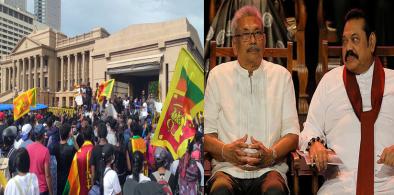
As Sri Lanka descends deeper into economic chaos, the popularity of the President and his government have declined to levels never seen before for any political regime reaching midterm, writes Indika Hettiarachchi for South Asia Monitor