

Water Security and Regional Peace: Future of the Indus Waters Treaty in a Changing Climate
The Indus Waters Treaty has lasted more than 60 years, illustrating diplomacy's ability to handle one of South Asia's most sensitive resources. However, climate change and geopolitical tensions have called into question its significance. To guarantee that the treaty continues to prevent war and promote shared prosperity, Indian and Pakistani governments must update its provisions, invest in joint institutions, and view water as a shared strategic asset rather than a source of friction.
 Apr 14, 2026
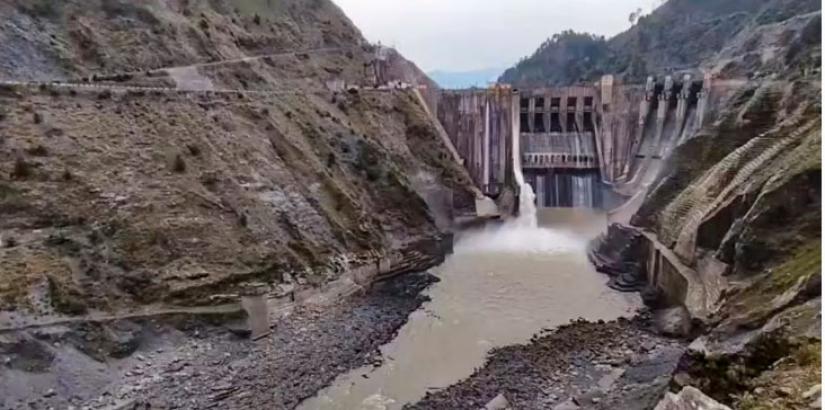
Water is often regarded as South Asia's lifeblood, and nowhere is this more evident than in the Indus River Basin, which supports millions of people in Pakistan and India. The Indus Waters Treaty (IWT), agreed with World Bank mediation, has long served as a foundation for cooperation and conflict resolution between the two nuclear-armed neighbors. For almost six decades, it has weathered numerous wars and political crises, and it is frequently touted as a rare example of successful bilateral water diplomacy.
However, the accord is currently under unprecedented pressure. Climate change is changing the hydrological patterns of the Indus Basin, and rising political tensions between India and Pakistan have increased the likelihood of water-related disputes. In this context, the IWT is more than just a technical agreement; it is a strategic tool for ensuring regional security, economic stability, and environmental sustainability.
Indus Waters Treaty: A Historical Overview
The IWT allocates waters from the Indus River system, splitting control between the two countries. According to the treaty, the three "eastern rivers" (Ravi, Beas, Sutlej) are assigned to India, while the three "western rivers" (Indus, Jhelum, Chenab) predominantly flow to Pakistan, with India allowed limited uses such as irrigation and hydroelectric projects.
Despite its clarity, the pact has encountered numerous obstacles. India's construction of hydroelectric dams on western rivers, Pakistan's fears over potential water diversion, and delays in dispute resolution systems have all caused tensions in bilateral relations. Nonetheless, the IWT's longevity is partly due to its extensive technical requirements and the presence of a neutral arbitrator, previously the World Bank.
Climate Change and Its Impact
According to recent studies, climate change is having a growing impact on the Indus River system. The Himalayan glaciers that feed the Indus are melting at an accelerated rate as temperatures rise, generating fluctuation in river flows and increasing the danger of floods and droughts. Seasonal monsoon patterns are becoming less predictable, and extreme weather events endanger agriculture-dependent people in India and Pakistan.
These changes pose existential concerns to Pakistan's food security and livelihoods, as the Indus accounts for more than 90% of its irrigated farmland. Reduced flows in dry years or abrupt surges in rainy years may intensify disputes over water allocation, especially if India builds its hydroelectric infrastructure. In this setting, the IWT faces pressure to adapt not only to legal interpretations, but also to environmental conditions that its original architects could not have predicted.
Water Diplomacy Amid Political Tensions
Water in South Asia is highly politicized. India and Pakistan have fought several wars and continue to be geopolitical rivals. The IWT has historically served as a barrier, preventing water disputes from turning into military battles. However, recent political developments, such as border conflicts and nationalist sentiments, have raised the possibility that water will become a flashpoint.
India's increasing capacity for upstream water storage, along with Pakistan's vulnerability downstream, has resulted in imbalances that feed political narratives of unfairness. Analysts suggest that if there is no dialogue, minor technical differences, such as dam safety checks or hydropower design changes, might grow into diplomatic disasters. The IWT, while legally binding, is heavily reliant on mutual trust, which has weakened in recent years.
Given the dual pressures of climate change and political tension, reforming water governance in the Indus Basin is both necessary and urgent. Several policy-oriented approaches could enhance the resilience of the IWT:
Incorporating Climate Adaptation Measures
The treaty should integrate flexible mechanisms for managing variable river flows, including early warning systems, joint flood management protocols, and adaptive allocation formulas during extreme droughts or floods.
Institutions responsible for monitoring and implementing the IWT must be modernized. Joint technical committees, independent monitoring, and transparent data sharing can reduce mistrust and provide objective evidence in disputes.
Involving neutral third-party actors or regional organizations could provide mediation during disputes and ensure that environmental and development goals are prioritized over purely political considerations.
Linking Water to Sustainable Development
Both countries could coordinate basin-wide initiatives on hydropower, irrigation efficiency, and climate-resilient agriculture, turning the Indus into a shared resource that supports economic growth rather than conflict.
Failing to adapt the IWT to current realities carries significant risks. Uncoordinated water management could lead to reduced agricultural productivity and food insecurity in Pakistan, increased cross-border tensions and potential militarization of water infrastructure and environmental degradation, including wetland loss and soil erosion. Water scarcity could also exacerbate internal political instability, particularly in Pakistan’s rural areas, where livelihoods are intimately tied to river flows. For India, unilateral water projects without cooperation risk international criticism and undermine regional stability.
Toward a Resilient Indus Waters Treaty
The Indus Waters Treaty has lasted more than 60 years, illustrating diplomacy's ability to handle one of South Asia's most sensitive resources. However, climate change and geopolitical tensions have called into question its significance. To guarantee that the treaty continues to prevent war and promote shared prosperity, Indian and Pakistani governments must update its provisions, invest in joint institutions, and view water as a shared strategic asset rather than a source of friction.
Finally, the future of the IWT will decide not only water security but also the overall direction of regional peace in South Asia. A proactive, cooperative, and climate-conscious approach can turn the Indus from a source of conflict to a pillar of sustainable diplomacy.
References
Bhave, A., & Mehta, V. (2019). Transboundary water governance in South Asia: Challenges and opportunities. Routledge.
Dinar, S., & Nigatu, T. (2018). Water diplomacy: A negotiation framework for shared water resources. World Bank Publications.
Gleick, P. H. (2014). Water, drought, climate change, and conflict in South Asia. Environmental Research Letters, 9(1), 014004.
Hassan, M., & Qureshi, A. (2020). The Indus Waters Treaty: Revisiting its relevance under climate change. Journal of South Asian Studies, 35(2), 145–162.
Kumar, M., & Singh, R. (2017). Climate change and river basin management in the Indus Basin. International Journal of Water Resources Development, 33(5), 757–774.
Rashid, A. (2021). India-Pakistan water politics and the future of the Indus Waters Treaty. Strategic Studies, 41(1), 89–108.
Salman, S. M. A., & Uprety, K. (2002). Conflict and cooperation on South Asia’s international rivers: A legal perspective. World Bank Publications.
Shah, T., & Singh, O. P. (2019). Adaptive water management in the Indus Basin under changing climate. Water Policy, 21(4), 653–672.
Wolf, A. T. (2007). Shared waters: Conflict and cooperation. Annual Review of Environment and Resources, 32, 241–269.
Yaseen, M., & Ali, F. (2022). Water security, diplomacy, and regional stability in South Asia. Asian Journal of Political Science, 30(3), 211–230
(The author is a policy analyst based in Islamabad, Pakistan. Views expressed are personal. He can be reached at masoodtariqqq@gmail.com. )







Post a Comment