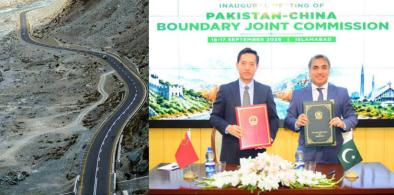

The South Asian region is home to an estimated 1.7 billion people, representing around 25 percent of the world’s population and also accounts for 25 percent of the world’s road crash fatalities.
Sri Lanka’s political debate has long revolved around spy narratives, often casting suspicion on India and the United States. Yet, this fixation risks obscuring a more pressing reality. CrowdStrike’s 2025 Global Threat Report identifies Chinese espionage agencies as the most active worldwide, surpassing even the CIA. In 2024, China’s cyber operations expanded by 150 percent, while attacks on financial services, media, manufacturing, and industrial sectors surged by 200 to 300 percent compared to the previous year.
As Imran Khan enters his seventies behind bars, the stakes extend far beyond his individual fate. Should his detention continue—or worse, should harm befall him in custody—the consequences could be explosive. Public anger, already simmering, may erupt into widespread unrest, challenging the state’s ability to maintain control.
Bangladesh has survived partition, the liberation war, famine, floods, military coups, and democratic collapse. It has always returned. But returning is not the same as resolving. Fifty-six years after independence, the founding paradox remains: a nation whose birth is still debated cannot fully inhabit its future. The gun salutes will be loud and unambiguous. The questions they echo, however, about what Bangladesh is, who founded it, and whose vision should guide it, remain, as they have always been
For India, this raises complex challenges. Historically, India has positioned itself as a strong advocate of anti-colonialism and sovereignty. However, in the current context, its responses have often appeared measured and cautious, despite the direct implications for its interests—ranging from energy security and regional stability to strategic initiatives such as connectivity through Iran.
The South Asian region is home to an estimated 1.7 billion people, representing around 25 percent of the world’s population and also accounts for 25 percent of the world’s road crash fatalities.
India is one country, but its 28 states are as diverse as the 27 nations of the European Union in language, culture, cuisine and economic development. The 27 nations together put out almost as much emissions as India at 3.1 million kilotonnes with only a population of 448 million, a third of India’s, for a per capita output of 5.5 tonnes.
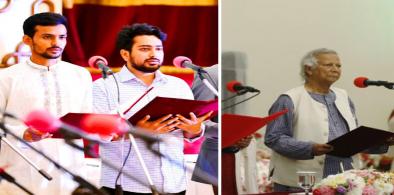
India's position on the upcoming election is consistent with its friendly and good-neighborly relations with Bangladesh, its national interests, and international legal principles. Elections are an internal affair of Bangladesh, and only the Bangladeshi people have the right to decide their future.
The power plants, cement and fertiliser units, and chemical industries have to be encouraged to utilize the paddy straw for the production of manure, briquettes and ethanol. These units could be provided the responsibility and authority of cutting the paddy straw from the fields after paying a nominal fee to the farmers. The arrangement could be a win-win situation for the paddy growers as well as user industries
It is imperative that Infrastructural requirements like roads, bridges, tunnels, power plants and other industries should be weighed against their ecological impact by experts and their cost-benefit analysis undertaken before final decisions are taken. The damage done by man to nature can sometimes be irreversible and irredeemable.
This despite full knowledge that the BNP and its permanent ally Jamaat e Islami are aligned with China and Pakistan. During the earlier BNP regimes in Bangladesh, major state-supported anti-India terrorist camps were running in that country, mainly in the Chittagong Hill Tracts, which also had instructors from Al Qaeda and Pakistan’s army-ISI.
Any facet of the economy one might imagine has the army's hand over it as evidenced in 2016 when the Pakistan Senate reckoned that the army operated more or less 50 commercial entities. Between 2011 and 2015 the Fauji Foundation, which perhaps serves as a facade for the Pakistani military’s commercial wing, grew its assets by 78 per cent.
Setting aside all the hullabaloo about the much-debated National Educational Policy 2020, the latter has hardly anything to offer on improving the sexual and reproductive health of women in India. This was unexpected since NEP 2020 aimed at holistic education.
The global political and economic order is beginning to aggressively impact our region. It may effectively alter the balance of power and cordiality, especially within the South Asian neighborhood.
Given its strategic location blended with the old maritime silk route legacy, China places Sri Lanka in the pole position of its maritime strategy.
The EU recognises that emerging countries such as Bangladesh have a great need for cash for infrastructure development and it will be hard to turn these states away from Chinese influence unless they are provided with financial tools to meet that demand.
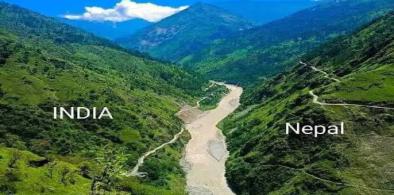
It is indeed intriguing to question how Nepal and India, despite similar cultural realities, have displayed contrasting interpretations.
The world may have witnessed a cricket match, but for Afghans, it was a moment of glory, pride, and unity. Afghanistan once again proves that it is more than just a country; it is a resilient and hopeful nation on the rise.
Against the backdrop of the very intimate Qatar-US relations and the US-led West supporting Israel, the charge against Indian naval veterans of spying for Israel is absurd.
In conclusion, it may be said that while South Asia, Central and West Asia and Pacific Asia showed improvement in sustainability indicators for environment and energy in 2020, they did not do so well in social and governance indicators.