
The adverse influence of uncontrolled social media in the relations between India and Maldives is a case in point. Social media poses an existential threat to the conventional methods of conducting governance, diplomacy, and warfare.
Sri Lanka’s political debate has long revolved around spy narratives, often casting suspicion on India and the United States. Yet, this fixation risks obscuring a more pressing reality. CrowdStrike’s 2025 Global Threat Report identifies Chinese espionage agencies as the most active worldwide, surpassing even the CIA. In 2024, China’s cyber operations expanded by 150 percent, while attacks on financial services, media, manufacturing, and industrial sectors surged by 200 to 300 percent compared to the previous year.
As Imran Khan enters his seventies behind bars, the stakes extend far beyond his individual fate. Should his detention continue—or worse, should harm befall him in custody—the consequences could be explosive. Public anger, already simmering, may erupt into widespread unrest, challenging the state’s ability to maintain control.
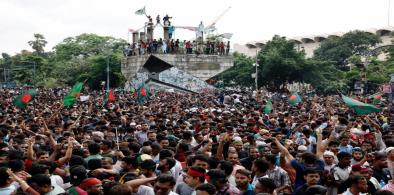
Bangladesh has survived partition, the liberation war, famine, floods, military coups, and democratic collapse. It has always returned. But returning is not the same as resolving. Fifty-six years after independence, the founding paradox remains: a nation whose birth is still debated cannot fully inhabit its future. The gun salutes will be loud and unambiguous. The questions they echo, however, about what Bangladesh is, who founded it, and whose vision should guide it, remain, as they have always been
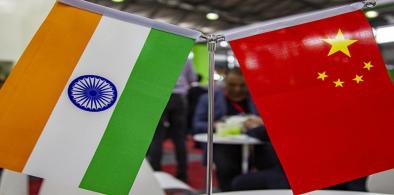
For India, this raises complex challenges. Historically, India has positioned itself as a strong advocate of anti-colonialism and sovereignty. However, in the current context, its responses have often appeared measured and cautious, despite the direct implications for its interests—ranging from energy security and regional stability to strategic initiatives such as connectivity through Iran.
The adverse influence of uncontrolled social media in the relations between India and Maldives is a case in point. Social media poses an existential threat to the conventional methods of conducting governance, diplomacy, and warfare.
Al-Qaeda's strategic plan involves aiding "persecuted" Kashmiri Muslims once their objectives in Pakistan are achieved. Shifting the jihadist threat toward Kashmir will also align with the ambitions of the Pakistani military.
In India's close-knit communities, mental health struggles often face a deafening silence. According to a study by Deloitte, over 70 per cent of Indians use derogatory terms for mental disorders and nearly 40 per cent voice fear of a neighbour seeking help for mental health issues.
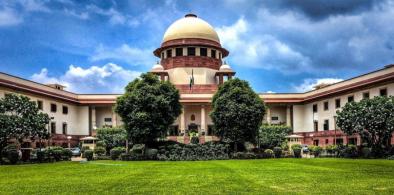
The recent passage of amended criminal laws in India highlights the challenges of human judges' adaptability, contrasting with the instantaneous application capabilities of robo-judges. COVID-19 accelerated technology integration in Indian courts, paving the way for the use of AI in judicial administration.
With the spectacular achievements of the Indian Navy in the 1971 war under the daring and decisive leadership of Admiral Nanda, he could well have been considered for being made Admiral of the Fleet. As this involves rectifying past oversights, there are already precedents.
The absence of a strong opposition can potentially pave the way for the ascendancy of authoritarian, dictatorial, or undemocratic forces within the country's political sphere.
Both DPI and AI are data-driven and integral to future human development. In 2024, India and the EU are looking to formulate a unified approach towards these two cutting-edge aspects of technology.
The large number of independent candidates winning in this election has shown new thinking in Bangladesh's politics. And the time may have come for political parties to rethink their candidate selection process.
The judiciary, media, human rights activists and Baloch nationalist parties have almost exhausted their efforts in trying to persuade international institutions to intervene and end the sustained atrocities against the people of Balochistan.
India’s mainland is endowed with a long coastline of over 5500 km. All the areas situated near this coastline can get clean drinking water through dew condensation.
State-sponsored terrorism is often employed by smaller or weaker states to weaken bigger or stronger nations as it is more cost effective than traditional war. One of the most prominent examples of this could be the Kashmir issue between India and Pakistan
The drone attacks in the Arabian Sea recently are an indication of the high-tech means available to the non-state actors and it won’t take much time for them to acquire deadly underwater drones with explosives to carry out unimaginable attacks in a politically volatile IOR
The South Asian region has much to learn from the ASEAN experience in integrating investment, trade and movement of labour which includes a skilled workforce
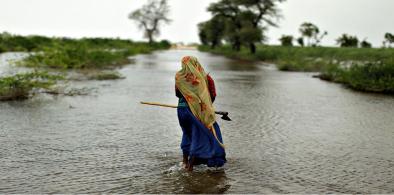
The word ‘just transition’ is not just about the historic climate injustice done to developing countries, but it also secures the rights and livelihood of workers working on old energy systems that would change to new systems
Bangladesh and other low-income industrialised nations shouldn't be forced to transition to a non-carbon (net zero) economy on the same timelines. The international community should give Bangladesh, the country most affected by climate change, a high priority in receiving financial resources for both adaptation and mitigation.