

With some 600 million Indians facing high to extreme water stress, ‘games’ offer vital insights for expanding self-governance to help people manage water more sustainably, write Ruth Meinzen-Dick and Pratiti Priyadarshini for South Asia Monitor
The current strains in Bangladesh–India relations should therefore be seen not as an inevitable deterioration, but as a test of diplomatic maturity. Bangladesh and India share more than geography and history; they share a responsibility to ensure that temporary political frictions do not harden into structural mistrust. In a time of regional uncertainty, neither country benefits from a relationship defined by grievance or miscommunication.
The 27th Amendment, celebrated by its proponents as a security reform, is in reality a political coup executed through constitutional means. It marks not only Munir’s personal triumph but the institutional victory of the military over all other state authorities. As history warns, empowering any unelected institution above the republic’s elected will invites instability—not strength. Pakistan may soon discover that consolidating military power does not secure the nation’s future, but instead places it at greater risk
India must now transition from conventional soft-power thinking to visibility governance—the systematic management of how the country appears, circulates, and is emotionally interpreted across global platforms. Failure to do so will leave India’s global image increasingly shaped by commercial incentives outside Indian control.
The strengthening of Taliban-India ties runs counter to Pakistan’s interests. The more border clashes intensify between the Taliban and Pakistan, the more secure the Kashmir region and the Line of Control (LoC) become for India. Under such conditions, Pakistan will remain preoccupied with its northwestern border, giving India a unique opportunity to consolidate its control over Kashmir and potentially weaken, drive out, or eliminate Kashmiri militant groups
With some 600 million Indians facing high to extreme water stress, ‘games’ offer vital insights for expanding self-governance to help people manage water more sustainably, write Ruth Meinzen-Dick and Pratiti Priyadarshini for South Asia Monitor
The two countries’ leaders have brought Delhi and Dhaka closer and can together bring economic prosperity to South Asia, writes Pathik Hasan for South Asia Monitor
The foremost geostrategic challenge for India vis-à-vis Bangladesh is to counter the machinations of the China-Pakistan axis, writes Amb Pinak Ranjan Chakravarty (retd) for South Asia Monitor
As a result of the Nixon-Kissinger folly that made it an accomplice of the Pakistani crimes in Bangladesh, Washington is now facing a formidable rival in China, writes Arul Louis for South Asia Monitor
The movement in Gwadar under the leadership of Maulana Hidayat Ur Rehman Baloch has attracted a massive number of people across Balochistan, especially from the Mekran region, writes Nizam Hassan for South Asia Monitor
The development of tribal people in the Chittagong Hill Tracts is much better than any remote region of Bangladesh, writes Hafizur Talukdar for South Asia Monitor
This is the story of Ganpat Singh from Pakistan’s Sodha Rajput community. Like him, each member of this half a million strong community has matrimonial linkages across the border in Rajasthan, India, writes Beena Sarwar for South Asia Monitor
The Taliban will soon face internal strife; the Haqqani network and extremist and fanatical factions will revolt against the moderates, splitting the Afghan nationalist struggle, writes Dr Ruhollah Eslami for South Asia Monitor
A stronger relationship with India is undeniably in Australia’s – and Western Australia’s – interest, writes Andrew Hunter for South Asia Monitor
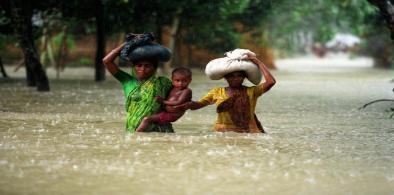
Bhutan contributes little or zero to the climate crisis. Yet, it has not been justly rewarded for its noble and invaluable sacrifices, writes Rinchen Kinzang for South Asia Monitor
India and Bangladesh can show the world how neighbouring countries can become all-weather friends, writes Jubeda Chowdhury for South Asia Monitor
The repeal of the farm bill stretches the plight of poor farmers and hurts the potential growth of food processing in the country, writes S. Majumder for South Asia Monitor
The 1971 massacre of innocents in to be Bangladesh by Pakistan was one of the most heinous and barbaric genocides in world history, writes Farabi Bin Zahir for South Asia Monitor
Sheikh Hasina and Lotay Tshering have agreed on building the necessary infrastructure to avail the maximum benefits of the PTA signed between Bangladesh and Bhutan, writes Pathik Hasan for South Asia Monitor
Carbon finance is expected to play a critical role in leveraging private sector finance for flourishing regional power trade between Bangladesh, Bhutan, India and Nepal, writes Partha Pratim Mitra for South Asia Monitor