In order to provide small company owners and women traders access to the market, South Asian countries should also adopt regional concepts like the border "haat" (informal markets) used at the India-Bangladesh and India-Myanmar border points.


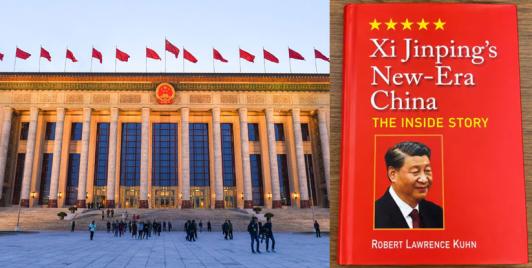
Kuhn says if the first half of this century is being defined by USA-China relations, the second half may well be defined by India-China relations and, in the New World Order, "India-China relations will likely become the most pivotal.....for the entire world".
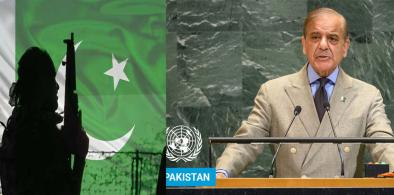
The strategic equation has irrevocably shifted. Pakistan’s long-standing attempt to separate itself from its proxies has failed, replaced by the reality of a state struggling with the infrastructure it created. As these groups operate with increasing autonomy, the world community is left with a clear conclusion
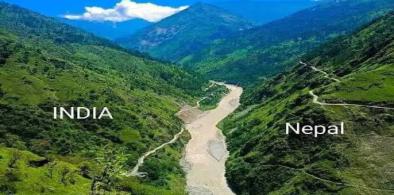
Supported by the Transboundary Rivers of South Asia Programme (TROSA), this led to formation of grassroots networks, including the India-Nepal Joint Action Forum (INJAF) through which civil society organisations and local communities could raise common riverine concerns with officials in their respective countries. Many women in the community participate in these programs, leading to development of women’s empowerment centres (Mahila Mandals).
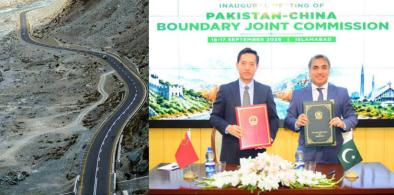
The Pakistan-China Boundary Joint Commission needs to be viewed in backdrop of the fast-changing geopolitics of South Asia and its military implications. The Shaksgam Valley sits immediately north of the Siachen Glacier and just west of Aksai Chin under China's control. By controlling Shaksgam, China can jointly monitor Indian military movements from the north while Pakistan does so from the south.
In order to provide small company owners and women traders access to the market, South Asian countries should also adopt regional concepts like the border "haat" (informal markets) used at the India-Bangladesh and India-Myanmar border points.
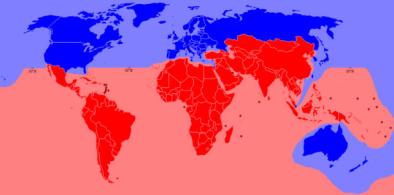
An alternate strategy for overcoming the North-South divide and altering power dynamics is South-South collaboration. South-South collaboration disproves the idea that knowledge and progress only travel from North to South, giving developing nations the chance to establish their autonomy and create their own narratives.
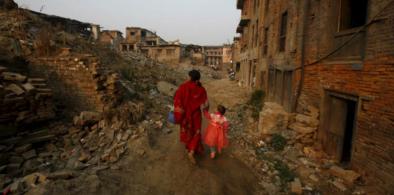
According to a UN report, three months after the quake in Nepal at least 245 children had been preyed upon by traffickers and that was just the “tip of a growing iceberg”
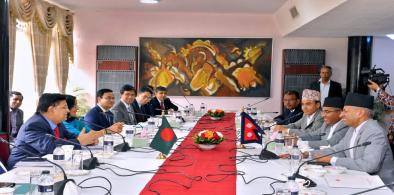
A trilateral energy sales and purchase agreement between Bangladesh, Nepal, and India are required for any Dhaka-Kathmandu power transaction to be implemented because Bangladesh and Nepal do not have a direct land link.
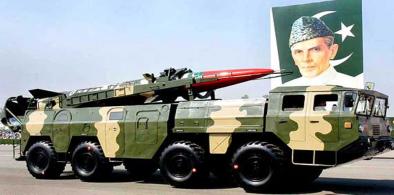
Pakistan’s nuclear tests of 28 May 1998 not only demonstrated the resolve of the Pakistani nation to safeguard the country's territorial integrity, independence and sovereignty but also the desire to preserve strategic balance in South Asia.

India should make concerted efforts to corner a bigger role in the governance of global multilateral bodies and should get involved in resolving global conflicts and issues. It should take its success to the world, contributing to capacity building wherever required, especially in Africa.
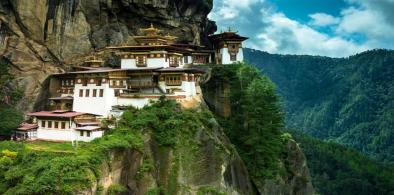
Bhutan is regarded as ‘the kingdom of happiness’ and also has the reputation of being the first to become the one and only carbon-negative country in the world. The international community sees Bhutan as a peaceful and traditional country, and that has helped its policymakers formulate a foreign policy that maintains its unique status in the world order.
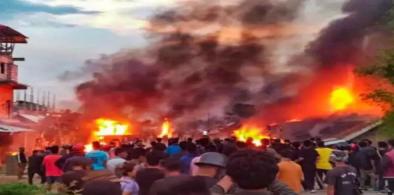
The danger is that the cracks in the Constitution are widening. The need of the hour is to find the true meaning of religion. A divisive agenda no matter how strong, will end up dividing the nation and enhancing a culture of division.
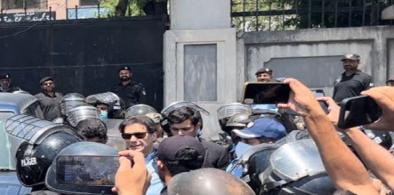
Since Pakistan’s birth over 75 years ago, it is the ‘establishment’ that has largely determined who gets political power and when to take it away. Out-of-favour politicians get disqualified from political office, imprisoned, or exiled. Some have been killed.
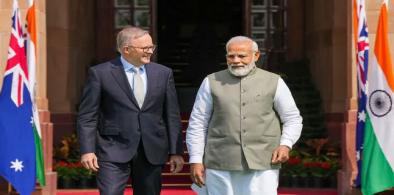
The research strengths of Australian universities in areas such as cyber security, quantum computing, space technology, robotics and AI, critical technologies, public health, water, waste utilization, teacher training, low-cost housing, and solar power, to name a few, are all initiatives and aspirations that PM Modi has identified for India and which Australian universities are well-placed to collaborate on.
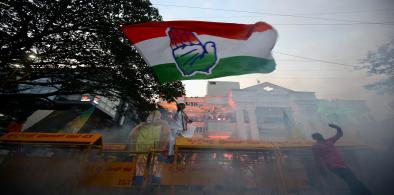
From the secular Bharat Jodo Yatra to the Karnataka elections, Indian civil society groups have played an important role. One does look forward to civil society groups committed to the rights of weaker sections of society playing a similar role in forthcoming elections to ensure that the country comes back to the path and idea of India envisaged by the freedom movement and the Constitution of India.

The warning is not only coming with unusual certainty but there is a clearer message that the world is failing in its pursuit to meet the Paris Climate Agreement.
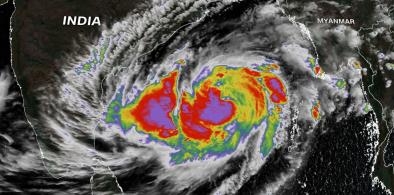
Cyclone Mocha only reminds us of the urgency of India-Bangladesh-Myanmar-Thailand-China-Sri Lanka cyclone management cooperation. As a start, Myanmar-Bangladesh-India trilateral cooperation is a must in this regard.
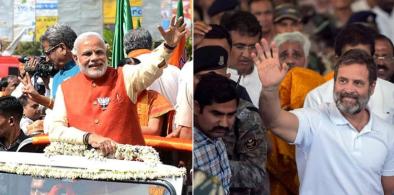
After Karnataka, however, the BJP may be wary of going down that path when the world will be watching Modi’s forthcoming steps in the run-up to the 2024 general election
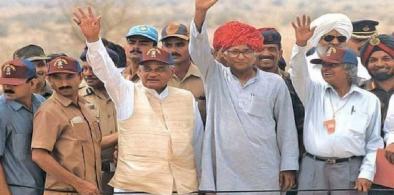
The lesson one can draw from 25 years of nuclear South Asia is that nuclear weapons are guarantors of stability at the highest or strategic levels, but they are certainly not the panacea to the security challenges faced by a nation, especially at the sub-conventional level. The case of the India-Pakistan conflict validates this point