Representational Photo

Conspiracy and Power: How Spy Narratives Shape Sri Lankan Politics

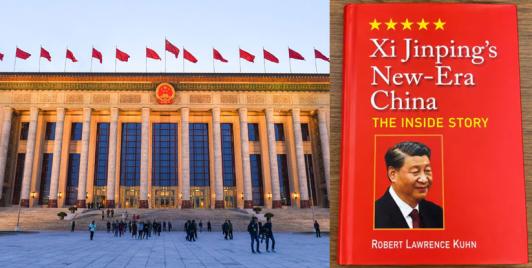
Sri Lanka’s political debate has long revolved around spy narratives, often casting suspicion on India and the United States. Yet, this fixation risks obscuring a more pressing reality. CrowdStrike’s 2025 Global Threat Report identifies Chinese espionage agencies as the most active worldwide, surpassing even the CIA. In 2024, China’s cyber operations expanded by 150 percent, while attacks on financial services, media, manufacturing, and industrial sectors surged by 200 to 300 percent compared to the previous year. 

Pakistan’s National Hero to Prisoner No. 804: Destiny of Pakistan Linked to Imran Khan's Fate

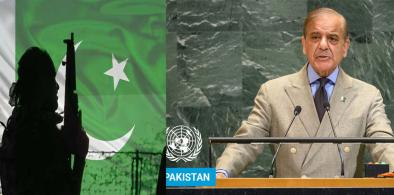
As Imran Khan enters his seventies behind bars, the stakes extend far beyond his individual fate. Should his detention continue—or worse, should harm befall him in custody—the consequences could be explosive. Public anger, already simmering, may erupt into widespread unrest, challenging the state’s ability to maintain control. 

Fifty-Six Years on, Bangladesh a Nation Still Negotiating What it Means to be Itself

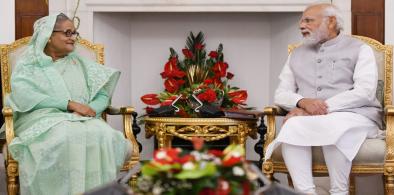
Bangladesh has survived partition, the liberation war, famine, floods, military coups, and democratic collapse. It has always returned. But returning is not the same as resolving. Fifty-six years after independence, the founding paradox remains: a nation whose birth is still debated cannot fully inhabit its future. The gun salutes will be loud and unambiguous. The questions they echo, however, about what Bangladesh is, who founded it, and whose vision should guide it, remain, as they have always been

Colonialism by Another Name: Reconfiguration of Global Power With Trumpian Characteristics

For India, this raises complex challenges. Historically, India has positioned itself as a strong advocate of anti-colonialism and sovereignty. However, in the current context, its responses have often appeared measured and cautious, despite the direct implications for its interests—ranging from energy security and regional stability to strategic initiatives such as connectivity through Iran.

More on Spotlight

Rohingya repatriation from Bangladesh: Myanmar must keep its word

Myanmar and Bangladesh must cooperate in a neighbourly manner. Resolving the regional humanitarian problem will benefit the entire region of South Asia and Southeast Asia, writes Parvej Siddique Bhuiyan for South Asia Monitor 

India must take corrective measures to control hatred, divisiveness

In view of the growing trade and cultural ties between India and the Arab world, it will be disastrous if differences aggravate and no remedial and timely actions are taken, writes Asif Rameez Daudi for South Asia Monitor

India’s devotional politics; and its immunity to criticism

Beginning with Mahatma Gandhi and Jawaharlal Nehru till Narendra Modi, we have a tendency to associate divine qualities to a political leader, writes Dr. Suparna Banerjee for South Asia Monitor

Bangladesh's help to Sri Lanka underlines need for SAARC revival

Covid-19 pandemic and Sri Lanka's crisis are the best examples for all member states to try their level best to revitalize SAARC, writes Dr Shakuntala Bhabani for South Asia Monitor

Religion is another name for love; hate is part of divisive politics

The major political parties in India need to oppose the gross violations of the Constitution, the bulldozer (in)justice and beating of accused in custody, writes Dr Ram Puniyani for South Asia Monitor

Are Hindus being persecuted in Bangladesh? Facts belie prevailing narratives

Unlike Myanmar and India, Bangladesh has never, particularly since 1991, promoted any discriminatory policy against minorities, writes Samina Akhter for South Asia Monitor

Will warming ties with the US be a lifeline for Pakistan?

A number of factors in Pakistan such as the alarming economic situation, continued grey-listing by the FATF, growing terrorism challenges created the exigency for a reset in its ties with Washington, writes Shraddha Nand Bhatnagar for South Asia Monitor 

Afghanistan: The failure of democracy, the US and the free world

But the democratic world, mainly the US, already lost its battle for democracy in South and Central Asia by allowing the collapse of the the Afghan Republic, writes Fahim Sadat for South Asia Monitor

India’s outreach to the Taliban: An opening with limited expectations

The Taliban, on the other hand, assiduously tried to exert themselves as an independent sovereign authority in Afghanistan, which was also reflected in the series of interviews that the group’s senior leaders gave to Indian media just before Singh’s visit. They also assured, on multiple occasions, that if New Delhi decided to re-open its embassy, they will be provided security, India’s prime concern, writes Shraddha Nand Bhatnagar for South Asia Monitor

Global economic prospects and challenges for South Asia: Cooperation is the key

The policy dilemmas which the economies of South Asia face call for collective thinking, although each country may have to pursue its own strategy, writes Partha Pratim Mitra for South Asia Monitor 

Saffron bigotry stumps the BJP in the Muslim world: Will the party change tack?

Now the BJP may begin to have second thoughts about aggressive pro-Hindu tactics. Even if it has won over large sections of the communal-minded Hindus at home, it will be wary of an Arab boycott of Indian products abroad, writes Amulya Ganguli for South Asia Monitor

Why Bangladesh should be seen as a South Asian economic miracle

Bangladesh is a South Asian miracle. Dislodging India, Bangladesh has quietly made its way to the top spot of the South Asian economic wheel, writes Shuvo Das for South Asia Monitor  

World must not forget the Rohingya refugees of Bangladesh

The Afghan and Ukraine crises have worsened the situation. But the world must remember that Rohingyas are also refugees, writes Parvej Siddique Bhuiyan for South Asia Monitor 

Defining moment for earth: South Asia faces grave environmental concerns

South Asia alone produces around 300 million tonnes of solid waste annually and 70–80 percent of these ends up in water bodies or in oceans, write George Cheriyan and Simi T.B. for South Asia Monitor 

Indian food aid to Sri Lanka; Are there any lessons from 1987?

Sri Lanka should also remember the adage ‘there are no free lunches’ and bilateral relations will depend on a give-and-take policy, writes Suggeeswara Senadhira for South Asia Monitor