

Dying Rivers, Disappearing Species: Zoological Cost of Pollution in Pakistan and India
The Indus and the Ganges are dying slowly, and with them disappear species that evolved over thousands of years within these waters. If current patterns continue, future generations may inherit rivers that exist geographically but are biologically empty. South Asia still has an opportunity to reverse this trajectory, but only if environmental protection becomes a shared regional priority rather than an afterthought.
 May 10, 2026
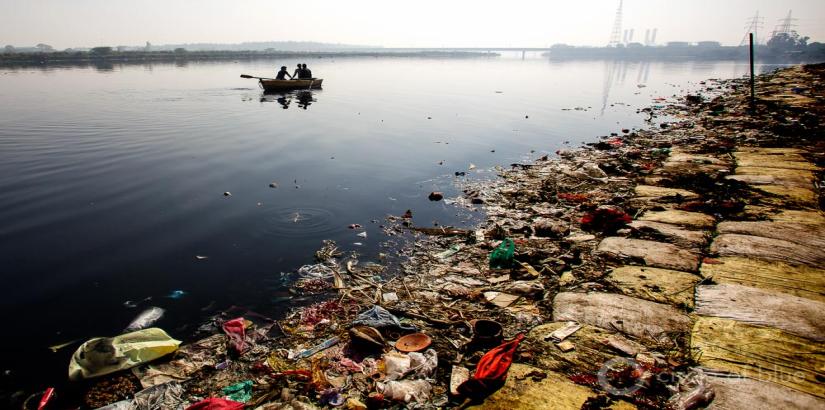
Rivers have always shaped the political and economic foundations of South Asia, but contemporary debates surrounding the Indus and Ganges systems remain narrowly centred on water allocation, hydro diplomacy, and interstate tensions. What receives far less attention is the zoological collapse unfolding within these river systems themselves. The ecological degradation of South Asia’s major rivers is no longer only an environmental issue; it has become a governance failure driven by weak regulation, fragmented environmental policy, and development models that prioritise industrial growth over ecological sustainability.
In both Pakistan and India, pollution is transforming biologically complex river ecosystems into chemically stressed waterways incapable of supporting aquatic biodiversity at historical levels. This crisis reveals a deeper structural problem within South Asian environmental governance: rivers are treated as economic resources to be extracted rather than ecosystems requiring coordinated scientific management.
Industrialisation and Ecological Decline
The condition of many rivers across Pakistan and India reflects decades of industrial negligence, urban expansion, weak environmental regulation, and unsustainable agricultural practices. Untreated sewage, plastic waste, heavy metals, chemical runoff, and industrial discharge are routinely emptied into river systems that were once among the richest ecological habitats in the region. Cities continue to grow around rivers while treating them as dumping grounds rather than living ecosystems. The result is not only degraded water quality for humans but also the systematic destruction of biodiversity.
Zoological Consequences of Pollution
For zoologists, the crisis extends far beyond pollution statistics. Rivers function as complex biological networks that support fish populations, amphibians, reptiles, migratory birds, freshwater mammals, and microscopic organisms essential for ecological balance. Once pollution disrupts this chain, entire ecosystems begin to collapse. In both Pakistan and India, aquatic species are increasingly showing signs of stress through shrinking populations, reproductive failure, habitat loss, and disease outbreaks.
One of the clearest examples is the decline of freshwater dolphins. The Indus River dolphin, once widespread across the Indus basin, now survives in fragmented stretches of the river due to habitat degradation and reduced water quality. Similarly, the Ganges river dolphin faces severe threats from industrial contamination and declining oxygen levels in Indian rivers. These dolphins are not only endangered species; they are indicators of ecological health. When apex freshwater mammals struggle to survive, it signals the breakdown of the entire river ecosystem beneath them.
Fish populations across South Asia are also under increasing pressure. Toxic pollutants reduce oxygen levels in water, making survival difficult for native species that evolved in balanced river systems. In many polluted areas, sensitive fish species disappear entirely while only highly tolerant organisms remain. This reduction in biodiversity weakens food chains and affects communities that depend on fishing for survival. The issue is therefore not limited to conservationists or zoologists; it directly threatens food security and local economies.
The impact on migratory birds is equally alarming. Wetlands connected to major river systems serve as seasonal habitats for birds traveling across Central and South Asia. Pollution destroys these feeding and breeding grounds, forcing migratory populations into ecological stress. Heavy metal contamination also accumulates within aquatic organisms, entering the food chain and affecting birds that consume contaminated fish and invertebrates. Over time, this process can reduce reproductive success and alter migration patterns.
Climate Change as a Force Multiplier
Climate change is intensifying these problems. Rising temperatures, irregular rainfall, glacial melting, and prolonged droughts are changing river flows across the region. Lower water levels mean pollutants become more concentrated, increasing toxicity within aquatic habitats. Species already struggling against pollution must now adapt to rapidly changing environmental conditions. Many cannot evolve quickly enough to survive.
Failure of Environmental Governance
Despite the severity of the crisis, environmental cooperation between Pakistan and India remains institutionally weak because river governance is overwhelmingly securitised. Bilateral engagement under frameworks such as the Indus Waters Treaty has historically focused on water distribution and infrastructure disputes rather than biodiversity protection or ecological monitoring. This policy limitation is significant because ecological collapse cannot be addressed through water allocation mechanisms alone. Existing governance frameworks largely exclude zoological indicators such as species decline, habitat fragmentation, or toxic accumulation within aquatic food chains. As a result, conservation policy remains reactive rather than preventative.
The absence of integrated ecological governance has also exposed the limitations of domestic environmental institutions in both countries. Regulatory agencies frequently lack enforcement capacity, while industrial interests continue to exert significant influence over environmental compliance standards. Wastewater treatment infrastructure remains underdeveloped relative to urban growth, particularly in rapidly expanding industrial regions. Consequently, environmental laws often function symbolically rather than operationally.
Towards Ecological Diplomacy
A more effective policy response would require cross-border ecological governance rather than isolated national interventions. Joint biodiversity monitoring programs, shared pollution databases, coordinated wetland restoration projects, and scientific cooperation between universities could create more sustainable outcomes than politically fragmented approaches. Importantly, ecological diplomacy may offer one of the few areas where cooperation between Pakistan and India remains possible because environmental degradation creates shared regional consequences regardless of political boundaries.
The Ethical Contradiction
There is also a deeper ethical dimension to this crisis. South Asia often celebrates rivers in poetry, religion, and national identity; yet the treatment of these waters reflects a contradiction between symbolism and reality. Rivers cannot continue to be worshipped culturally while being poisoned biologically. The destruction of aquatic life reveals how economic growth and urban development are frequently prioritized without considering long-term ecological consequences.
Public Awareness and Policy Enforcement
Governments alone, however, cannot solve this issue. Public awareness remains critically low regarding the zoological impact of pollution. Discussions around river contamination are usually framed through human health or water scarcity, while biodiversity loss receives far less attention. Educational institutions, universities, environmental organizations, and media platforms must begin highlighting the scientific reality that polluted rivers are causing irreversible damage to species that cannot defend themselves.
The crisis also demands stronger environmental enforcement. Many industries continue to discharge untreated waste because regulations are weakly implemented or corruption allows violations to continue without accountability. River restoration efforts often remain symbolic rather than structural. Cleaning a river requires more than short-term campaigns; it demands investment in sewage treatment infrastructure, industrial regulation, waste management systems, and sustainable agricultural practices.
Absence of Collective Will
At its core, the decline of South Asia’s rivers represents a warning about humanity’s relationship with nature. Zoology teaches us that ecosystems survive through balance and interdependence. Once species disappear, ecological functions become difficult or impossible to restore. The extinction of freshwater organisms is not simply a scientific concern; it reflects the collapse of natural systems that human societies themselves depend upon.
The Indus and the Ganges are dying slowly, and with them disappear species that evolved over thousands of years within these waters. If current patterns continue, future generations may inherit rivers that exist geographically but are biologically empty. South Asia still has an opportunity to reverse this trajectory, but only if environmental protection becomes a shared regional priority rather than an afterthought.
The real tragedy is that this crisis is not invisible. Scientists, conservationists, and environmental researchers have warned about these dangers for decades. What remains absent is the political urgency and collective will to act before ecological decline becomes irreversible. Dying rivers are no longer only an environmental issue; they are a test of whether Pakistan and India can protect the living systems that sustain both nations beyond politics, beyond borders, and beyond short-term interests.
(The author is a Pakistani zoologist with a focus on South Asian wildlife conservation, mountain ecosystems, and the role of environmental cooperation in protecting endangered species. Views expressed are personal. She can be contacted at zonamumtazz@gmail.com )





Post a Comment