

How India’s Monetary Policy Shapes Nepal’s Economy: Nepal Needs Greater Monetary Flexibility
The days of “benign neglect” of our exchange rate policy are over. Nepal’s macroeconomic fundamentals — record reserves, stable remittance inflows, a gradually diversifying trade base — have quietly put in place the foundation for reform. What is missing is the political will to act on it.
 May 11, 2026
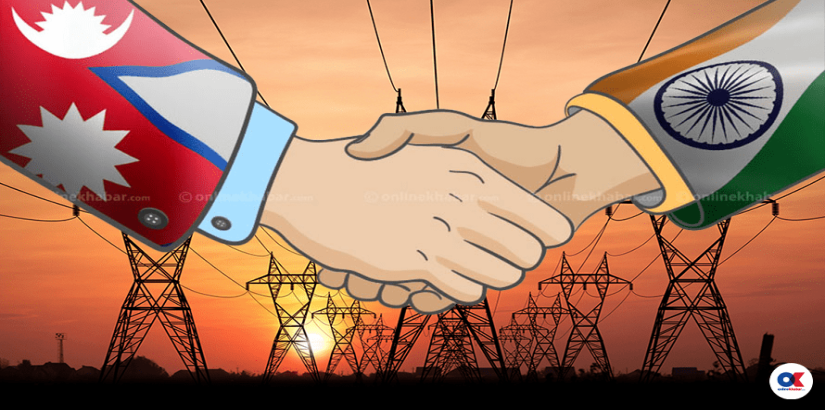
Nepal officially adopted the current exchange rate peg of NPR 1.6 per INR in 1993, with implementation beginning in 1994, an era when the internet was still a novelty and Nepal’s total trade volume was only a fraction of what it is today. According to the Nepal Rastra Bank macroeconomic report, foreign reserves rose by 18.3% to USD 23.08 billion, reflecting strong remittance inflows and providing the country with a strong import buffer. The reserve remains sufficient to cover more than 18 months of imports. Despite this financial cushion, every policy shift in Mumbai’s Reserve Bank of India (RBI) continues to dictate the cost of capital in Kathmandu. The US Dollar remains the aspirational “Gold Standard” for wealth for average Nepali citizens. The question always looms: “If Gulf can thrive pegging to dollar why are we still anchoring with Indian Rupees?” Much evidence surrounding the “Impossible Trinity” suggests that Nepal has gained price stability while compromising part of its monetary sovereignty. The peg is no longer merely a stabiliser; it now requires a serious rethink of the exchange rate regime.
The Trade Gravity: Comparing with USD Peg
From a policy viewpoint, the major reason to peg with US Dollar is the desire to align with global markets. However, comparisons between the Nepali economy and dollar-pegged nations like the UAE and Saudi Arabia highlight major structural differences. The Gulf Cooperation Council (GCC) nations peg to the dollar because their primary resource, oil, is priced, sold and settled in USD; well known as the “petrodollar” system. For GCC, the dollar peg ensures stability — which is the opposite in case of Nepal. Though the exact figures vary by time period and metric, latest 8-month NRB and Customs data (mid-July 2025 to mid-March 2026) confirms India’s overwhelming dominance in Nepal’s trade: 81.98% of Nepal’s total exports go to India, and 56.16% of its imports come from India.
Nepal’s economy is fundamentally associated with India’s trade and supply. A USD peg would create major fluctuations in market behaviour. If the Indian currency weakens against the USD, the dollar-pegged Nepali Rupee becomes expensive, making our exports less competitive compared to Indian production.
On the positive side, imports from India like petroleum can become unsustainably cheap — but this widens our trade deficit with India. We can conclude that pegging with USD can reduce our exports and widen our trade deficit unless we diversify our trade partners.
Cost of the Impossible Trinity
The economic theory of the “Impossible Trinity” states that a country cannot achieve all three economic goals simultaneously: a fixed exchange rate, free capital movement, and an independent monetary policy. Nepal has chosen the first two with India, sacrificing its interest rate decisions to the RBI.
IMF research on inflation synchronisation between Nepal and India suggests that a 1% increase in Indian inflation can lead to roughly a 0.45% increase in Nepali inflation — a statistically significant relationship.
This highlights that the inflation-adjusting tools of Nepal Rastra Bank are blunted by the peg, as nearly half of its inflationary pressure originates beyond its borders and outside its control.
Consumer price inflation in Nepal stood at around 3.62% as of mid-March 2026 (NRB Macroeconomic Report), while India recorded approximately 3.41% (MOSPI) — the two figures mirroring each other. This reflects clear evidence of monetary policy synchronisation between the two countries. The peg helps contain “imported inflation” in one sense, but also means the NRB cannot lower interest rates to stimulate the domestic economy if India is in a tightening cycle.
In effect, we are using an external heartbeat to pulse our internal markets — a policy that does not account for Nepal’s special domestic pressures and developmental goals in 2027 and beyond.
The Middle Path: A Trade-Weighted Basket
The answer is not a blind leap into the USD, but a move to a “Basket Peg” — a system successfully utilised by nations like Morocco and Singapore. Morocco pegs its Dirham to a basket heavily weighted toward the Euro (60%) and the USD (40%), reflecting its actual trade patterns with Europe and the global market. Global market fluctuations pushed Morocco toward the basket peg in 2018, demonstrating the real-world advantages of a flexible pegging system.
Nepal could consider a similar trade-weighted basket of INR (60%), USD (25%) and CNY (15%). This would allow the Nepali Rupee to remain stable relative to its main neighbour, while still acting as a “shock absorber” against currency shifts around the world. As trade with China and the dollarisation of service exports increase, a basket peg would help the NRB gradually reclaim its tools for monetary intervention — making the Nepali Rupee reflect a 2026 trade reality in a globalised Nepal, not a bilateral 1994 one.
Countering the Fear of Speculation
Critics of exchange rate reform often point to the danger of speculative attacks and capital flight. They argue that any deviation from the long-standing 1.6:1 peg would signal weakness and cause a run on the banks. Such caution was warranted in decades past when reserves were low, but the current data contradicts it. With $23 billion in reserves — nearly double the internationally recommended safety benchmark — Nepal is in its strongest position ever to manage a controlled transition.
History backs this confidence. Morocco’s 2018 transition from a fixed peg to a managed float occurred without a speculative crisis because the central bank front-loaded its communication, widened the exchange rate band incrementally, and maintained adequate reserve buffers throughout. Bangladesh also successfully managed exchange rate adjustments in 2022–23 under IMF guidance without triggering the capital flight. These are not exceptions — they are blueprints. Speculative attacks historically target economies with thin reserves, opaque policy frameworks, and abrupt unannounced shifts. Nepal’s case is the contrary on all three counts.
A transition is not an ‘unpegging’ — it is a recalibration. That distinction makes a significant difference to market psychology. By outlining a clear, phased and data-driven path to a basket peg, anchored by the institutional credibility of the NRB and backed by its reserve strength, Nepal can maintain market confidence while finally allowing the exchange rate to function as a tool for competitiveness rather than a political anchor. The fear of speculation is not a reason to avoid reform. Nepal is in a position to plan the transition carefully — and it should.
A Plea for Monetary Sovereignty
The days of “benign neglect” of our exchange rate policy are over. Nepal’s macroeconomic fundamentals — record reserves, stable remittance inflows, a gradually diversifying trade base — have quietly put in place the foundation for reform. What is missing is the political will to act on it.
The Nepal Rastra Bank should commission an official technical review on the feasibility of a trade-weighted basket peg before the next IMF Article IV consultation, and, as an interim step, start publishing a shadow basket index to educate markets and normalise the conversation around exchange rate evolution. Parliament must also have a sober, non-partisan discussion on monetary sovereignty — because the exchange rate is not a technocratic footnote; it is a lever that affects the cost of capital, the competitiveness of exports, and the purchasing power of every Nepali household.
We cannot steer a complex late-2020s economy with a compass that is 32 years old. Nepal should gradually move toward a framework that provides greater monetary flexibility while preserving macroeconomic stability.
(The author is an Assistant Officer at the Deposit and Credit Guarantee Fund (DCGF), Nepal. His interests include monetary policy, financial stability, and regional economic integration. Views expressed are personal. He can be contacted at ashishpoudel@dcgf.gov.np )





Post a Comment