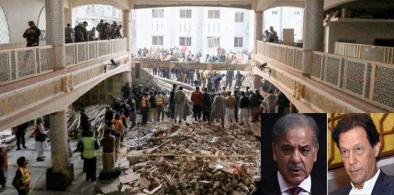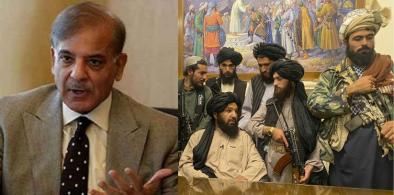
On two counts – annoying Army and America, two of the three pillars on which Pakistan’s polity stands -- may block Imran Khan's future comeback. Only the third, Allah, can help, writes Mahendra Ved for South Asia Monitor
The conflict in Iran, in this context, is acting as the moment of revelation. It is showing us what kinds of energy systems are still structurally dependent on distant chokepoints, and what kinds of energy systems are starting to build the foundations for resiliency much closer to home. The trajectory of the Pakistani experience, while still in its early stages, may represent the beginnings of an alternative model, one in which decentralization and renewables are key to managing global instability.
Sri Lanka’s political debate has long revolved around spy narratives, often casting suspicion on India and the United States. Yet, this fixation risks obscuring a more pressing reality. CrowdStrike’s 2025 Global Threat Report identifies Chinese espionage agencies as the most active worldwide, surpassing even the CIA. In 2024, China’s cyber operations expanded by 150 percent, while attacks on financial services, media, manufacturing, and industrial sectors surged by 200 to 300 percent compared to the previous year.
As Imran Khan enters his seventies behind bars, the stakes extend far beyond his individual fate. Should his detention continue—or worse, should harm befall him in custody—the consequences could be explosive. Public anger, already simmering, may erupt into widespread unrest, challenging the state’s ability to maintain control.
Bangladesh has survived partition, the liberation war, famine, floods, military coups, and democratic collapse. It has always returned. But returning is not the same as resolving. Fifty-six years after independence, the founding paradox remains: a nation whose birth is still debated cannot fully inhabit its future. The gun salutes will be loud and unambiguous. The questions they echo, however, about what Bangladesh is, who founded it, and whose vision should guide it, remain, as they have always been
On two counts – annoying Army and America, two of the three pillars on which Pakistan’s polity stands -- may block Imran Khan's future comeback. Only the third, Allah, can help, writes Mahendra Ved for South Asia Monitor
Bangladesh has very strong leadership, pragmatic fiscal policy and foreign reserves. The Sri Lankan case is totally different, writes Mehjabin Bhanu for South Asia Monitor
From within the Muslim community there are extremist elements who in the name of Islam provide much-needed provocations to majoritarian politics, writes Dr Ram Puniyani for South Asia Monitor
The ECTA with Australia will boost India’s confidence in signing similar trade pacts with the UK and EU, writes N. Chandra Mohan for South Asia Monitor
Amid Sri Lanka’s crippling shortages, Hirunika Premachandra Yatowita, daughter of a slain SLFP MP and herself a former MP from Colombo, is being seen as a new leader, writes P. Jayaram for South Asia Monitor
Some major countries of South Asia have recently had Article IV consultations with the IMF since the onset of the pandemic in early 2020, writes Partha Pratim Mitra for South Asia Monitor
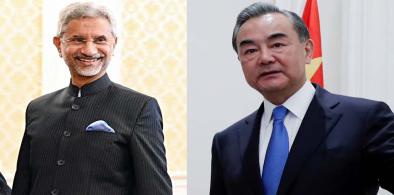
Xi has been quick to grab the opportunity to launch his own diplomatic blitzkrieg by sending his Foreign Minister Wang Yi to South Asia, writes Amb Dilip Sinha (retd) for South Asia Monitor
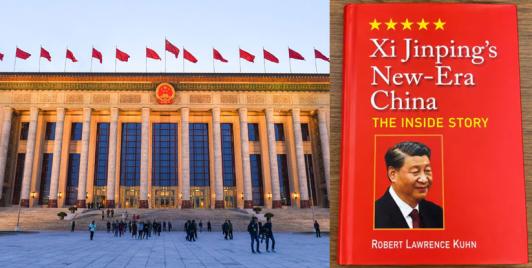
China needs to seriously think whether it wants to continue the confrontation with India or settle the border with irrevocable guarantees, writes Lt Gen P.C. Katoch (retd) for South Asia Monitor
Governments across South Asia need to display stronger political will against violence and unrest over communal and religious issues, writes Shubham for South Asia Monitor
The film lives to its own dialogue that showing wrong is as dangerous as hiding the truth; it totally hides the murders and exodus of Muslims, writes Dr Ram Puniyani for South Asia Monitor
The film has soured Hindu-Muslim relations to an extent in Kashmir - and also in the rest of the country - that the Pandits will be unable to settle down as before in close proximity with their Muslim neighbours, writes Amulya Ganguli for South Asia Monitor
The younger generation of both countries is keen to forge stronger ties between these two Muslim-majority countries in the region, writes Mehjabin Bhanu for South Asia Monitor
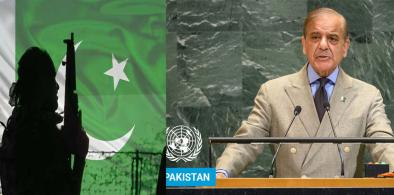
Fortunately, Pakistan never went ballistic and their reaction has averted what could have potentially led to a disastrous escalation, writes Maj Gen Jagatbir Singh (retd) for South Asia Monitor
Afghanistan owes a measure of its progress to the India cricket board and its generosity in providing to the embattled Afghan cricketers the use of ‘home’ grounds in India, writes Qaiser Mohammed Ali for South Asia Monitor
The Japan Bank for International Cooperation listed India as the most attractive investment destination, yet Prime Minister Fumio Kishida’s visit to Delhi failed to generate that investment buzz, writes S. Majumder for South Asia Monitor