
Pakistan Agriculture

From Ecological Decline to Food Insecurity: Pollinator Loss has Long-Term Consequences for Pakistan Agriculture

The decline of pollinators in Pakistan is not an isolated environmental issue. It is a structural signal of imbalance within agricultural ecosystems. It reflects how modern farming practices, if not carefully managed, can inadvertently weaken the very systems upon which they depend. The danger lies not in sudden collapse but in gradual erosion that goes unnoticed until productivity begins to decline in visible and irreversible ways.

Gulf Crisis: Pakistan Hosts the Table; India Influences the Room (Part V)

India’s role in the Middle East crisis is defined not by presence at negotiation tables but by its ability to sustain stability around them.While Pakistan facilitates talks between the US and Iran in Islamabad, India underwrites the broader security architecture through its maritime presence, economic weight, and multi-aligned diplomacy.

Water Security and Regional Peace: Future of the Indus Waters Treaty in a Changing Climate

The Indus Waters Treaty has lasted more than 60 years, illustrating diplomacy's ability to handle one of South Asia's most sensitive resources. However, climate change and geopolitical tensions have called into question its significance. To guarantee that the treaty continues to prevent war and promote shared prosperity, Indian and Pakistani governments must update its provisions, invest in joint institutions, and view water as a shared strategic asset rather than a source of friction.

Iran at the Crossroads: In a Changing Region, Tehran’s Critical Choices Could Shape Change (Part IV)

Iran's demonstrated endurance to maintain its intrinsic rights to nuclear enrichment as an NPT state even under sanctions and its willingness to escalate without collapsing, is an important consideration for the Iranian regime. This issue was centre stage at the collapsed Islamabad negotiations. How Iran shapes its stand will be centre piece of future negotiations. 

More on Spotlight

The Nightingale has fallen silent: Lata Mangeshkar's music had universal appeal

Numbers have defied easy recording, whether Lata sang 25,000 songs or 30,000, for an estimated 1,000 films, writes Mahendra Ved for South Asia Monitor

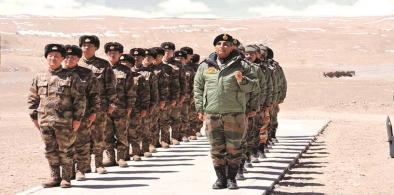
India must not politically or economically appease China

The fact remains that as long as India, Nepal and Bhutan do not protest Chinese aggressive moves because of political compulsions China will keep having its way, writes Lt Gen P. C. Katoch (retd.) for South Asia Monitor

Sri Lanka will come out of its present crisis stronger

With heightened external geopolitical fissures in the region, balancing infrastructure diplomacy between China, India and the US is indeed a daunting challenge for Sri Lanka, writes Sugeeswara Senadhira for South Asia Monitor

Why does Pakistan lag far behind Bangladesh?

Although Bangladesh was a part of Pakistan, it has already surpassed Pakistan in almost all socio-cultural and economic indicators, writes Jebeda Chowdhury for South Asia Monitor

Appropriating Subhas Chandra Bose: He was equally critical of both Muslim and Hindu communal streams

Bose was very clear that in independent India equal opportunities should be thrown open to all, irrespective of caste, creed or religion, writes Ram Puniyani for South Asia Monitor 

Can Air India become world class again? Can Tatas live up to expectations?

What is the future of civil aviation and Air India? The immediate outlook is that it will take beyond 2022-23 to return to any semblance of pre-pandemic normalcy, writes N. Chandra Mohan for South Asia Monitor

For a more harmonious and cooperative South Asia, India must lead by example

India with its huge numbers and relative political stability can play an influential role in the South Asian region, writes Nirupama Sekhri for South Asia Monitor 

Debt management crucial for pandemic-hit economic recovery in India and South Asian nations

The pandemic is estimated to have caused 48-59 million people to become or remain poor in 2021 in South Asia, writes V.K. Varadarajan for South Asia Monitor

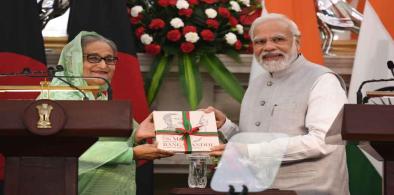
India, Bangladesh must settle Teesta issue in mutual interest

India should act quickly to reach an amicable solution to the Teesta dispute before Bangladesh embraces Chinese cooperation on the issue, writes Anup Sinha for South Asia Monitor

New supply chain dynamics post-Covid: Advantage India or Vietnam?

Even though Vietnam is reckoned as having an edge over India in the global supply chain, India’s demographic advantages override Vietnam, writes S. Majumder for South Asia Monitor

Can India and France work to shape a new world order?

With a French Presidency, the strategic partnership between India and the EU could finally bloom to its full potential, writes Amb Bhaswati Mukherjee (retd.) for South Asia Monitor

Deepening Indo-Saudi ties will see major investments, strategic energy partnership

During a visit to India in 2019, the Saudi Crown Prince announced that the kingdom would be investing $100 billion in diversified sectors in India, writes N. Chandra Mohan for South Asia Monitor

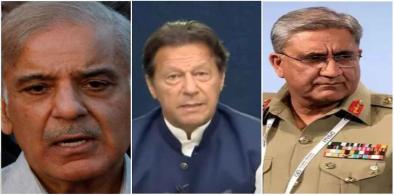
Pakistan’s National Security Policy: Old thoughts in new packaging

The NSP tosses a heads-I-win-tail-you-lose option for India; it announces its intent of seeking peace but leaves the onus on India, writes Mahendra Ved for South Asia Monitor 

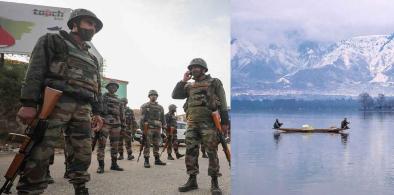
Bringing peace to India's Northeast: Greater engagement with Bangladesh and Myanmar holds the key

Using the Army to control insurgency in the Northeast has failed as a model, writes B.L. Vohra for South Asia Monitor

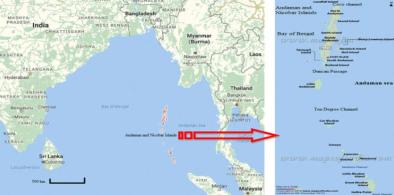
Bangladesh has a key role in combating maritime threats in Bay of Bengal

The US, Sri Lanka, India, the Maldives and others can work together with Bangladesh to deal with regional maritime problems, writes Jubeda Chowdhury for South Asia Monitor