
Improved military ties between Bangladesh and Myanmar can aid in the smoothing of ties and the resolution of long-standing issues such as the Rohingya crisis, maritime disputes, and trans-border crimes.
The Pannun case in the US, the preceding Nijjar row in Canada, the unyielding diplomatic stances of their respective governments, and the coordinated, adversarial statements issued by the Five Eyes alliance, collectively triggered a quiet but intense counter-intelligence pivot by New Delhi.
One of the most durable strengths of India-US relations lies outside the government. The five million strong Indian diaspora has become an extraordinary bridge between the two societies. Indian Americans occupy influential positions in technology, academia, medicine, business and public administration. This human connectivity provides resilience that many bilateral relationships lack.
India and Australia are not building a grand alliance; they are building useful capacity. Indonesia, through its archipelagic geography, fits into that larger maritime dynamic. Taken together, these developments show how strategy is increasingly made through nodes, not narratives.
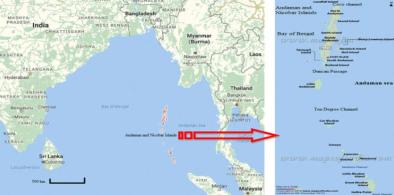
While China's leverage over India runs through an upstream river Beijing controls, India's leverage over China runs through a chokepoint India will now sit astride. The Strait of Malacca is a 930-km passage between the Malay Peninsula and Sumatra through which an approximate of 40–50 percent of global trade and 80 percent of China's crude oil imports transit.
Improved military ties between Bangladesh and Myanmar can aid in the smoothing of ties and the resolution of long-standing issues such as the Rohingya crisis, maritime disputes, and trans-border crimes.
Saudi Arabia has been reorienting its foreign policy, and while maintaining its individual relationships with India and Pakistan, it could possibly play a role as an intermediary between both countries.
Khan, the government, and the military establishment seem to have taken extreme positions, leaving no room for rapprochement for now, plunging Pakistan into political chaos.
The tragedy of our times is that the South Asian region has the cultural resources to live with diversity. This has, in fact, been its millennial tradition. Despite these cultural resources, the region is mired in majority-minority conflicts that can be debilitating.
Transcending narrow geographical borders, handicrafts often make their own presence felt as a representation of humanity, connecting communities. One such important handicraft item is the dry grass mats of the region of South Asia
Indian policymakers should be ready for the next phase of synchronized China-Pakistan actions to undermine India.
The situation however has been somewhat different in certain countries of South Asia which have raised resources through external borrowings despite having current account deficits - Afghanistan, Maldives, Bhutan, Nepal Pakistan, and Sri Lanka. Caution needs to be exercised by them in resorting to such borrowings.
The salvation for Pakistan’s body politic, wherein democracy is aspired by those who are not democrats themselves, may remain unfortunately with the men in uniform.
There is no light at the end of the repatriation tunnel; one must look at other more viable and pragmatic scenarios rather than transporting almost a million people at gunpoint to Rakhine
From religious bigotry in India targeting Muslims, to Sri Lanka’s economic woes and food insecurity, to the plight of the Afghans, particularly women, discussions at the conference took up these and other issues like the impact of climate change, press freedom and creeping censorship, to transgender rights, enforced disappearances, and arbitrary detentions.
India annually celebrated major festival days of all faiths, but these festivities are largely confined to their believers. If those communities, however, were to become more open to secular participation on the principle that if faiths are for believers, associated festivities are for all to enjoy.
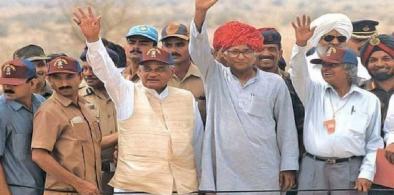
Indian and Pakistani politicians can leverage the sport to resolve many outstanding issues between the neighbouring countries, provided there is an honest will on either side and the intentions are well-meaning. And the bilateral series can resume only if a Vajpayee-Musharraf-like initiative is taken by those occupying the highest positions in the two countries.
South Asia must develop a common framework to hold politicians accountable and increase transparency in government dealings. Regional collaboration can reduce vulnerability.
If Myanmar acquires a nuclear capability, it would be a disaster for South and Southeast Asia. A nuclear Myanmar is not in India, China, or other neighbouring countries' interests. Recent border tensions between Myanmar and Bangladesh are the best example to understand the gravity of the situation.
Since Dawood moved to Karachi, the D Company syndicate has expanded incredulously. He is said to have invested over USD $28 billion in assets in Karachi alone and has diversified his businesses in several countries such as India, Morocco, the UK, UAE, Switzerland, Hong Kong, Thailand, Sri Lanka, Italy and France.