Bangladesh may not face the same situation as Sri Lanka in the near future but it has considerable weaknesses in its economy and good-governance processes, writes Aashish Kiphayet for South Asia Monitor
After Munich, Rubio travelled to Budapest and aligned himself warmly with Orbán’s government, praising Hungary’s trajectory. For European leaders committed to participatory democracy and the rule of law, the signal must have been disquieting. It suggested that Washington’s conception of Western solidarity may prioritise cultural homogeneity over liberal pluralism.
The structural transformation of India’s export basket is no longer incremental—it is systemic. Technology-driven industries with higher value addition are steadily outpacing traditional sectors. If managed strategically, external tariff pressures could accelerate this transition. Rather than viewing tariff hikes solely as a threat, India can leverage them as a catalyst for deeper integration into global supply chains and stronger positioning in high-technology manufacturing. The reshaping of India’s export architecture is already underway. The tariff shock may simply fast-forward the process.
Considering the potential of AI in solving complex questions and generating contents in individual writing styles, institutions need to ask a few fundamental questions - what is the role of academia in ensuring that the learners are not being slaves to AI, but masters who are aware of the potential bias and hallucinations that has a huge impact on knowledge acquisition and dissemination? Should it be a social responsibility of higher educational institutions to ensure meaningful curriculum and assessment practices which make learners future ready in such a rapidly changing AI era?
Recent global adoption indices confirms that South Asia has become one of the most dynamic regions for cryptocurrency engagement, with implications for remittance use. According to the 2025 crypto adoption index by Chainalysis, India secured the top position worldwide in overall crypto adoption across retail usage, reflecting pervasive grassroots digital activity. Pakistan and Bangladesh also feature prominently, with Pakistan ranking among top three in Asia and Bangladesh within top 20
Bangladesh may not face the same situation as Sri Lanka in the near future but it has considerable weaknesses in its economy and good-governance processes, writes Aashish Kiphayet for South Asia Monitor
The allure of Russian oil for India, however, is more than the imperatives of energy security. It also has deep stakes with $16 billion of investments in various oil and gas projects in Russia, writes N. Chandra Mohan for South Asian Monitor
Given that Sri Lanka has a post-independence history of episodic JVP militancy in 1971 and 1987, there is concern about the direction the street protests may take, writes N. Sathiya Moorthy for South Asia Monitor
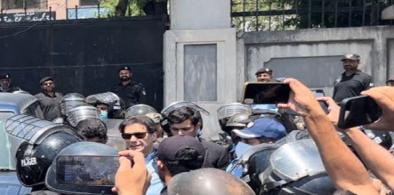
On two counts – annoying Army and America, two of the three pillars on which Pakistan’s polity stands -- may block Imran Khan's future comeback. Only the third, Allah, can help, writes Mahendra Ved for South Asia Monitor
Bangladesh has very strong leadership, pragmatic fiscal policy and foreign reserves. The Sri Lankan case is totally different, writes Mehjabin Bhanu for South Asia Monitor
From within the Muslim community there are extremist elements who in the name of Islam provide much-needed provocations to majoritarian politics, writes Dr Ram Puniyani for South Asia Monitor
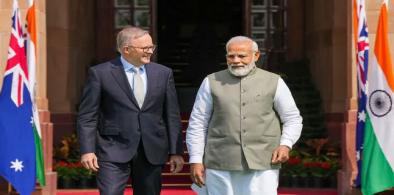
The ECTA with Australia will boost India’s confidence in signing similar trade pacts with the UK and EU, writes N. Chandra Mohan for South Asia Monitor
Amid Sri Lanka’s crippling shortages, Hirunika Premachandra Yatowita, daughter of a slain SLFP MP and herself a former MP from Colombo, is being seen as a new leader, writes P. Jayaram for South Asia Monitor
Some major countries of South Asia have recently had Article IV consultations with the IMF since the onset of the pandemic in early 2020, writes Partha Pratim Mitra for South Asia Monitor
Xi has been quick to grab the opportunity to launch his own diplomatic blitzkrieg by sending his Foreign Minister Wang Yi to South Asia, writes Amb Dilip Sinha (retd) for South Asia Monitor
China needs to seriously think whether it wants to continue the confrontation with India or settle the border with irrevocable guarantees, writes Lt Gen P.C. Katoch (retd) for South Asia Monitor
Governments across South Asia need to display stronger political will against violence and unrest over communal and religious issues, writes Shubham for South Asia Monitor
The film lives to its own dialogue that showing wrong is as dangerous as hiding the truth; it totally hides the murders and exodus of Muslims, writes Dr Ram Puniyani for South Asia Monitor
The film has soured Hindu-Muslim relations to an extent in Kashmir - and also in the rest of the country - that the Pandits will be unable to settle down as before in close proximity with their Muslim neighbours, writes Amulya Ganguli for South Asia Monitor
The younger generation of both countries is keen to forge stronger ties between these two Muslim-majority countries in the region, writes Mehjabin Bhanu for South Asia Monitor