
US Secretary of State Marco Rubio with Prime Minister of Hungary Viktor Orban.

New Civilisational Thesis of Western Renewal Risks Reviving Spectres of Colonialism and Racism

After Munich, Rubio travelled to Budapest and aligned himself warmly with Orbán’s government, praising Hungary’s trajectory. For European leaders committed to participatory democracy and the rule of law, the signal must have been disquieting. It suggested that Washington’s conception of Western solidarity may prioritise cultural homogeneity over liberal pluralism.

Trump’s Tariff Shock and India’s Export Reset: A Tech-Led Turn in the Making

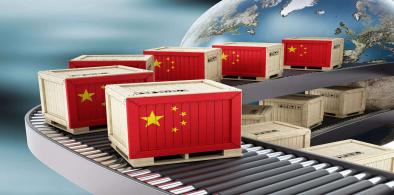
The structural transformation of India’s export basket is no longer incremental—it is systemic. Technology-driven industries with higher value addition are steadily outpacing traditional sectors. If managed strategically, external tariff pressures could accelerate this transition. Rather than viewing tariff hikes solely as a threat, India can leverage them as a catalyst for deeper integration into global supply chains and stronger positioning in high-technology manufacturing. The reshaping of India’s export architecture is already underway. The tariff shock may simply fast-forward the process.

AI Encounters in Indian Higher Education: In Search of Humans in the Loop

Considering the potential of AI in solving complex questions and generating contents in individual writing styles, institutions need to ask a few fundamental questions - what is the role of academia in ensuring that the learners are not being slaves to AI, but masters who are aware of the potential bias and hallucinations that has a huge impact on knowledge acquisition and dissemination?  Should it be a social responsibility of higher educational institutions to ensure meaningful curriculum and assessment practices which make learners future ready in such a rapidly changing AI era?

Cryptocurrency and the Emergence of a Parallel Financial Architecture in South Asia

Recent global adoption indices confirms that South Asia has become one of the most dynamic regions for cryptocurrency engagement, with implications for remittance use. According to the 2025 crypto adoption index by Chainalysis, India secured the top position worldwide in overall crypto adoption across retail usage, reflecting pervasive grassroots digital activity. Pakistan and Bangladesh also feature prominently, with Pakistan ranking among top three in Asia and Bangladesh within top 20

More on Spotlight

Why Bangladesh should be seen as a South Asian economic miracle

Bangladesh is a South Asian miracle. Dislodging India, Bangladesh has quietly made its way to the top spot of the South Asian economic wheel, writes Shuvo Das for South Asia Monitor  

World must not forget the Rohingya refugees of Bangladesh

The Afghan and Ukraine crises have worsened the situation. But the world must remember that Rohingyas are also refugees, writes Parvej Siddique Bhuiyan for South Asia Monitor 

Defining moment for earth: South Asia faces grave environmental concerns

South Asia alone produces around 300 million tonnes of solid waste annually and 70–80 percent of these ends up in water bodies or in oceans, write George Cheriyan and Simi T.B. for South Asia Monitor 

Indian food aid to Sri Lanka; Are there any lessons from 1987?

Sri Lanka should also remember the adage ‘there are no free lunches’ and bilateral relations will depend on a give-and-take policy, writes Suggeeswara Senadhira for South Asia Monitor

Men who fight together must pray together: The hallowed tradition of secularism in India's armed forces

As officers in the armed forces, their religion is that of their soldiers, sailors and airmen and all religious festivals of India are attended and taken part by all officers and families, writes Col Anil Bhat (retd) for South Asia Monitor 

India's pivot to Indo-Pacific is harbinger of geo-economic shifts in trade priorities

The US has now become important for India’s energy security as is the United Arab Emirates, Saudi Arabia and Iraq, writes N. Chandra Mohan for South Asia Monitor

Should the future of India be held hostage to a divisive ideology?

The 1991 act was aimed at focussing social energies on building the future while preserving the integrative aspects of Indian syncretism, what Jawaharlal Nehru underlined as "Ganga-Jamuna tehjeeb", writes Dr Ram Puniyani for South Asia Monitor

Sri Lanka: Beginning of end for political crisis, end of beginning for economy

His traditional urban backers grudgingly accept Prime Minister Ranil Wickremesinghe’s confession that they have to bear more for a few weeks more before pressing the recovery button. The same cannot be said of the rural poor, writes N. Sathiya Moorthy for South Asia Monitor

Why the US wants more engagement with Bangladesh

The US plans to sign two defense agreements with Bangladesh: GSOMIA and ACSA and, through these, the US hopes to strengthen military ties by enhancing intelligence sharing and exchanging logistical and technological support, writes Fumiko Yamada for South Asia Monitor 

Wheat exports: India's assurance to neighbours is a positive development for South Asia

India prioritizing neighbouring countries in its foreign policy objectives, particularly by assisting Sri Lanka and Afghanistan amid crises, shows its commitment to 'Neighbourhood First' policy, writes John Rozario for South Asia Monitor

Jaundiced approach to history: No room for composite culture in a changing India?

A mix of Indo-Pakistani enmity and a twisted, politically motivated interpretation of the subcontinent’s past, have helped the BJP to depict the Muslims as demons against whom the Hindus have to wage a relentless battle, writes Amulya Ganguli for South Asia Monitor

Should India rethink the ban on wheat exports?

Domestically and in the neighbourhood, too, India’s ban only creates fresh uncertainties despite the government’s assurance that government-to- government contracts will be honoured, writes N. Chandra Mohan for South Asia Monitor

Why Bangladesh can claim success in managing Covid-19

Bangladesh has a long experience in facing natural disasters and managing risks and has been utilizing the learning to cope with Covid-19 too, writes Dr Mohammad Rezaul Karim for South Asia Monitor 

Price of chauvinism: Sri Lankans soul-search as mass fury topples a prime minister

The path ahead in Sri Lanka will not be easy – for anyone. But the situation – widespread shortages of all essentials including medicines, food and fuel – have left many Sinhalese wondering if they were right in ignoring what tens of thousands of Tamils underwent for long years, writes M R  Narayan Swamy for South Asia Monitor

From donation seeker to donor: Bangladesh's assistance to Sri Lanka is a governance lesson for others

Bangladesh continues to generously host the world’s largest and growing refugee settlement despite the huge burden on economy, food management, limited resources and other circumstances, writes John Rozario for South Asia Monitor