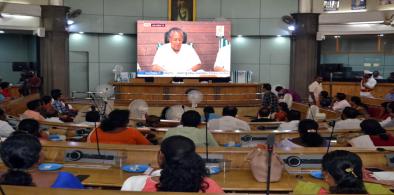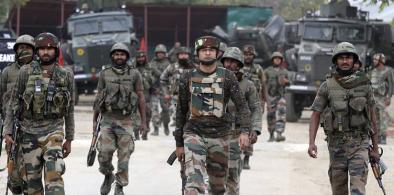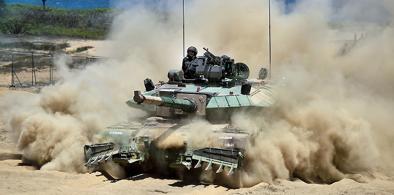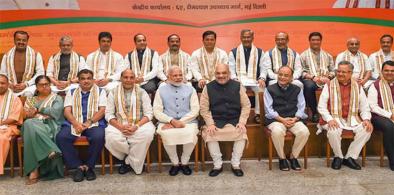

India is poised for an all-out war and, like in any war, this is not the time for partisanship. It’s in this scenario that Modi will find himself at a fork in the road, writes E.D. Mathew for South Asia Monitor

Here is something that is perhaps not widely reported. According to this account, Iranian forces were able to destroy a significant part of the logistics infrastructure supporting these large carrier operations. They struck the central logistics hub in Bahrain very early in the conflict.
Bangladesh's Prime Minister need not visit India simply to keep relations cordial, but when engagement can advance its interests, refusing engagement becomes a cost of its own. The objective should be to preserve leverage through engagement, not to mistake rigidity for leverage.
However, the political situation has gradually begun to show currents that may move against Munir. The Supreme Court of Pakistan’s order to shift former Pakistan Prime Minister Imran Khan, Munir’s arch-rival, to a private hospital and the statement by the US Ambassador to India, Sergio Gor affirming that J&K is "an important part of India", reinforces the impression of classic temporariness and limited strategic relevance of Pakistan in US-Pak relations.
New Delhi’s official response has been measured, almost pointedly so, a statement that India is “looking into the implications” rather than any dramatic condemnation. That restraint is wise, and should be read as strength rather than uncertainty. India’s ties with Saudi Arabia are too economically consequential, too carefully cultivated over the past decade, for Riyadh to jeopardize them by handing Pakistan a blank check.
India is poised for an all-out war and, like in any war, this is not the time for partisanship. It’s in this scenario that Modi will find himself at a fork in the road, writes E.D. Mathew for South Asia Monitor

Indeed, if anyone is serious about the plight of the Rohingyas and is looking for sustainable solutions to the crisis, then the person ought to put her gaze not on Bangladesh but on Myanmar, writes Imtiaz Ahmed for South Asia Monitor

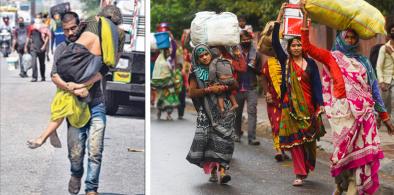
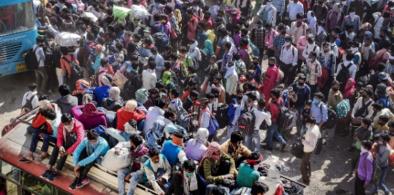
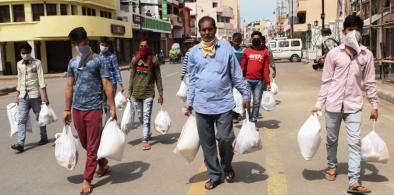
When the first COVID-19 case came to public notice in India in January this year, questions in concerned quarters have been raised as to why did it take almost two months to prepare for lockdown and that too with a notice of a few hours to leave many citizens unprepared and more so the migrant and the poor, writes Partha Pratim Mitra for South Asia Monitor

RSS remains quite optimistic about the way the new world order is going to pan out post-COVID-19. It feels that it is the beginning of a new golden era for India, writes Arun Anand for South Asia Monitor

The consequence of continuing the lockdown, even under present conditions, could be grave, as the self-employed people like vendors, plumbers, auto drivers, small automobile workshops etc. as well as poor senior citizens, visually impaired/differently-abled people, who are millions in number all over the country, would be badly hit, writes N S Venkataraman for South Asia Monitor

The legitimacy of a regional organization like SAARC and others alike will be uncertain if strategic measures and procedures to control COVID-19 do not work in South Asia, writes Maj. Gen Binoj Basnyat (retd) for South Asia Monitor
No one can predict what the trajectory of communal relations will be when it is clear that so much will change in the post-corona period not only with regard to Hindu-Muslim ties, but in every other field that the scene in India will be quite different from what it is today writes Amulya Ganguli for the South Asia Monitor
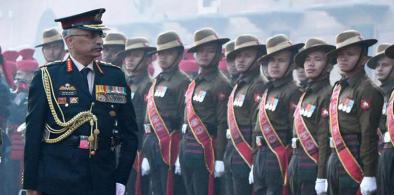
The armed forces, after decades of clamouring, have been accorded a historic opportunity to usher in change and reforms. It is imperative that this opening is utilized with sagacity and deliberate forethought writes Admiral Arun Prakash (retd) for the South Asia Monitor
How much the talk of sharing power with the Taliban is realistic - that raises doubts, as it is impossible for the Taliban to be diverted from their ideology, writes Monira Nazmi Jahan for the South Asia Monitor
We, the people of Nepal should understand that if an unfortunate incident can befall one, it can befall others too. That’s why we all need to stand together, writes Jivesh Jha for the South Asia Monitor
While the South Korean model of aggressive and maximum testing has proved successful; the world is also studying and appreciating the Indian model wherein a densely and an overpopulated nation with limited resources and a not very advanced health infrastructure has been able to control the exponential spread of the pandemic, writes Brig Anil Gupta for the South Asia Monitor
The question whether India’s initiative will develop into a SAARC minus Pakistan or lead to a revival of SAARC itself remains open, writes Amb T P Sreenivasan (retd) for South Asia Monitor
This inability to get any meaningful trade agreement in place speaks volumes about India’s potential future relations with the US with Trump as president, writes Frank F Islam for South Asia Monitor
Lockdown cannot be an option to exercise indefinitely. We need to progressively lift it so that the economic costs will not overwhelm us, writes Mohan Guruswamy for the South Asia Monitor
It wasn't only a favour to the US, Brazil or Israel. India also decided to send HCQ “to all our neighbouring countries who are dependent on our capabilities” and “some nations who have been particularly badly affected" by the pandemic, writes Arul Louis for South Asia Monitor