
Wildlife in Pakistan

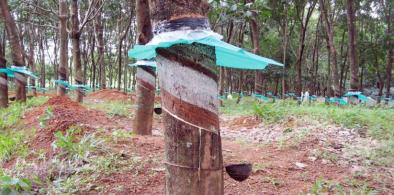
Deforestation Disrupting Ecosystems, Creating Habitat Loss of Wildlife in Pakistan: Needed Targeted Policy Interventions

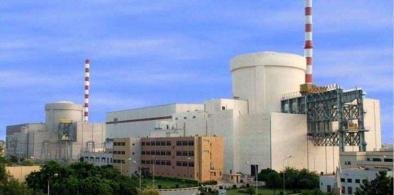
Deforestation in Pakistan is a pressing issue with serious implications for wildlife and ecological balance. Habitat loss, human-wildlife conflict, and ecosystem disruption are already evident, and the situation will worsen without decisive action. While initiatives like large-scale tree planting are a step in the right direction, they must be complemented by strong policies, effective enforcement, and community involvement. 

Looming Energy Crisis in South Asia: Strait of Hormuz Disruption is Reshaping Benchmarks of Regional Leadership

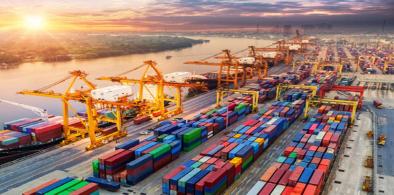
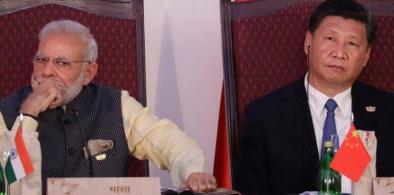
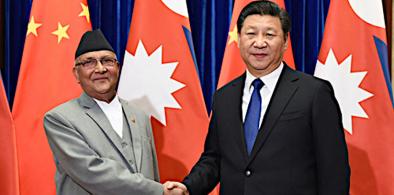
South Asian states prioritise partners who can deliver immediately in times of economic and political uncertainty. Despite expanding economic ties with China, they continue to turn to India for vital supplies like diesel, LPG and crude oil. This is not only about proximity but rather reflects a level of trust built through repeated experience. China, in response to the crisis, chose to restrict exports of refined fuels such as gasoline and diesel to protect its domestic market. 

Bridging the Climate Gap: India’s Path from Belém to Viksit Bharat

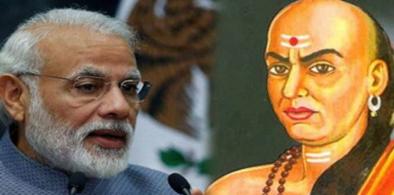
COP30, Viksit Bharat, and SDG 13 cannot be separated into silos of policy. They have to be woven into one coherent climate-development narrative. At COP30, India can exercise credible ambition and obtain enabling mechanisms from international partners. At home, Viksit Bharat has to internalise climate—not as a compulsion, but as the basis for India’s success. SDG 13 is the yardstick by which India’s growth needs to be measured to determine if growth is both sustainable and future-proof.

Macroeconomic Stability and Fiscal Sustainability in South Asia: Takeaways from IMF–World Bank Spring Meetings

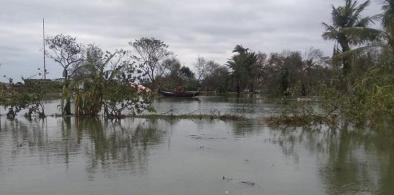
Macroeconomic stability and fiscal sustainability in South Asia are deeply interconnected and increasingly fragile. While the region continues to grow rapidly, structural weaknesses and external vulnerabilities pose significant risks. Insights from the World Bank and Asian Development Bank highlight that sustaining stability will require improved revenue mobilisation, credible fiscal consolidation, structural economic reforms and reduced exposure to external shocks.   

More on Spotlight

Is India’s populist surge a threat to liberal democracy?

The success of Modi’s populist campaigns in 2014 and 2019 Lok Sabha elections, followed by the majoritarian mobilizations and lurking use of repression, pose a serious threat to liberal democracy in India, writes L T Om Prakash for South Asia Monitor

A battle for India's soul

With Delhi assembly elections set for February 8, the battle lines are sharply drawn between two pitting ideologies that have polarised national discourse like at no time before, writes Tarun Basu for South Asia Monitor

Soleimani’s killing has only helped Islamic State, will threaten South Asian security

The re-emergence of IS would have a definite impact on the Af-Pak region, with its consequential fallout for India and regional peace and stability in South Asia, writes Brig Anil Gupta (retd) for South Asia Monitor

Shaheen Bagh protests: A unique civil society movement led by women

What makes the Shaheen Bagh rare in the history of Indian civil society movements is that this is the first-time Muslim women are leading a protest against a law passed by the state, writes Alakh Ranjan for South Asia Monitor

CAA will deepen perception of an India unfriendly to Muslims

It is widely believed that India’s decision on CAA would ‘question the principle of equality before the law’ and emotionally impact the Muslim community of both India and its neighbouring countries, writes Sukanya Bali for South Asia Monitor

Challenging times for Indian foreign policy as new foreign secretary takes charge

Shringla, who came in from Washington where he served as India’s ambassador, will have his work cut out, writes  Nilova Roy Chaudhury for South Asia Monitor 

Will China’s strategic embrace of Myanmar spell more trouble for Rohingyas?

The strategic gameplan of support to the Rohingya militancy is clearly visible. One, for China, making them into militants can be used to destabilize many countries, including India in South Asia, thus weakening its economic competitors, writes Swadesh Roy for South Asia Monitor

South Asian countries must formulate legal frameworks to control marine litter

In South Asia, the issue of marine litter management is not taken as a priority by any of the nations, write Harsh Mahaseth and Shubham Sharma for South Asia Monitor 

Religious extremism taking hold in Afghanistan as Taliban influence spreads

Salafist movements, such as Hizb ut-Tahrir and the Jamiat-E Eslah, while opposing Taliban methods, are generally the same, and these movements, consciously or unconsciously, pave the way for Taliban recruitment in Afghanistan, Writes Saleem Payenda for South Asia Monitor

Vulnerable communities in Bangladesh to be worst hit by climate crisis

Bangladesh and Maldives, amongst others, are the most afflicted and vulnerable victims of environmental pollution and climate change, Write Akmal Hossain for South Asia Monitor

Anti-CAA protests in India mask Assam’s lonely struggle

The nature of protests and participation of people in anti-CAA rallies in Assam indicates that Assam rejects the communal agenda of the current BJP-led government and diversionary tactics of the mainstream media, write Minakshi Bujarbaruah & Rituparna Kaushik Bhattacharya for South Asia Monitor

What is drawing Iran and Taliban closer?

The Taliban has never been happy about Iran’s cultural influence in Afghanistan. When the Taliban ruled Afghanistan, they rejected any cultural links between Iran and Afghanistan and ignored Iran’s interests, writes Zahid Aria for South Asia Monitor

The profound symbolism of the Shaheen Bagh protests

The world must note the significance of the Shaheen Bagh phenomenon, as it highlights the power of Gandhian non-violent and secular protests in the face of the formidable State machinery, writes Brigadier Deepak Sethi (retd) for South Asia Monitor

Was India's controversial citizenship act modeled on US legislation?

External Affairs Minister S Jaishankar missed an opportunity at the news conference with Secretary of State Mike Pompeo and the two other participants at last month’s 2+2 strategic dialogue to clearly explain India’s goals behind the CAA in the rare opportunity he got to make the case in public before the US media, writes Arul Louis for South Asia Monitor 

Is India heading for a constitutional crisis over CAA?

Nearly all the non-BJP state governments have ruled out implementing the two measures, thereby preparing the battlefield for an unprecedented confrontation which will shake up the federal polity, writes Amulya Ganguli for South Asia Monitor