How the 215.8 million under 30 might vote in the seven-phase election would be a compelling trend to watch.



Air power will remain central to national security. Whether India has enough of it, in the right form, and can afford it in scarce dollars, is still an open question. ACM Singh is to be commended for his distinguished service and stellar leadership – and more importantly – rendering objective professional advice to the apex leadership, an increasingly rare trait in the current times.
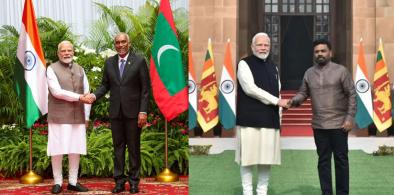
Under conditions of what is increasingly described as the "Great Fragmentation," Sri Lanka's geographic proximity to India should be viewed as a strategic advantage rather than a liability. Properly managed, this strategic reality could help transform Sri Lanka into a prosperous and stable nation.
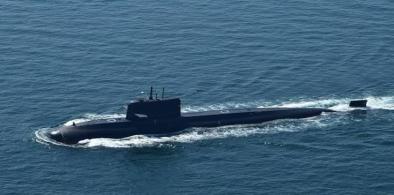
The September 27 firing is therefore best seen as the beginning of a new phase in Pakistan’s naval modernization. The larger strategic question is still open. Whether Hangor changes the regional maritime balance will depend on what comes next
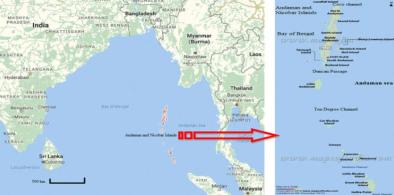
The Great Nicobar Island Development Project (GNIDP) is a mammoth venture by India to strategically strengthen its presence in the Andaman Sea and Southeast Asia with its own transshipment hub. The mega-infrastructure project spans approximately166.10 sq km covering about 15% of the total landmass of Great Nicobar Island at the southernmost tip of the Andaman and Nicobar archipelago.

How the 215.8 million under 30 might vote in the seven-phase election would be a compelling trend to watch.
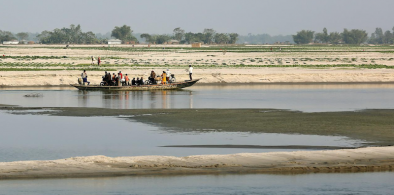
Bangladesh's initiatives have resulted in impressive climate adaptation ventures, including the construction of the world's largest multi-storied social housing project in Coxs Bazar, which will rehabilitate 4,400 families displaced by climate change.
One of the impacts of the pandemic in South Asia has been on education. Yet, at least 11 million primary-age and almost 21 million lower secondary-age children in South Asia are not even in school, according to a recent UIS estimate.

After almost every disaster we see that our leaders come in front of the media to strongly express their grief and form an even stronger investigation committee. But the investigation committee's 'strong' report somehow gets lost in the dark abyss of the Bermuda Triangle.
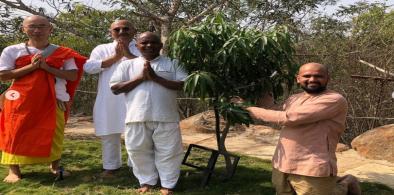
Their vision includes a plan to graft mangoes from Bangladesh this year. These mango trees will bear ‘the fruit of unity’ with three distinct varieties in a few years - from India, Pakistan and Bangladesh. They will be more than just a horticultural marvel - they will be a testament to the subcontinental people’s aspirations for peace and unity.
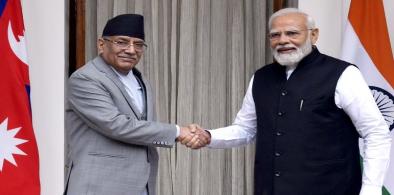
Last month, after Indian Foreign Secretary Vinay Mohan Kwatra met his Nepali counterpart Sewa Lamsal in Kathmandu, a press note issued on this meeting mentioned the two sides discussed “multifaceted cooperation”. However, it did not reference PMP, which is by far the biggest bilateral power project conceived between the two sides.
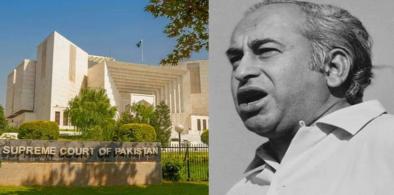
“It shows that even popularly elected prime ministers can be humiliated, incarcerated and even sent to the gallows when the state desires it and that the legal system can be manipulated to suit the whims of powerful forces.”
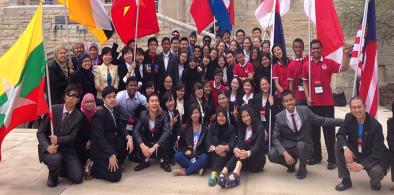
The EU therefore will need to depend on other regions to bridge the manpower gap and South Asia could be an important source, but global partnerships in skilling will need to happen in a big way.
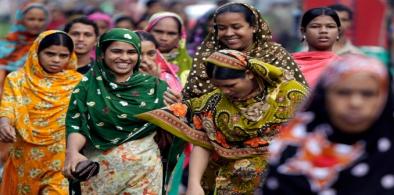
Women have to take risks at every step while walking down the streets. In the vast area of Bangladesh, there is hardly any place where a woman can breathe safely. Hatred towards women is being spread at every level of society.
The two major reforms in labor and land policies being politically sensitive will be a dampener if not implemented. These are political decisions much like the aborted advantageous farm reforms.
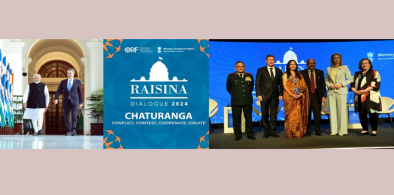
Building trust within our societies and institutions is paramount, as evidenced by the correlation between trust levels and resilience during crises such as the COVID-19 pandemic.
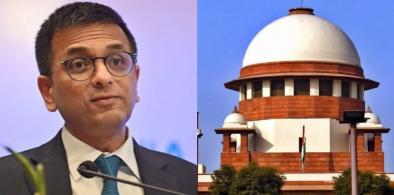
What is of significance and runs parallel in both the above verdicts is the Supreme Court's innate concern for upholding democratic values in the Indian polity.

The United States wants to keep the South Asian region stable, seeking to neutralize the overdependence of any nation on China. Bangladesh, because of its geostrategic position, is being lured to align Dhaka with Washington’s strategic objective for a free and open Indo-Pacific.
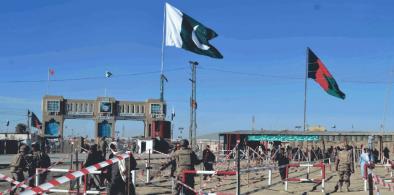
While the contentious Durand Line has become one of the main reasons for cross-border skirmishes between Afghanistan and Pakistan, the Taliban has turned from being seen as an ideological ally that can give Pakistan 'strategic depth' against India, to a troublesome neighbour that is now viewed with deep suspicion.
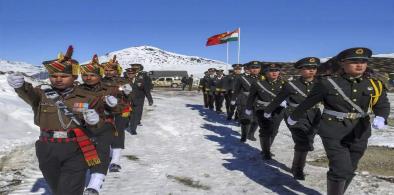
Since 2019, China has been building 628 dual-use military villages (termed ‘Xiaokang’ or ‘well-off’ villages) along the southern border of the Tibet Autonomous Region (TAR), including inside Bhutan and in Arunachal Pradesh, India.