Most importantly, does the rise, arming, and free hand given to Arambai Tenggol signal the arrival of private political armies in India?


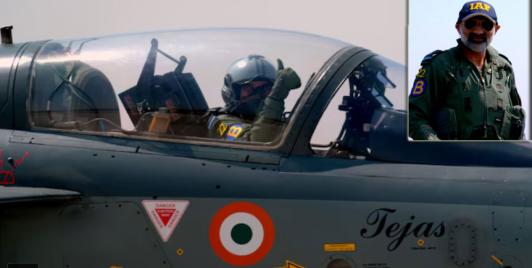
Air power will remain central to national security. Whether India has enough of it, in the right form, and can afford it in scarce dollars, is still an open question. ACM Singh is to be commended for his distinguished service and stellar leadership – and more importantly – rendering objective professional advice to the apex leadership, an increasingly rare trait in the current times.
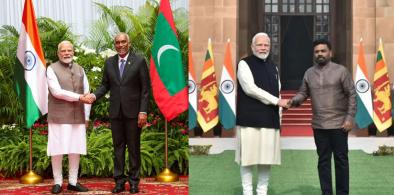
Under conditions of what is increasingly described as the "Great Fragmentation," Sri Lanka's geographic proximity to India should be viewed as a strategic advantage rather than a liability. Properly managed, this strategic reality could help transform Sri Lanka into a prosperous and stable nation.
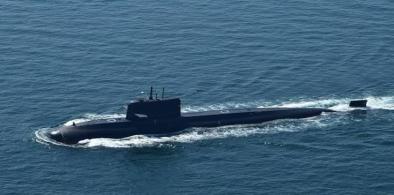
The September 27 firing is therefore best seen as the beginning of a new phase in Pakistan’s naval modernization. The larger strategic question is still open. Whether Hangor changes the regional maritime balance will depend on what comes next
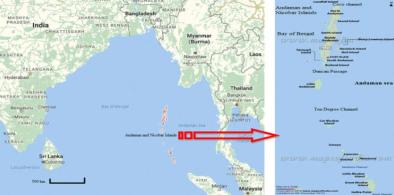
The Great Nicobar Island Development Project (GNIDP) is a mammoth venture by India to strategically strengthen its presence in the Andaman Sea and Southeast Asia with its own transshipment hub. The mega-infrastructure project spans approximately166.10 sq km covering about 15% of the total landmass of Great Nicobar Island at the southernmost tip of the Andaman and Nicobar archipelago.
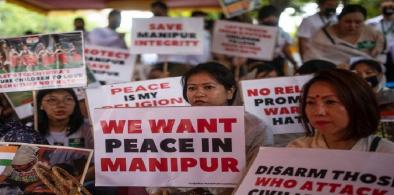
Most importantly, does the rise, arming, and free hand given to Arambai Tenggol signal the arrival of private political armies in India?
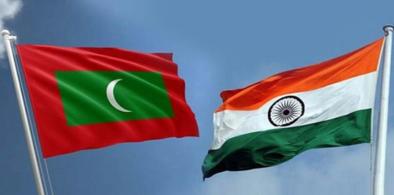
As it stands today, Maldives is going to be drawn deeper into China’s strategic sphere. Chinese presence in Maldives is set to increase.

Designating it as a ‘Hindu’ New Year appears to be part of an ongoing attempt to homogenise our diversity and multiple, multicultural identities.
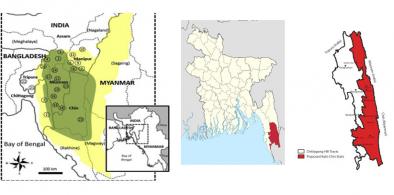
It is critical to formulate a comprehensive strategy that involves both Bangladesh and India to counteract the potential threats posed by external actors in the CHT. This strategy should take into account the historical grievances and aspirations of the ethnic communities
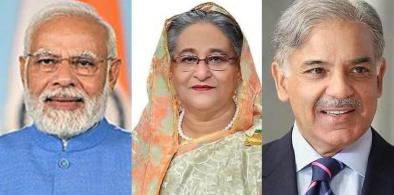
After all, If India can do more than $100 billion worth of business with China, with which it is now involved in a far more complex border dispute and naval rivalry, then we can at least do business with our next-door neighbours and let consumers have a greater choice.
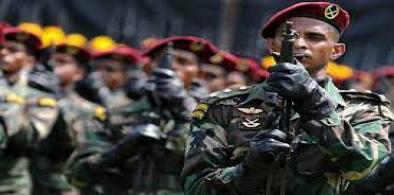
A report submitted by the State Intelligence Service ( SIS) of Sri Lanka to the country’s defence secretary indicates there are hundreds of Sri Lankan nationals serving on both Russian and Ukrainian fronts.
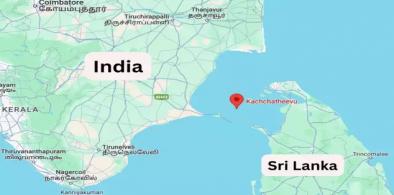
India watchers in Sri Lanka are not unduly worried about Modi’s statement and External Affairs Minister Subramaniam Jaishankar’s comments. They point out that Modi did not say that his government will seek to retrieve Katchatheevu from Sri Lanka.
After the Indian protests over China’s research vessels in the Indian Ocean, Sri Lanka has indicated that Chinese vessels can dock at Sri Lankan ports for replenishment and repairs.
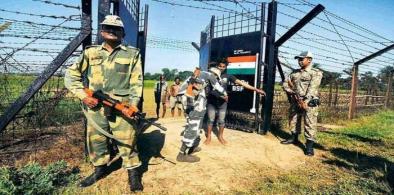
Despite extraordinary diplomatic efforts and landmark agreements between the two countries, the ground reality along the border often reveals deep-seated animosities fueled by historical legacies, socio-economic disparities, and cross-border dynamics.
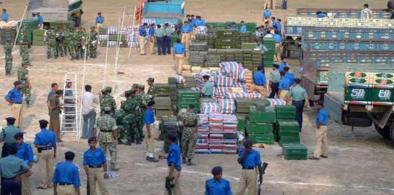
An analysis of Chetia's and Singh's interviews alongside the court's detailed judgement brings out several crucial points. Firstly, there was a concerted effort to transform Bangladesh into a sanctuary for ULFA and other rebel factions from India's northeast, facilitated by Pakistan's intelligence agency.

Strategic initiatives such as "AI in Defense," "Make in India," and "Buy IDDM" demonstrate India's commitment to nurturing indigenous AI solutions.
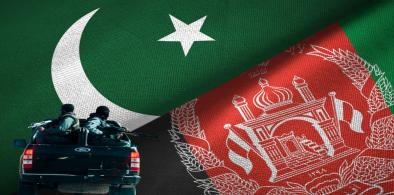
The US, it would seem, was awaiting the formation of the new government in Pakistan to nudge Islamabad to act against the various outfits operating from Afghan territory and this suited Pakistan. Simultaneously, the much-awaited tranche from the International Monetary Fund (IMF) has been cleared at the staff level to help Pakistan ease its economic situation.
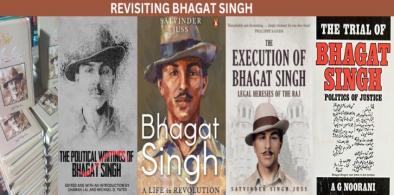
Since 1947, the establishments of Pakistan and India have aggressively promoted identities of ‘separateness’ based on religion. However, the people of both countries have a more mature understanding of the fluidity of identities.
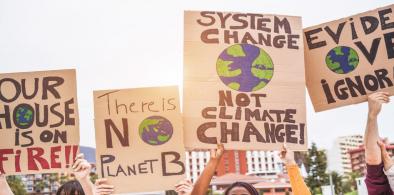
Accelerated climate action would continue if Modi retains his leadership after the election. Expansion of solar and wind infrastructure and enhanced investment in green hydrogen and electrical vehicles have already been announced in the interim budget presented recently.
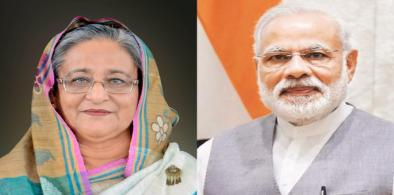
The CAA and its influence on Bangladesh demonstrate the complex interplay of geopolitics, identity, and diplomacy in South Asia.