
US Secretary of State Marco Rubio with Prime Minister of Hungary Viktor Orban.

New Civilisational Thesis of Western Renewal Risks Reviving Spectres of Colonialism and Racism

After Munich, Rubio travelled to Budapest and aligned himself warmly with Orbán’s government, praising Hungary’s trajectory. For European leaders committed to participatory democracy and the rule of law, the signal must have been disquieting. It suggested that Washington’s conception of Western solidarity may prioritise cultural homogeneity over liberal pluralism.

Trump’s Tariff Shock and India’s Export Reset: A Tech-Led Turn in the Making

The structural transformation of India’s export basket is no longer incremental—it is systemic. Technology-driven industries with higher value addition are steadily outpacing traditional sectors. If managed strategically, external tariff pressures could accelerate this transition. Rather than viewing tariff hikes solely as a threat, India can leverage them as a catalyst for deeper integration into global supply chains and stronger positioning in high-technology manufacturing. The reshaping of India’s export architecture is already underway. The tariff shock may simply fast-forward the process.

AI Encounters in Indian Higher Education: In Search of Humans in the Loop

Considering the potential of AI in solving complex questions and generating contents in individual writing styles, institutions need to ask a few fundamental questions - what is the role of academia in ensuring that the learners are not being slaves to AI, but masters who are aware of the potential bias and hallucinations that has a huge impact on knowledge acquisition and dissemination?  Should it be a social responsibility of higher educational institutions to ensure meaningful curriculum and assessment practices which make learners future ready in such a rapidly changing AI era?

Cryptocurrency and the Emergence of a Parallel Financial Architecture in South Asia

Recent global adoption indices confirms that South Asia has become one of the most dynamic regions for cryptocurrency engagement, with implications for remittance use. According to the 2025 crypto adoption index by Chainalysis, India secured the top position worldwide in overall crypto adoption across retail usage, reflecting pervasive grassroots digital activity. Pakistan and Bangladesh also feature prominently, with Pakistan ranking among top three in Asia and Bangladesh within top 20

More on Spotlight

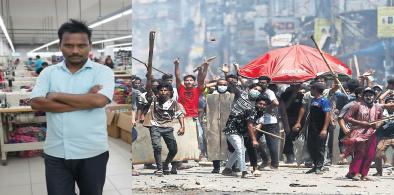
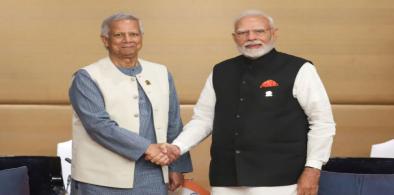
India-Bangladesh diplomatic tensions has South Asia in a flux, heightening regional security concerns

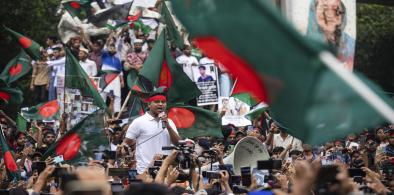
The rise of BNP as the most important party in the interim coalition, a party that is seen as more sympathetic towards China and Pakistan by New Delhi, and the diplomatic efforts by Beijing to woo Dhaka, opens the possibilities for increased Chinese influence in South Asia, making India more circumspect in its dealings with the interim government.

Bangladesh’s last chance for democracy

The interim government has established a ‘Constitutional Reform Committee,’ led by Dr. Ali Riaz, a Bangladeshi-American political science professor at Illinois State University. There is a widespread demand among students and civil society groups for necessary constitutional changes to prevent future dictatorships and eliminate anti-democratic provisions. The committee has already submitted its ‘Reform Report,’ addressing the demands of the mass revolution and laying the groundwork for democracy in Bangladesh.

Pakistan needs to make education a public policy priority

A  large number of families in rural areas, as well as in some urban areas, still don’t consider the education of girls essential and thus do not send them to school. This trend, however, is on the decline, especially in the urban centers of Pakistan. According to the data presented by the Annual Status of Education Report (ASER) in 2022 by Idara-e-Taleem-o-Aagahi (ITA), 64% of boys were admitted to public schools as compared to only 36% of girls.

Five years since the COVID-19 lockdown: How AI is putting life in the fast lane

March 2020 was when the world hit pause. Airports emptied, city streets grew silent, and entire countries retreated indoors. What started as "two weeks to flatten the curve" spiraled into months of uncertainty. Time felt stretched, endless - one long, monotonous loop of home workouts, doom-scrolling, and everyone suddenly becoming a chef, experimenting with recipes they’d never try otherwise.

Women's growing role in Pakistan’s peace policies

The role of women in peacemaking at the national level is still nascent. However, Pakistan’s women UN peacekeeping missions' role in promoting peace in post-conflict spaces is widely acknowledged. More than 500 hundred Pakistani women peacekeepers are currently in different UN missions. 

Chinese checkers - weaving a string of pearls around India

Viewing the Chinese projects in Nepal’s Terai region, and close to the strategic Chicken’s Neck in Bangladesh, together with the one in the waters of Maldives, one can see that China's calculated moves seek to slowly encircle India. 

EU's 'new strategic agenda' with India: Crisis in US ties compels Brussels to seek closer partnership with New Delhi

The transatlantic alliance, considered to be a pillar of geopolitical stability, now faces an uncertain future and the realism that Europe can no longer depend on its security on the US has begun to creep in the minds of policymakers in Brussels.

Can Pakistan sustain its bold policy reforms?

Another critical reform is ensuring that at least 33% of government board members are women. This move is more than just a symbolic gesture; it marks a tangible shift toward inclusivity in decision-making. Women have historically been underrepresented in governance structures, and this policy sends a strong message that their voices are not just welcome but necessary for Pakistan’s progress.

Beyond the 2024 elections: Sustaining democracy and development in Jammu & Kashmir

While the BJP began on the backfoot as the party of Hindutva (political Hinduism) inspiring little confidence among Kashmiri Muslims, the elections provided vindication to the Modi government's Kashmir policy even in his party's defeat. It was a feat in itself to hold peaceful elections with all political parties contesting under the post-2019 arrangement with a 63.88% turnout to show.

The next pandemic will not wait for policy debates: Shun anthropocentric mindset to One Health in South Asia

Take, for instance, the recent rise in antibiotic-resistant bacterial infections across Nepal, India, and Bangladesh. Governments have started cracking down on antibiotic overuse in human medicine, yet the uncontrolled use of antibiotics in livestock and aquaculture remains largely unchecked. The result? Resistant bacteria continue to grow, eventually finding their way into human populations

South Asian refugee crisis: Political scapegoating and interstate conflicts hinder institutional mitigation

South Asian states have steered clear of accepting formal responsibilities in addressing refugees, with only Afghanistan being a curious signatory to the 1951 Refugee Convention. South Asian states have sought a more voluntary approach to taking in refugees, with geopolitical considerations driving the select acceptability of refugee communities.

Transacting with Trump: Can Modi turn Trump's climate denialism into an opportunity?

Modi can invoke Trump’s language and highlight business and economic opportunities along with market mechanisms that are available almost on platter while pursuing a non-fossil fuel future.  Particularly,  Modi could showcase employment generation by promoting solar energy through the International Solar Alliance. He and Trump can strike bilateral and multilateral ventures as well as research programmes with BRICS on solar energy, modular nuclear plants, windmills, biofuels and green, grey and blue hydrogen.

How India is drawing inspiration from its ancient treatise to strategise national security

On October 21, 2023, India launched ‘Project Udhbav’ during the inauguration of the Indian Military Heritage Festival to synthesize ancient wisdom with contemporary military practices, forging a unique and holistic approach to address modern security challenges. It is tempting to draw a correspondence between India’s and China’s initiatives just 17 days apart.

Nuclear is the way to go: A transformative shift in India's energy landscape

India has 24 nuclear reactors in operation in 8 nuclear power plants with a total installed capacity of 8,180 MW nuclear power produced a total of 48 TWh in 2023, contributing around 3% of total power generation in India.  Due to earlier trade bans and lack of indigenous uranium, India has uniquely been developing a nuclear fuel cycle to exploit its reserves of thorium. India is actively pursuing the development of nuclear energy using thorium as its primary fuel source

South Asian countries must adopt Colombo Process to safeguard migrant labour interest

Since the Colombo Process Ministerial Consultation in Bali, 2005, member states have taken concrete steps to improve the management of labour migration. There has been significant progress in areas of revised policies and regulations. There is greater cooperation between Colombo Process countries and key destination countries. Several initiatives are now in place including awareness-raising campaigns, orientation training, recruitment drives, remittance investment and welfare programmes.