The Canadian government is doing a very big mistake by thinking that such separatists and terrorist groups operating in Canada will not harm Canada but only other countries.


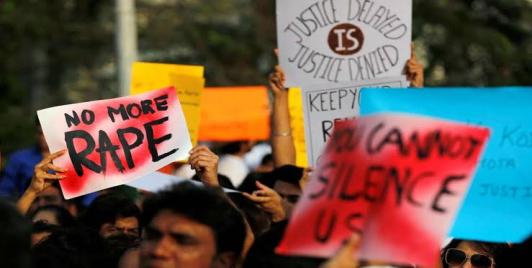
The Chopra siblings' murder in 1978, the Nirbhaya case of 2012, R.G. Kar Kolkata in 2024 and Kalkaji in 2026 belong to different historical contexts. Yet they reveal a recurring difficulty in Indian governance: we are capable of extraordinary mobilisation after extraordinary violence, yet less consistent at converting that mobilisation into permanent institutional practice.

The Tata group is a national icon, a picture of enterprise, growth and service packed in a business model that many Indians cherish and hold as an exemplar. That model, in which the bulk of a great enterprise’s profits flows to charitable trusts for the public good, is rare anywhere in the world.

Aggressive migration of youth and workers to metro cities in search of better opportunities is common across the region. And so is the response deficit by local and central governments in providing them with basic, dignified lifestyles. The time has come for the elected representatives to think differently and narrow the gap between government schemes and results on the ground.

These achievements have positioned India as a digital governance exporter. Singapore, Nepal, Bhutan, France, Mauritius, Sri Lanka, and the United Arab Emirates have already established UPI connectivity, and more than 50 countries have expressed interest in replicating aspects of India Stack’s open digital infrastructure.

The Canadian government is doing a very big mistake by thinking that such separatists and terrorist groups operating in Canada will not harm Canada but only other countries.
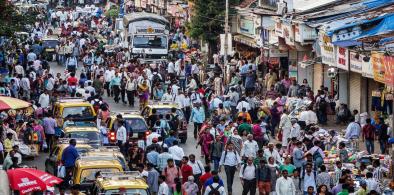
It is possible to use the numbers to argue in many ways but what should be reasonable to note is that there is no conspiracy among a certain set of people to grow their numbers. Demographics tells us that as the level of education (particularly of the woman) and the standard of living of the family moves up, the number of children per woman generally comes down.

A mere look at the map of Tripura showed that the insurgents were operating from the hills where there was no police presence as all the police stations and posts were on the main roads. I was convinced that we should move into the hills.

The statue has cost substantial money but is fully funded by the public through a charitable trust managed by a number of Indians residing in the UK. The chair of an advisory group that oversaw the project was former Pakistani-origin mayor and minister Sajid Javed.
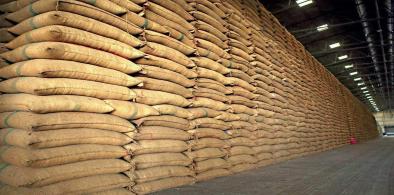
An increase in support of free food means cutting back on maybe health, education, infrastructure, military or pension benefits. The government cannot escape these difficult fiscal tradeoffs.
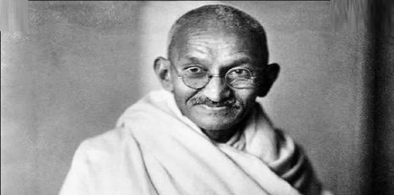
Thus the mantra of development should be spirituality with high technology. Both these things allow us to reduce our greed for resources and live in harmony with nature – something that Gandhi preached intuitively all his life.
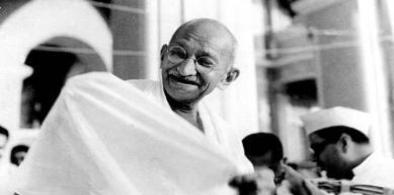
But for Gandhi, India's political destiny would have been vastly different and her moral stature vastly inferior.

Clearer commitments and standards on access and quality, making oversight and redressal mechanisms more participatory, and allocating adequate financial resources alone would make the right to healthcare to all citizens a reality.

The book is a must-read for all policymakers, diplomats, academics and civil and military personnel who have an interest in Siachen.
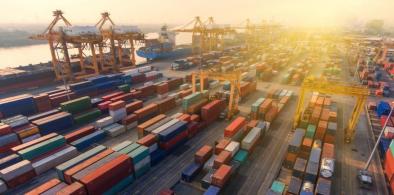
In a world slowing down due to a recession, even if our share of trade goes up from 3 to 4 per cent, that would be a huge boost for the Indian economy. And that is eminently feasible only if we are less afraid of open and free trade.
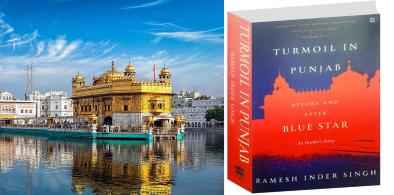
The book, in many ways, is the last word on the tragic and defining years of Punjab’s turmoil that took a large number of lives.

There are currently 41 ships and submarines under construction, 39 are being built in Indian shipyards, while in-principle approval is there from the Defence Ministry for 47 ships to be built in India.
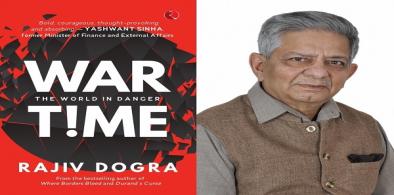
The author’s prognosis of a major contestation in the not-so-distant future is situated in the South China Sea. The compelling logic portends China’s proclivity to fight one or possibly two major wars before 2035, either with Taiwan or India before the major US-China war.

Riding the global strategic shift in manufacturing, India is on the cusp of attractive large-scale domestic and foreign investors by incentivizing supply chain manufacturing

It would be appropriate to design a comprehensive plan for India to create 10,000 unicorns in the next 25 years and with a few hundred becoming decacorns - enterprises with a valuation of over $10 billion. These enterprises alone could add over $12 trillion to India’s GDP.