
BRICS leaders

India, BRICS Fail the Iran Test: It Could Seek to Bridge Divides

For India, the failure is particularly significant as its presidency was an opportunity to translate “strategic autonomy”, the current buzzword in foreign policy circles, into multilateral leadership. True, its response is shaped by structural constraints. The country imports more than 85% of its crude oil, much of it from West Asia and Russia. Some nine million of its citizens live in the Gulf. The United States is its largest trading partner. Iran anchors the Chabahar port project and India’s access to Afghanistan and Central Asia. Each relationship is too consequential to risk.

Bhutan Under China’s Doklam Shadow: Delhi Needs to Move Away From Protector-Protected Dynamic With Thimpu

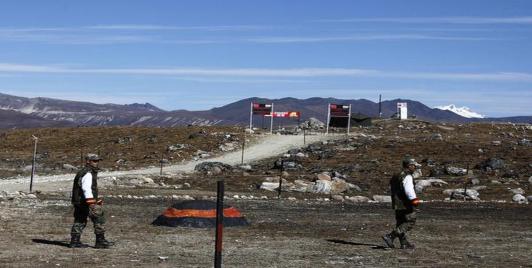
A key consideration for Delhi is Bhutan’s occasional denial or downplay of any Chinese encroachment on its territory, even when satellite data suggests otherwise. This is coupled with a growing perception within Bhutan that India is preventing it from completing its border negotiations with China. Although Thimphu remains closely aligned with Delhi, there is growing interest in expanding its engagement with China.

AI in Elder Care: Potential for Broader Social Transformation

For India, the opportunity is significant as its robust digital infrastructure and large demographic dividend can create a significant opportunity for adoption and deployment of Artificial Intelligence across sectors, particularly in the care economy. There is an ample room for the development of age-friendly products and services using AI innovation which are of scalable commercial value.

South Asia's EdTech Moment: Centre of Gravity of Global Education is Shifting

South Asia's higher education ecosystem — with over 1,500 universities and 60 million enrolled learners — is uniquely positioned to absorb and scale new models: work-integrated degrees, on-demand micro-credentials, lifelong learning. The Global South — Africa, Southeast Asia, Latin America, the Middle East — shares the same structural challenges. The solutions that work at scale in India, Bangladesh or Nepal will travel naturally to these geographies.

More on Spotlight

Gender Diplomacy: A New Peace Project For India‑Pakistan And South Asia

Aside from digital platforms for women-owned business, another concrete example could be to foster women-led marketplaces. Located along borders between the two countries, these could be designed to be safe, offering clean facilities and childcare. Stable and lower cost customs and visa processes could help restore trade relations and the trust of local communities affected by conflict. 

With BRICS Presidency, India Will Have To Walk A Fine Balance

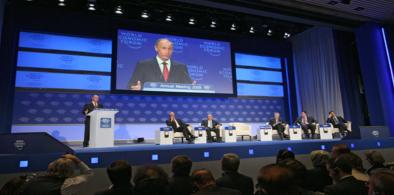
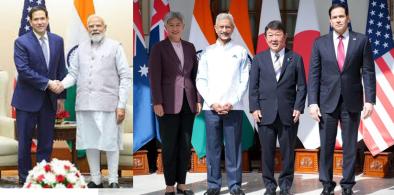
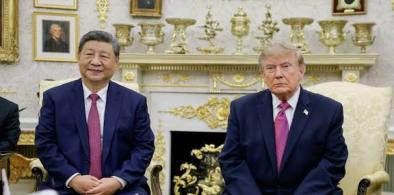
There is a difference between a BRICS common currency and de-dollarisation. While trade in local currencies is a compulsion due to sanctions and other changes in the global economic landscape, a BRICS common currency is not feasible due to economic and geopolitical reasons. India’s presidency of BRICS will be important, since it will have to walk a fine balance. While voicing the concerns of the Global South it would not want to get caught in a zero-sum geopolitical wrangling.

Pakistan in 2025: Deep State Grip

The year 2025 marked a mix of turbulent times for Pakistan with weakening yet stabilising economy, fractured, fragile polity and civil society, rise in enforced disappearances and heightened militancy. It also saw diplomatic initiatives with Asian states and resurgence of engagement with the United States. Overall, the Deep State with Pakistani Army leadership at the core continues to dominate the governance structures and institutions, further impinging on the democratic credentials of the country.

Lessons from the Venezuela Takeover: When Laws Are Irrelevant Without Enforcing Mechanism

It is clear that in those 'virtual' negotiations, the participating sides were the US, Russia and China. The EU, including Denmark, the country whose territory Greenland is, was not. India neither. The old rule that if you are not part of the negotiations, you are likely a subject to the decisions, holds true. Possible future steps would include annexation of Greenland, as indicated by Trump on multiple occasions, including also in interviews after the Venezuela takeover. This would achieve another objective – to weaken the EU further, as no EU state will likely challenge the US if the annexation happens.

Do Not Allow Politics To Colonise Our Shared Games

When cricket is weaponized against Bangladesh while India’s own internal challenges are ignored, the message is unmistakable: power, not principle, is guiding moral judgment. This undermines the very spirit of Neighborhood First, which depends on trust and even‑handedness. Over time, such practices erode confidence, deepen asymmetry, and weaken the foundations of cooperation.

South Asia's Youth Bulge Risks Becoming Long-Term Liability

South Asia’s unemployment challenge is unfolding differently across different regional countries, yet driven by almost similar structural failures. India’s scale magnifies the risks of jobless growth; Pakistan’s instability deepens youth disillusionment; Sri Lanka’s educated unemployment reflects long-standing policy neglect; and Bangladesh’s export-led success masks limited employment diversification. Unless these states move beyond fragmented schemes and adopt employment-centred growth, skill-linked education, and gender-inclusive labour reforms, the region’s youthful population will shift from being a potential dividend to a shared strategic vulnerability.

When Christmas Becomes a Test of India’s Pluralism

Uttar Pradesh, the country's most populous state, offers an even starker illustration of how symbolic minority marginalisation is being normalised. This year, the BJP government of Chief Minister Yogi Adityanath directed schools to remain open on December 25 and mandated programmes commemorating former prime minister Atal Bihari Vajpayee’s birth anniversary instead of observing Christmas as a holiday. In isolation, such decisions may appear administratively defensible. Taken together, they signal a deeper shift in which civic space for religious minorities is steadily shrinking.

Care Diplomacy: Redefining India-Israel Relations Beyond Defence And Technology

For example, the recent recruitment drive for thousands of home-based caregiver positions in Israel, promoted by the Labour, Employment, Skill Development and Entrepreneurship Department of the Mizoram state government in northeastern India, was a striking example of institutionalised labour diplomacy. The advertisement clearly outlined the eligibility criteria, certification requirements and employment terms.  Such initiatives would prove essential for state accountability and worker protection in the international political and legal arena.

Assault On The Aravallis: Development Models India Must Eschew

India today sits at the bottom of the rank of countries in the Environmental Performance Index (EPI), which combines a range of indicators like climate change mitigation, air pollution, waste management, sustainability of fisheries and agriculture, deforestation, and biodiversity protection. The EPI is produced by centres working under Yale and Columbia universities. The 2024 listing showed India at rank 176 out of 180, just ahead of Pakistan (rank 179) but behind Bangladesh (175), China (156), and Sri Lanka (134).

India’s Foreign Policy In 2025; Shrinking Options And Difficult Choices

Overall, 2025 was a tough year for India’s foreign policy with choices being curtailed and by the end of the year India’s foreign policy once again appears to be driven more by constraints, opportunities and choices.

AI For Early Warning On Climate Disasters In South Asia

Through vulnerability analytics, AI can highlight populations more likely to struggle with recovery, including plantation communities, low-income families, and settlements located on flood plains. India has already allocated a US$450 million fund for Sri Lanka’s post-cyclone recovery. The joint committee established by India and Sri Lanka to manage this fund will be able to implement AI-based disaster warning systems under Sri Lanka’s digitalisation programme, which is being supported by India.

Tarique Rahman’s Return: A Narrow Window for Dhaka–Delhi Re-Engagement

For now, Rahman’s return is a consequential fact: it reshapes domestic dynamics and reframes the bilateral conversation at a critical moment in Bangladesh’s political calendar. If New Delhi reciprocates with measured outreach, this moment can be converted into durable, institutionalized cooperation.

Growing Islamic Fundamentalism In Bangladesh: A Security Challenge For India

Yunus’s actions increasingly reflect the anti-India agenda of pro-Pakistan fundamentalists. This is illustrated by a book he recently presented to a visiting Canadian delegation - its cover featured a map of Bangladesh appearing to encompass large parts of India’s northeast—a symbolic gesture aimed at globalising the anti-India narrative.

The Crisis in Trade Multilateralism: Developing Nations Need To Form Alliances

At this critical juncture, developing countries such as India need to forge alliances to rescue multilateral trade. This would require a vociferous championing of multilateral trade at all forums and the use of all means to challenge American unilateralism. Sadly, India has not done much in this regard. 

Bangladesh: Born In Hope, Trapped In Instability, Can Become Strategic Liability

Has India faltered in “handling” these two neighbours? In theory, perhaps. As the dominant regional power, expectations are inevitably high. In practice, however, India’s very dominance generates suspicion in both Pakistan and Bangladesh, sharply limiting its influence. Meanwhile, the United States, with its strategic weight, and China with its economic clout, have exercised far greater leverage over Pakistan for decades. A similar dynamic applies to Bangladesh.