

A Line Crossed: The Killing of Ayatollah Khamenei Has Dangerous Consequences for Volatile Region
The killing of Ayatollah Ai Khamenei is not an isolated headline; it is a defining chapter in the evolving story of Middle Eastern and regional geopolitics. It forces a reckoning with questions of power, legality, and consequence. Whether this moment becomes the spark of broader conflict or a catalyst for renewed diplomatic urgency will depend on decisions made now, in Tehran, in Jerusalem, in Washington, and beyond. One era has undeniably ended. What begins next will shape the region for years to come.
 Mar 01, 2026
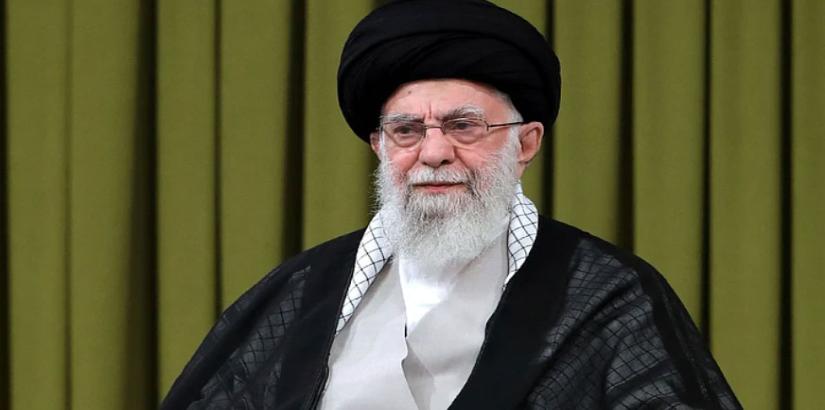
The death of Ayatollah Sayyed Ali Hosseini Khamenei marks one of the most consequential turning points in modern Middle Eastern history. For more than three decades, he stood at the center of Iran’s political, religious, and strategic architecture. His killing is not merely the loss of a national leader; it is a seismic geopolitical event that threatens to redraw the region’s already fragile fault lines.
This moment is being framed in different ways across the world. For some, it represents the removal of a powerful and controversial figure whose policies shaped Iran’s assertive regional posture. For others, it is an act that crosses a fundamental boundary in international conduct, the targeted killing of a sitting supreme authority of a sovereign state. Regardless of political perspective, one fact is undeniable: a line has been crossed.
Ayatollah Khamenei led the Islamic Republic of Iran since 1989, guiding its domestic direction and foreign policy through wars, sanctions, negotiations, and regional rivalries. His leadership defined Iran’s resistance narrative, its alliances, and its adversarial stance toward Israel and the United States. Removing such a figure does not erase those policies; instead, it risks solidifying them in memory and martyrdom.
Instability Will Have Regional Implications
The strategic implications are profound. In political systems built around strong central authority, the sudden loss of a leader creates uncertainty. Iran’s constitutional mechanism for succession involves the Assembly of Experts, yet the political realities of transition are rarely simple. Power centers within the state, religious authorities, the Revolutionary Guard, political factions, will now navigate a sensitive and potentially tense process. Any instability within Iran will not remain contained within its borders.
At the regional level, this development intensifies an already volatile environment. Tensions between Iran and Israel have long played out through indirect confrontations and proxy arenas. Direct escalation has often been avoided despite fierce rhetoric on both sides. The killing of Iran’s Supreme Leader dramatically alters that equation. It risks transforming a shadow conflict into something far more overt and far more dangerous.
History shows that targeted killings of high-ranking leaders rarely produce the calm their architects may expect. Instead, they tend to inflame nationalist sentiment, unify fragmented political actors, and harden ideological lines. In Iran’s case, the concept of martyrdom carries deep religious and historical meaning. The narrative forming around this event will not be one of mere political succession but of sacrifice and defiance. That symbolism may strengthen the very resolve external actors sought to weaken.
Moment of Reckoning, Fears of Escalation
There is also the broader question of precedent. If the targeted killing of a nation’s supreme authority becomes normalized, the architecture of international norms begins to erode. Sovereignty, already strained in an era of cyber warfare, drone strikes, and cross-border operations, faces further dilution. Today’s justification may rest on security; tomorrow’s could be framed the same way by another state with different motives.
For ordinary citizens across the Middle East, the fear is tangible. Economic markets react to instability. Oil prices fluctuate. Borders become tense. Families worry about the prospect of a wider conflict that could disrupt daily life, employment, and safety. In a region fatigued by decades of war and political upheaval, the appetite for another escalation is minimal, yet events now seem to be moving in that direction.
Diplomacy will be tested in the coming days and weeks. International actors, including global powers and regional organizations, face a critical responsibility: to prevent further spirals of retaliation. Rhetoric alone will not suffice. Channels of communication, however strained, must remain open. History teaches that once direct confrontation takes hold, de-escalation becomes exponentially harder.
The killing of Ayatollah Khamenei is not an isolated headline; it is a defining chapter in the evolving story of Middle Eastern and regional geopolitics. It forces a reckoning with questions of power, legality, and consequence. Whether this moment becomes the spark of broader conflict or a catalyst for renewed diplomatic urgency will depend on decisions made now, in Tehran, in Jerusalem, in Washington, and beyond. One era has undeniably ended. What begins next will shape the region for years to come.
(The author is a Pakistani research analyst specializing in foreign affairs and global issues. Views expressed are personal. She can be contacted at nazishpensdown@gmail.com )





Post a Comment