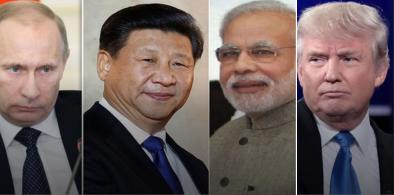
BRICS leaders

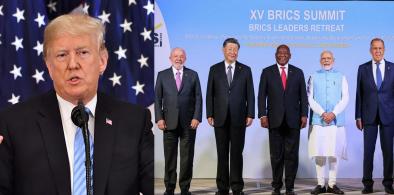
India, BRICS Fail the Iran Test: It Could Seek to Bridge Divides

For India, the failure is particularly significant as its presidency was an opportunity to translate “strategic autonomy”, the current buzzword in foreign policy circles, into multilateral leadership. True, its response is shaped by structural constraints. The country imports more than 85% of its crude oil, much of it from West Asia and Russia. Some nine million of its citizens live in the Gulf. The United States is its largest trading partner. Iran anchors the Chabahar port project and India’s access to Afghanistan and Central Asia. Each relationship is too consequential to risk.

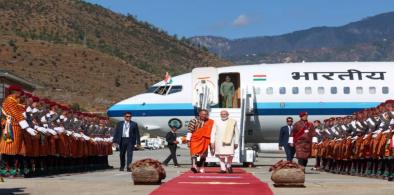
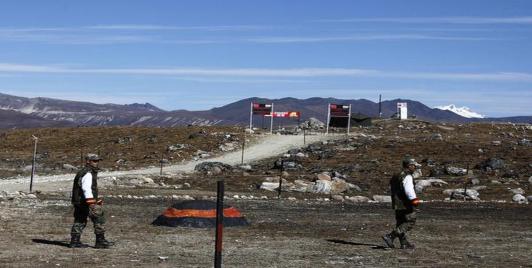
Bhutan Under China’s Doklam Shadow: Delhi Needs to Move Away From Protector-Protected Dynamic With Thimpu

A key consideration for Delhi is Bhutan’s occasional denial or downplay of any Chinese encroachment on its territory, even when satellite data suggests otherwise. This is coupled with a growing perception within Bhutan that India is preventing it from completing its border negotiations with China. Although Thimphu remains closely aligned with Delhi, there is growing interest in expanding its engagement with China.

AI in Elder Care: Potential for Broader Social Transformation

For India, the opportunity is significant as its robust digital infrastructure and large demographic dividend can create a significant opportunity for adoption and deployment of Artificial Intelligence across sectors, particularly in the care economy. There is an ample room for the development of age-friendly products and services using AI innovation which are of scalable commercial value.

South Asia's EdTech Moment: Centre of Gravity of Global Education is Shifting

South Asia's higher education ecosystem — with over 1,500 universities and 60 million enrolled learners — is uniquely positioned to absorb and scale new models: work-integrated degrees, on-demand micro-credentials, lifelong learning. The Global South — Africa, Southeast Asia, Latin America, the Middle East — shares the same structural challenges. The solutions that work at scale in India, Bangladesh or Nepal will travel naturally to these geographies.

More on Spotlight

A colonial-era fort in Sri Lanka hosts a modern lit-fest: Shaping South Asian nation's cultural identity and economic rejuvenation

Works by Ali Kazim from Pakistan and Tayeba Begum Lipi from Bangladesh, besides Sri Lankan talent contributors featured in The Arts Trail, six exhibitions highlighting upcoming and renowned South Asian artists. The series, organized by Sri Lankan-based ARTRA magazine, explored themes from war to nature’s beauty.

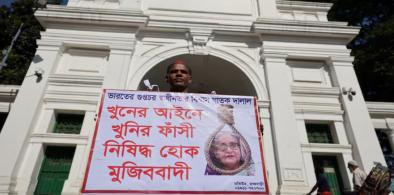
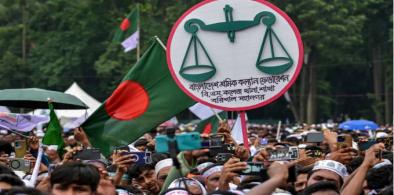
Bangladesh at crossroads: People's patience may be running thin

Adding another layer of complexity is the rising specter of radicalism. Reports suggest that extremist elements are gaining traction, with foreign actors allegedly playing a role in fueling Islamist movements. The Yunus government’s perceived leniency toward certain hardline factions has sparked concern, both domestically and internationally

Pakistan faced with existential crisis as Baloch insurgency takes deadly turn

Large sections of Gwadar city have been fenced off effectively restricting access to its own people. As Dr Baloch pointed out, this militarization is not just about controlling the Baloch people but also about securing Chinese interests in the region

Afghanistan’s missing weapons: A ticking time bomb for regional security

Pakistani forces have seized significant caches of American and other foreign-made weapons from TTP hideouts. The presence of M4 rifles, night-vision gear, and advanced sniper equipment among these stockpiles suggests a clear and steady pipeline of arms flowing out of Afghanistan and into the hands of militants

Balochistan train attack has grave implications for Pakistan’s internal security, external ties

The attacks are important for more reasons than one. First, resentment of the Baloch people is a key reason for these attacks. Second, these could further slow down the CPEC project which already has not progressed as expected. Third, Islamabad’s ties with not just India but also Iran and Afghanistan are already strained. Pakistan’s relations with Afghanistan could witness a further downhill trajectory. 

Social media is reshaping identity and group dynamics: Need to establish stringent ethical guidelines

At this digital crossroads, the choices made by users, policymakers, and tech companies will determine whether social media fosters empowerment or fragmentation. Society can navigate this transformation toward a more sustainable and authentic digital future by prioritizing ethical considerations, inclusivity, and mental well-being.

Despite Taliban disavowal, Afghanistan remains a breeding ground for extremism

ISIS-K continues to launch deadly attacks inside Afghanistan, and Sharifullah’s arrest proves that its network remains active. If the Taliban were serious about counterterrorism, they would be working with regional partners instead of dismissing arrests like this one.

India-Bangladesh diplomatic tensions has South Asia in a flux, heightening regional security concerns

The rise of BNP as the most important party in the interim coalition, a party that is seen as more sympathetic towards China and Pakistan by New Delhi, and the diplomatic efforts by Beijing to woo Dhaka, opens the possibilities for increased Chinese influence in South Asia, making India more circumspect in its dealings with the interim government.

Bangladesh’s last chance for democracy

The interim government has established a ‘Constitutional Reform Committee,’ led by Dr. Ali Riaz, a Bangladeshi-American political science professor at Illinois State University. There is a widespread demand among students and civil society groups for necessary constitutional changes to prevent future dictatorships and eliminate anti-democratic provisions. The committee has already submitted its ‘Reform Report,’ addressing the demands of the mass revolution and laying the groundwork for democracy in Bangladesh.

Pakistan needs to make education a public policy priority

A  large number of families in rural areas, as well as in some urban areas, still don’t consider the education of girls essential and thus do not send them to school. This trend, however, is on the decline, especially in the urban centers of Pakistan. According to the data presented by the Annual Status of Education Report (ASER) in 2022 by Idara-e-Taleem-o-Aagahi (ITA), 64% of boys were admitted to public schools as compared to only 36% of girls.

Five years since the COVID-19 lockdown: How AI is putting life in the fast lane

March 2020 was when the world hit pause. Airports emptied, city streets grew silent, and entire countries retreated indoors. What started as "two weeks to flatten the curve" spiraled into months of uncertainty. Time felt stretched, endless - one long, monotonous loop of home workouts, doom-scrolling, and everyone suddenly becoming a chef, experimenting with recipes they’d never try otherwise.

Women's growing role in Pakistan’s peace policies

The role of women in peacemaking at the national level is still nascent. However, Pakistan’s women UN peacekeeping missions' role in promoting peace in post-conflict spaces is widely acknowledged. More than 500 hundred Pakistani women peacekeepers are currently in different UN missions. 

Chinese checkers - weaving a string of pearls around India

Viewing the Chinese projects in Nepal’s Terai region, and close to the strategic Chicken’s Neck in Bangladesh, together with the one in the waters of Maldives, one can see that China's calculated moves seek to slowly encircle India. 

EU's 'new strategic agenda' with India: Crisis in US ties compels Brussels to seek closer partnership with New Delhi

The transatlantic alliance, considered to be a pillar of geopolitical stability, now faces an uncertain future and the realism that Europe can no longer depend on its security on the US has begun to creep in the minds of policymakers in Brussels.

Can Pakistan sustain its bold policy reforms?

Another critical reform is ensuring that at least 33% of government board members are women. This move is more than just a symbolic gesture; it marks a tangible shift toward inclusivity in decision-making. Women have historically been underrepresented in governance structures, and this policy sends a strong message that their voices are not just welcome but necessary for Pakistan’s progress.