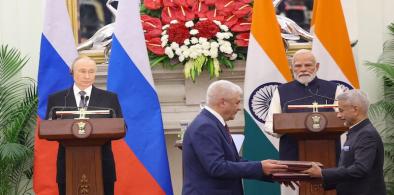
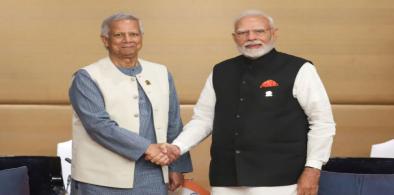
BRICS leaders

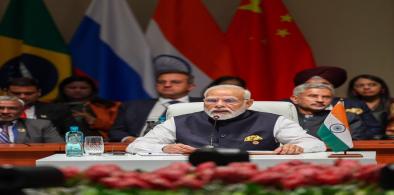
India, BRICS Fail the Iran Test: It Could Seek to Bridge Divides

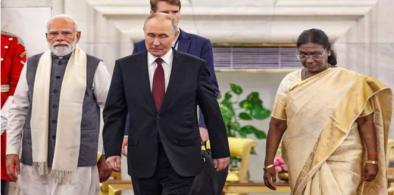
For India, the failure is particularly significant as its presidency was an opportunity to translate “strategic autonomy”, the current buzzword in foreign policy circles, into multilateral leadership. True, its response is shaped by structural constraints. The country imports more than 85% of its crude oil, much of it from West Asia and Russia. Some nine million of its citizens live in the Gulf. The United States is its largest trading partner. Iran anchors the Chabahar port project and India’s access to Afghanistan and Central Asia. Each relationship is too consequential to risk.

Bhutan Under China’s Doklam Shadow: Delhi Needs to Move Away From Protector-Protected Dynamic With Thimpu

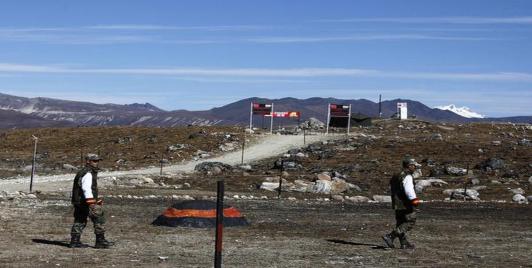
A key consideration for Delhi is Bhutan’s occasional denial or downplay of any Chinese encroachment on its territory, even when satellite data suggests otherwise. This is coupled with a growing perception within Bhutan that India is preventing it from completing its border negotiations with China. Although Thimphu remains closely aligned with Delhi, there is growing interest in expanding its engagement with China.

AI in Elder Care: Potential for Broader Social Transformation

For India, the opportunity is significant as its robust digital infrastructure and large demographic dividend can create a significant opportunity for adoption and deployment of Artificial Intelligence across sectors, particularly in the care economy. There is an ample room for the development of age-friendly products and services using AI innovation which are of scalable commercial value.

South Asia's EdTech Moment: Centre of Gravity of Global Education is Shifting

South Asia's higher education ecosystem — with over 1,500 universities and 60 million enrolled learners — is uniquely positioned to absorb and scale new models: work-integrated degrees, on-demand micro-credentials, lifelong learning. The Global South — Africa, Southeast Asia, Latin America, the Middle East — shares the same structural challenges. The solutions that work at scale in India, Bangladesh or Nepal will travel naturally to these geographies.

More on Spotlight

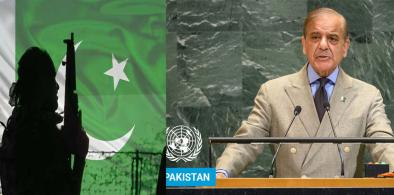
Pakistan' State Sponsorship Of Terror: World Cannot Afford To Look The Other Way

Kashmir is no longer a remote valley; it is the litmus test of global resolve against state-sponsored terror for reasons other than the wellbeing of its people. Pakistan’s duplicity is an open dossier. FATF grey-listing (2018-22) barely dented its war-chest because petrodollars kept the financial arteries open. Arun Shourie labelled this “strategic mendicancy milking Western fears of a failing nuclear state while fertilising jihad". The Pahalgam attack proves the scam endures. 

India-Pakistan Tensions and Abstract Justice: Who Lost, Who Gained?

Perhaps, the truth lies elsewhere, in the gaping holes of a failing system, the persistent lapses in security, intelligence and governance. And this, despite allocating billions in public funds, our money, our labour, to national security year after year. And yet, it is ordinary citizens who remain vulnerable, targeted again and again.

Operation Sindoor: India’s Strategic Shift in Deterrence Against Pakistan

India’s Operation Sindoor is not just a military retaliation—it is a signal of strategic transformation. With an emphasis on long-term credible deterrence, operational depth, and multi-domain pressure, New Delhi is redefining the rules of engagement with Pakistan. Islamabad would do well to recalibrate its approach and recognize the new reality: any miscalculated aggression will now face an overwhelming and multi-layered response.

Messaging in Times of Conflict: Fielding Muslim And Hindu Women Officers at Indian Media Briefing Was Smart Move

For the Modi government generally and the prime minister particularly, who has mastered the art of messaging and social media optics, deploying the two women is widely seen as a smart symbolism. Their gender and religions, incidental in the context of the armed forces, carried a strong message for Pakistan and the rest of the world.

Post-Pahalgam Kashmir mourns with nation like never before: Need to bridge gap between communities

But this time, the condemnation is unanimous and intense. I cannot recall another instance where all of Kashmir shut down in protest against terrorists who were not only Muslims but also backed by Pakistan, a country that once enjoyed sympathy among a significant section of the population. 

South Asia: Terror, Misinformation and Communal Politics

If South Asia is to overcome its myriad challenges—from religious extremism to geopolitical rivalries—it must reaffirm its commitment to secularism, inclusion, and regional cooperation. The costs of continuing down the current path are too high—not only in lost opportunities but in human lives.

Pahalgam Tragedy: Need to Reclaim Peace and Trust in Kashmir

Terrorism cannot be fought through centralization and alienation. Disempowering local leadership and repeatedly failing in intelligence and security—as seen in Pulwama and now Pahalgam—are grave concerns. Kashmir, as an integral part of India, must be given the dignity of full democratic participation.

May Day: Bangladesh needs meaningful changes in the lives of marginalized workers

The original principles behind May Day—demanding an eight-hour workday, fair wages, and safe working conditions—are still far from being fully realized in Bangladesh. Without addressing these core issues, the country risks falling behind others in achieving inclusive and sustainable economic development.

“Pani Dedo”: How Pakistanis Turned a Geopolitical Crisis into Meme Warfare

Twenty-six people died. Civilians. Tourists. Possibly women, children, families. Innocents. Their stories never reached us. Not because of censorship, but because no one cared enough to look for them. In Pakistan, people were too busy winning the meme war to ask who the victims were—or what their lives meant. 

India must go beyond rhetoric; kinetic responses must be unpredictable, overwhelming

A recent article by Pakistani Army veteran Adil Raza offers disturbing insights. He writes that Pakistan, gripped by internal military desperation, has teetered on the edge of conflict not due to provocation but due to the Pakistan Army’s desire to manufacture crises to mask its domestic failures.

India-Pakistan Need a Path to Sustainable Peace

The path to sustainable peace will not be easy. There will be setbacks, and there will always be those who seek to derail the peace process. Sometimes, even conflict is framed as a path to larger peace—but such actions must always be the absolute last resort. Nations must ensure that voices of hatred do not drown out those of reason and compassion.

Pakistan must be paid back in its own coin: Need for cool thinking and calculated action

The abrogation of the Indus treaty, on the other hand, can be done in one stroke, followed by a firm refusal to respond to any diplomatic or judicial proceedings launched by Pakistan. This one act will undo an unfair treaty, augment India’s water resources and parch Pakistan.

Climate change action: Can legal recourse work in goading governments in South Asia?

South Asian countries have reported multiple litigations related to climate change.There are 14 such cases in India, six in Pakistan, four in Nepal and one in Sri Lanka. These include the landmark Asghar Leghari v. Federation of Pakistan case where a farmer sued the Pakistan government for not implementing the National Climate Change Policy of 2012 and the Framework for Implementation of Climate Change Policy (2014-2030). 

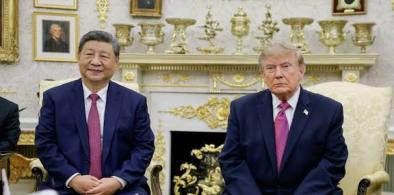
India can play a larger role in reducing US-Iran tensions

Prime Minister Narendra Modi has invested personal time and effort to rework India’s ties with every country in the Middle East/West Asia. And the results are showing -- India's relations with the United Arab Emirates, Saudi Arabia, Qatar, Kuwait and others have improved dramatically. Cooperation on counter terrorism – once an irritant between India and countries in the region – is now remarkably smooth

Rare Earths and the new Great Game: Is South Asia the new battleground?

The competition for rare earths in South-Central Asia is not just a story of mining—it is a story of power, politics, and people. Pakistan and Afghanistan sit on mineral treasure troves, but their benefit will depend on governance, peace, and equitable development. For India, the rare earth race presents both a challenge and an opportunity. It cannot afford to be a passive observer