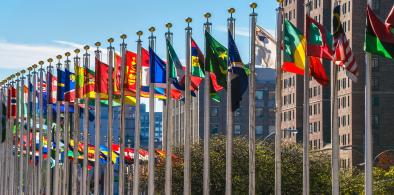
Sri Lanka has hosted two strategically important leaders from the region, President Mohamed Muizzu of the Maldives and Vietnamese President Tô Lâm, signaling

Two Visits and Strategic Signalling: Sri Lanka at Focal Point of Indian Ocean diplomacy

Nearly 80% of Asia’s energy imports and a large portion of global container traffic move through the Indian Ocean. With conflicts in the Middle East, disruptions in the Red Sea, and increasing great-power competition, freight security has become a strategic economic issue. Sri Lanka is positioning itself not merely as a recipient of investment, but as a regional connector between South Asia, Southeast Asia, and island maritime states.

One Year of Operation Sindoor: India’s Message of Strength and a New Normal

Military analyst Cooper argued that beyond battlefield outcomes, the operation exposed Pakistan’s inability to deter Indian strikes or mount a damaging counter‑response. He suggested the psychological impact of India’s operations triggered panic within Pakistan’s leadership, eventually driving Islamabad to seek international intervention.

Pakistan Needs Integrated Maritime Strategy: Fragmentation Carries Strategic Costs

Pakistan’s maritime domain offers multiple avenues for economic and strategic expansion. However, these remain underdeveloped. Coastal tourism has potential but lacks infrastructure and regulation. Offshore energy, including wind and tidal sources, remains largely unexplored. Marine biotechnology is another emerging sector with minimal investment. These gaps reflect a broader issue: the absence of long-term strategic planning

Climate Migration: The Next Global Humanitarian Crisis?

Climate migration isn’t just about the loss of land. It is about the loss of memory, culture and home. When people are driven out of the places where they were born, few things that matter are merely economic. Over the next decades, the world will confront a fundamental dilemma. Can humankind handle the climate crisis in a surer way? Or will the future consist of millions searching for a new place to call home?

More on Spotlight

India Can Be The Balancer In Reshaping Global Governance

If India is treated as an independent balancer, global multipolarity becomes stable. If the West instead tries to “arm-twist” India, it only drives India closer to Russia–China alignment. A respected, autonomous India helps prevent both Western hegemony and China-centric hegemony — creating a truly balanced order.

Rising Youth Unemployment in India a Cause for Concern: Skill Development Will Need to Factor Global Shifts

Two demographic shifts are increasingly seen to be transforming global economies and labour markets: aging and declining working-age populations, predominantly in the developed  economies, and expanding working-age populations, predominantly in the less developed  economies.

Digital Farming is the Future: South Asian Governments Need to Connect Climate Proposals with Digital Inclusion Plans

Digital agriculture offers a path towards farm practice transformation in addition to increased adaptive capacity and mitigation of extreme climate shocks. The strategy involves a package of tools from satellite-based weather forecasting to artificial intelligence-based diagnosis of pests, mobile-based market access platforms, precision irrigation equipment, and monitoring of the health of soil through cloud-based services.

Pakistan’s Forgotten Daughters: The Silent Suffering of Hindu Women in a Theocratic State

According to Amarnath Motumal, former vice chairperson of the Human Rights Commission of Pakistan (HRCP), 20 or more Hindu girls are abducted and converted monthly in Pakistan. The number of documented cases of non-Muslim girls being compelled to marry Muslim men and convert to Islam as a result of forced marriage has increased noticeably. Girls are forbidden to contact their families after being forced to convert.

Bridging Gulf Investment Power and India’s Tech Talent: UAE–India Collaboration Can Redefine Future of AI Innovation

The UAE’s financial muscle and India’s AI talent base can together create an ethically grounded, globally competitive AI ecosystem. This collaboration can become a blueprint for cross-regional partnerships that strengthen innovation, digital sovereignty, and sustainable growth across the Middle East, South Asia, and Southeast Asia.

Strange Bedfellows: Why Pakistan’s Munir and Bangladesh’s Yunus Are Rekindling Ties

From a realistic perspective, the prospect of a Pakistan-Bangladesh axis does not herald a serious economic or strategic bloc. Instead, it signals the re-emergence of revisionist politics in South Asia. In seeking to rewrite history and align against India, both countries risk ignoring their own domestic crises. 

An Assault on Democracy in Bangladesh: Need to Have an Inclusive Electoral Process

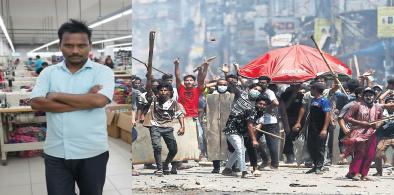
Bangladesh now stands at a perilous crossroads. Either the nation allows this unelected regime to continue dismantling democratic institutions, silencing dissent, and rewriting history—or its citizens rise to reclaim their rights. Democracy cannot endure without inclusivity

Sri Lanka Needs to Find a ‘Political Common Ground’ in Its Foreign Policy

Championing a rules-based maritime order in the Indian Ocean, which Sri Lanka has long called for since its 1971 ‘Indian Ocean Peace Zone’ (IOPZ) proposal and ensuring strict adherence to the provisions of the ‘UN Convention on the Law of the Sea’ (UNCLOS), will reinforce Sri Lanka’s credibility and also encourage cooperative stability in the Indian Ocean.

Trump's Tariffs and India's Strategic Dilemma: Acid Test for Modi Government

For Modi, the political cost of appearing to bow to American pressure may be almost as high as the economic cost of resisting it. In the end, the tariffs are not just about commerce. They are a test of whether India can still straddle the fault lines of great-power rivalry—whether the world’s most populous democracy is being forced into the uncomfortable role of choosing sides.

US Positioning on Crypto Currency has implications for BRICS and South Asia

With the  Ukraine war  and  the resulting sanctions making it difficult for Russia to trade with its allies, being  barred from using SWIFT or the US dollar, it resulted in Russia resorting to local currencies to trade that resulted in the BRICS currency drawing adverse attention in Washington and gaining global imprtance.

From Laureate to Liability: The Unraveling of Yunus’s Interim Rule

In the end, Yunus may find that his greatest failure is not the scandals that have already emerged, but the corrosion of hope that followed him into office. A nation that once believed it had found a principled steward now sees another operator in the same tired political theater—just with better English and a Nobel medal.

The Tianjin Calculus: Modi, Xi, and the Unfinished Chapter of the 21st Century

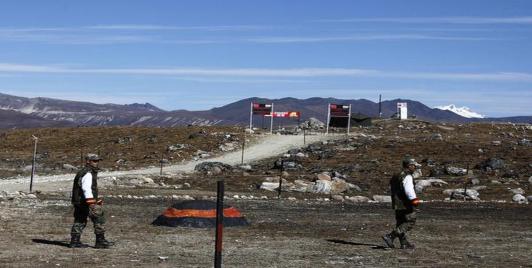
The most probable outcome in Tianjin is what one Indian diplomat called a “tactical pause.” A cooling of tensions, a resumption of some economic and security dialogues, perhaps even a roadmap for regular high-level contact. That would be enough to stabilise the border and signal to Washington that India has options.

When Pakistan's Nuclear Blackmail Becomes A Currency: U.S. Silence and Strategic Choices for India

India is a responsible nuclear power, the world’s fastest-growing major economy, and a civilisation-state that does not live on borrowed credibility. It has the patience to navigate provocation and the capacity to respond decisively. If Pakistan’s military flirts with Armageddon, India will respond “BrahMostically” with unmatched precision and power.

The Asian Century by 2050: Three Possible Scenarios for Regional Power and Global Leadership

Whether dominated by China's singular might, led by India's democratic coalition, or governed through shared stewardship, the path Asia takes by 2050 will profoundly influence the global balance of power, ethical governance, and economic prosperity. India's role, whether as counterweight or partner to China, will be critical.

Assam's Demographic Dilemma: Will Politics of Population Divide or Unite Northeast India's Most Populous State?

A seminal 2020 study by Das and Talukdar outlines the socio-economic and political consequences of this migration. The authors note that the influx, particularly post-1971, has led to widespread fear among Assamese communities about becoming minorities in their own homeland. Migration has altered landholding patterns, changed linguistic profiles, and generated social unrest.