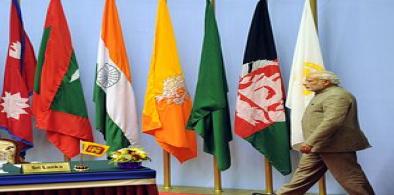
BRICS leaders

India, BRICS Fail the Iran Test: It Could Seek to Bridge Divides

For India, the failure is particularly significant as its presidency was an opportunity to translate “strategic autonomy”, the current buzzword in foreign policy circles, into multilateral leadership. True, its response is shaped by structural constraints. The country imports more than 85% of its crude oil, much of it from West Asia and Russia. Some nine million of its citizens live in the Gulf. The United States is its largest trading partner. Iran anchors the Chabahar port project and India’s access to Afghanistan and Central Asia. Each relationship is too consequential to risk.

Bhutan Under China’s Doklam Shadow: Delhi Needs to Move Away From Protector-Protected Dynamic With Thimpu

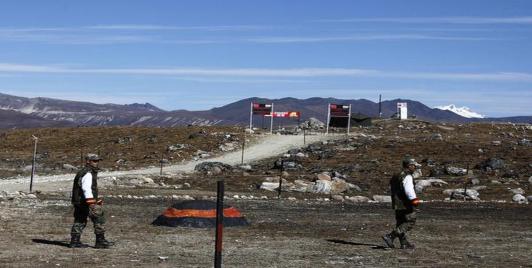
A key consideration for Delhi is Bhutan’s occasional denial or downplay of any Chinese encroachment on its territory, even when satellite data suggests otherwise. This is coupled with a growing perception within Bhutan that India is preventing it from completing its border negotiations with China. Although Thimphu remains closely aligned with Delhi, there is growing interest in expanding its engagement with China.

AI in Elder Care: Potential for Broader Social Transformation

For India, the opportunity is significant as its robust digital infrastructure and large demographic dividend can create a significant opportunity for adoption and deployment of Artificial Intelligence across sectors, particularly in the care economy. There is an ample room for the development of age-friendly products and services using AI innovation which are of scalable commercial value.

South Asia's EdTech Moment: Centre of Gravity of Global Education is Shifting

South Asia's higher education ecosystem — with over 1,500 universities and 60 million enrolled learners — is uniquely positioned to absorb and scale new models: work-integrated degrees, on-demand micro-credentials, lifelong learning. The Global South — Africa, Southeast Asia, Latin America, the Middle East — shares the same structural challenges. The solutions that work at scale in India, Bangladesh or Nepal will travel naturally to these geographies.

More on Spotlight

Beyond the 2024 elections: Sustaining democracy and development in Jammu & Kashmir

While the BJP began on the backfoot as the party of Hindutva (political Hinduism) inspiring little confidence among Kashmiri Muslims, the elections provided vindication to the Modi government's Kashmir policy even in his party's defeat. It was a feat in itself to hold peaceful elections with all political parties contesting under the post-2019 arrangement with a 63.88% turnout to show.

The next pandemic will not wait for policy debates: Shun anthropocentric mindset to One Health in South Asia

Take, for instance, the recent rise in antibiotic-resistant bacterial infections across Nepal, India, and Bangladesh. Governments have started cracking down on antibiotic overuse in human medicine, yet the uncontrolled use of antibiotics in livestock and aquaculture remains largely unchecked. The result? Resistant bacteria continue to grow, eventually finding their way into human populations

South Asian refugee crisis: Political scapegoating and interstate conflicts hinder institutional mitigation

South Asian states have steered clear of accepting formal responsibilities in addressing refugees, with only Afghanistan being a curious signatory to the 1951 Refugee Convention. South Asian states have sought a more voluntary approach to taking in refugees, with geopolitical considerations driving the select acceptability of refugee communities.

Transacting with Trump: Can Modi turn Trump's climate denialism into an opportunity?

Modi can invoke Trump’s language and highlight business and economic opportunities along with market mechanisms that are available almost on platter while pursuing a non-fossil fuel future.  Particularly,  Modi could showcase employment generation by promoting solar energy through the International Solar Alliance. He and Trump can strike bilateral and multilateral ventures as well as research programmes with BRICS on solar energy, modular nuclear plants, windmills, biofuels and green, grey and blue hydrogen.

How India is drawing inspiration from its ancient treatise to strategise national security

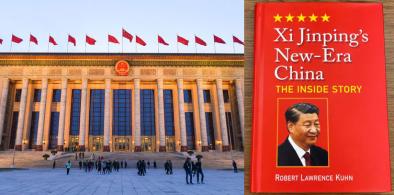
On October 21, 2023, India launched ‘Project Udhbav’ during the inauguration of the Indian Military Heritage Festival to synthesize ancient wisdom with contemporary military practices, forging a unique and holistic approach to address modern security challenges. It is tempting to draw a correspondence between India’s and China’s initiatives just 17 days apart.

Nuclear is the way to go: A transformative shift in India's energy landscape

India has 24 nuclear reactors in operation in 8 nuclear power plants with a total installed capacity of 8,180 MW nuclear power produced a total of 48 TWh in 2023, contributing around 3% of total power generation in India.  Due to earlier trade bans and lack of indigenous uranium, India has uniquely been developing a nuclear fuel cycle to exploit its reserves of thorium. India is actively pursuing the development of nuclear energy using thorium as its primary fuel source

South Asian countries must adopt Colombo Process to safeguard migrant labour interest

Since the Colombo Process Ministerial Consultation in Bali, 2005, member states have taken concrete steps to improve the management of labour migration. There has been significant progress in areas of revised policies and regulations. There is greater cooperation between Colombo Process countries and key destination countries. Several initiatives are now in place including awareness-raising campaigns, orientation training, recruitment drives, remittance investment and welfare programmes.

India’s rise a force for good in the Indo Pacific region

India’s rise provides positive ripple impact to the region and the world, from economic and trade spillover effects to the larger equation of helping to secure and preserve the rules-based order that has been the main bedrock of global trade and maritime capacity, maintaining the sanctity of international law and global norms, and in securing the freedom of navigation and overflight in international waters

Value-neutral journalism a threatened ideal in South Asia

Economic considerations surrounding media ownership in South Asia amplify the difficulties of conducting value-neutral journalism. People and businesses with a strong desire to keep things amicable between governments and public institutions own a lot of big media outlets. Journalists are unable to objectively critique powerful entities due to their reliance on advertising, government contracts, or political patronage. 

India In a challenging neighbourhood: Need to reach non-confrontational equilibrium with China

China’s pervasive and growing economic (finance, infrastructure, trade, and energy sectors), diplomatic, and overt/covert military influence, in Pakistan, Nepal, Bhutan, India’s northeastern states, Bangladesh, Myanmar, Sri Lanka and Maldives, and back to Gwadar in Pakistan is amply evident. The recent bonhomie between Bangladesh and Pakistan, both under China’s influence, raises fresh challenges for India’s security.

Hidden hand behind opposition to Adani wind power project in Sri Lanka?

While a Chinese-backed coal power project in Sri Lanka is being carried out without opposition, Adani’s eco-friendly energy project, which the world is looking to as the energy of the future, is being opposed.

What Trump 2.0 means for Asia: Need to balance national priorities with collaborative efforts

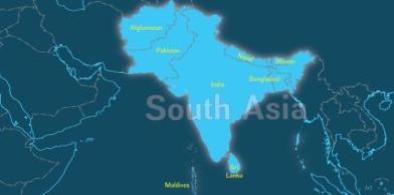
South Asia, home to nearly two billion people, stands at a crossroads as Trump’s policies reshape regional dynamics. India’s growing prominence within the QUAD strengthens its strategic position, but smaller economies like Bangladesh face vulnerabilities.

Trump makes unlikely return to White House - chaos and unpredictability may be new normal for world

The mass deportations - which will potentially affect hundreds if not thousands of South Asians - are not logistically or financially possible and have been pared down by his nominees, limiting it to criminal migrants. 

An Alliance of IITs to tackle the global climate crisis?

A number of leading universities and institutes around the world have initiated net-zero hubs in their campuses but India is the first country to initiate a  collaborative national movement supported by government and industry.  Integrating 23 IITs in this movement will be a groundbreaking concept that can elevate India as the world leader in clean technologies and of skilled human capital.

Politics in the digital abyss: How 'liquid modernity' is shaping populist discourse, particularly in South Asia

Imran Khan’s political journey in Pakistan highlights the transformative power of cyberspace in a liquid modern world. Initially dismissed by critics, Khan leveraged social media to build a narrative of hope and change.  Khan’s PTI has consistently outperformed traditional parties in digital engagement, mobilizing urban youth and the diaspora.