Representational Photo

The Muslim Brotherhood’s Ideological Insurgency Poses A Transnational Challenge

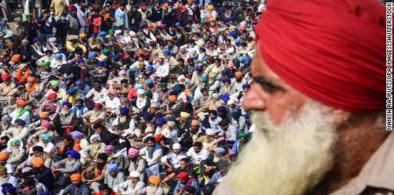
The Brotherhood’s strategy is global. In India, pro-Palestinian protests have been weaponized by groups including Jamaat-e-Islami, Jaish-e-Muhammad, Lashkar-e-Taiba, ISIS-linked entities, and Pakistan’s ISI to stoke communal hostility and recruit young Muslims into political Islam. Hundreds of millions of dollars have been funneled toward campus radicalization, media manipulation, and political influence campaigns that demonize Hindus and normalize Islamist narratives.

How AI Politics is Reshaping Cognitive Warfare in South Asia

Even reciprocal communal violence is spreading between Bangladesh and India through generative AI tools. Meta AI’s text-to-image generation feature is producing and propagating hate against Muslim minorities in India, which is creating an anti-India narrative in Bangladesh. Similarly, Several AI-generated images were found circulating on X and Facebook showing burning temples and torched bodies of the Hindu minority in Bangladesh

Putin's India Visit Outcomes Will Have Global Resonance

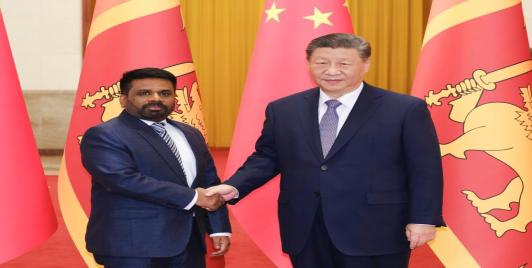
India’s multi-dimensional and wide-ranging relationship with Russia, with strategic issues, defence and energy security as bulwarks, has been one of the critical pillars of its foreign policy, one it will try to ensure remains vibrant and mutually beneficial and supportive during Putin’s visit, despite pressures. If, additionally, it can gain global stature by furthering a peace agreement on Ukraine, New Delhi will consider it a visit well done.

Pakistan's New National Security Doctrine: Re-establishing Deterrence

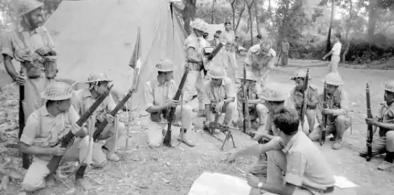
Foreign observers sometimes miss the broader shift. Since 2022, Pakistan’s national-security leadership has been engaged in what scholars would call a “deterrence-rebuilding project” across multiple fronts: Balochistan, the former tribal areas, the eastern border, and now the west. Each operation has been calibrated to restore the adversary’s respect for Pakistani red lines without triggering an all-out war. 

More on Spotlight

Relocation of global supply chain: Bangladesh should seize the opportunity

From the South Asian Association for Regional Cooperation (SAARC) countries, India is emerging as one of the top alternative manufacturing destinations, writes Dr. Mohammad Rezaul Karim for South Asia Monitor

China understands and respects only the language of power

China is sure that India would initiate back-room talks and negotiate some face-saving device to disengage. But, there lies the danger, writes Brigadier Deepak Sethi (retd) for South Asia Monitor

International community should recognize Pakistan as a responsible nuclear state

Pakistan has used its Centres of Excellence to promote and share best practices in nuclear security through three affiliated institutes: the Pakistan Centre of Excellence for Nuclear Security (PCENS), the National Institute of Safety and Security (NISAS), and the Pakistan Institute of Engineering and Applied Sciences (PIEAS), writes Rabia Javed for South Asia Monitor

Pakistan's 'diminishing democracy': Where dissent is a crime

Thirty prominent human rights advocates and peace activists, who disagree with a lot that is happening in Pakistan. Either living at home, but most of them exiled abroad, participated in the conference titled Enforced Disappearances, State-sanctioned killings, & Diminishing Democracy in Pakistan, writes Mahendra Ved for South Asia Monitor 

Has Rahul Gandhi stolen a march on the BJP?

The BJP found itself on the back foot was when Congress leader Rahul Gandhi was pictured sitting on a pavement, talking to a group of migrants. It was a Haroun al-Rashid moment of a privileged person closely interacting with the unwashed masses, writes Amulya Ganguli for South Asia Monitor

Maldives will seek a balance in its foreign policy

With the support of the United Arab Emirates, the Maldives not only prevented Pakistan from targeting India as Islamophobic during the OIC meeting, but also defended India’s record as a democratic, multicultural society, writes Shubha Singh for South Asia Monitor

India should push for relocating WHO headquarters to New Delhi

This is a time when India should fashion itself as a new global health hub and provide global leadership in health. Pushing a new agenda for the WHO’s relocation from Geneva to India would make immense sense, writes Ram Krishna Sinha for South Asia Monitor

South Asia’s rubber farmers hit hard by COVID-19

From Bangladesh to India and to Sri Lanka, the natural rubbers producers are getting squeezed under lockdowns and social distancing. It is sounding the death knell of the region’s rubber economy,  writes K S Nayar for South Asia Monitor

Future challenge of banks: Bringing digital banking to the last man standing

Banks are generally very traditional in nature even though all the banks and financial institutions are going digital. Traditional nature change is again a challenge. The lockdown has come as a blessing in disguise as the changeover to digital systems can now pick pace, as it  becomes the need of the day, writes Ashim Kumar Goswami for South Asia Monitor 

Have Nepal's communists made it China’s proxy?

Indian policy towards Nepal has been lackadaisical. Belief of mutual Hindu traditions should be viewed in the context of power in Nepal lying with the communists for whom religion is anathema, writes Lt Gen P. C. Katoch (retd) for South Asia Monitor

Lessons from Cyclone Amphan: Need to rethink development strategy

The question that arises uppermost is that are we learning the right lessons from these recurring weather episodes or just concentrating  on immediate short-term disaster relief without taking any steps to make the regions ecologically sustainable and disaster resistant, writes Partha Pratim Mitra for South Asia Monitor

Will the sun shine again on Maldives tourism?

The coronavirus outbreak has hit the Maldivian economy hard, as travel restrictions and other preventive measures affected the country’s lucrative tourism industry, which contributes to the bulk of the island nation’s state revenue and foreign reserves, writes Kavita Bajeli-Datt for South Asia Monitor

A global partnership is needed to combat COVID-19

On April 23, 2020, in a virtual conference ‘Enhancing regional cooperation in South Asia to combat COVID-19 related impact on its economics’ organized by the World Economic Forum, Bangladesh PM Sheikh Hasina placed five-point proposals to combat this global crisis with collective responsibility and partnership from every society, writes Dr. Mohammad Tarikul Islam for South Asia Monitor

Can India and Nepal resolve border dispute with elephant in the room?

The Kalapani issue first came into prominence in 1997 when the Indian and Chinese governments came to an agreement to open a route for the annual Kailash-Mansarovar yatra through Lipulekh pass. Nepal objected to the use of Lipulekh, writes Shubha Singh for South Asia Monitor

Bihar's migrant crisis compounded by resource crunch and communication breakdown

Bihar is the poorest state of the country in per capita terms. Can it find the enormous resources required to fight the virus and its impact on the economy? writes Gulrez Hoda for South Asia Monitor