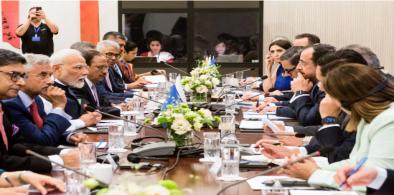
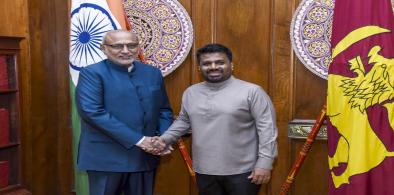
Representational Photo

Pakistan’s Afghan Blowback: Strategic Depth Turns Strategic Liability

The larger lesson is sobering. Pakistan’s experience illustrates the perils of instrumentalising militant proxies for short-term strategic gain. Strategic depth, once viewed as a force multiplier, has become a source of strategic vulnerability. As Islamabad turns to air power to manage a problem decades in the making, the deeper fracture lies not just along the Durand Line—but within the logic of proxy warfare itself.

India’s Global Power Trajectory: Strategic Implications for Bangladesh and Region

However, a balanced assessment suggests that India’s superpower trajectory could also generate opportunities for Bangladesh. Enhanced regional connectivity, expanded market access, greater investment flows, and improved regional stability could benefit Dhaka—provided cooperation and mutual respect remain central to bilateral engagement. Ultimately, the impact on Bangladesh will depend not only on India’s power trajectory but also on how both countries manage diplomacy, trust-building, and regional cooperation in an evolving geopolitical landscape.

India’s Emergence as a Global HealthTech and BioInnovation Powerhouse: Development of Global Significance

Today, in 2026, India stands at a historic moment in its healthcare and technological evolution. The convergence of biotechnology, artificial intelligence, digital infrastructure, and entrepreneurship has created unprecedented opportunities. India’s strengths in scientific talent, digital infrastructure, and cost-efficient innovation position it to become one of the world’s most important centres for healthcare innovation. However, sustained leadership will require continued investment, regulatory reform, and strategic vision.

Bangladesh at the Crossroads: Economic Reckoning and the Fragile Promise of Reform

Yunus paved the way for this election with his credibility as interim administrator intact, but his economic legacy will now be under scrutiny. The man who brought microcredit to the world’s poor — a model replicated across dozens of countries — has struggled to arrest the decline of Bangladesh’s industrial base. Between August 2024 and July 2025, nearly 245 factories closed, displacing approximately 100,000 workers.

More on Spotlight

Is Digital Colonialism Changing South Asian Politics Through Youth?

Apart from these conspiracy theories, one fact is apparent: Digital platforms, particularly those owned by Facebook and Twitter (X), are playing a drastic role in launching, organizing and supporting socio-political movements and revolutions in South Asia where these developing countries, already marked by high-debt dependency, poverty, unemployment, poor governance, corruption, and illiteracy, are heavily reliant on international INGOs, NGOs, foreign aid, funds, and loans.

The Greenium Paradox: Can South Asia Align Climate Finance with Investor Demands?

In June 2025, Sri Lanka’s DFCC Bank broke new ground as the first foreign corporation to list a green bond on India’s NSE International Exchange in GIFT City. The $8 million bond financed solar energy projects aligned with Sri Lanka’s 2030 renewables target. By securing a dual listing in Luxembourg and aligning with ICMA’s Green Bond Principles, DFCC broadened its international investor appeal and demonstrated how green finance can support debt stressed economies.

Cricket Must Not Lose Its Soul: Competition Not At Cost Of The Game’s Spirit

The game must be allowed allowed to find a way to restore its dignity and balance on the ground.Not only is there a need to check the unregulated commercialization but there is a need for the introduction of regulations that give bowlers a fair chance, have sporting pitches, and fair future tour programs that preserve Test cricket’s relevance.

India-Pakistan: Breaking the Stalemate, Changing the Narrative

Changing this dynamic involves rebalancing domestic narratives. In India, presenting Pakistan less as an existential threat and more as a troubled neighbour could lessen the political costs of engagement. In Pakistan, reducing the military's dominance over India policy would open space for pragmatic dialogue.

From Dhaka to Kathmandu: An Islamist-globalist blueprint to destabilize South Asia?

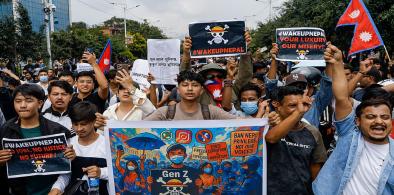
The events in Nepal and Bangladesh serve as stark warnings: the US Deep State and its Islamist partners are actively destabilizing South Asia, targeting democracies and turning vulnerable nations into vassal states. Nepal narrowly avoided disaster thanks to the courage and foresight of its army, while Bangladesh remains trapped in a jihadist nightmare.

Why India and Pakistan Should Resume Cricket Ties

New Delhi should not view cricket ties as appeasement but as investment in peace. By embracing cricket diplomacy, India can show moral leadership, protect its strategic interests and give millions of fans across South Asia a reason to dream of friendship rather than enmity. The ongoing Asia Cup is a good start in that direction. A few handshakes could have made it an even better start. 

Nepal Crisis: Is India Being Boxed-In In A Destabilized South Asia?

For India, the situation will remain volatile, as it shares a thousand-mile open border with Nepal permitting free movement of people. The coup in Nepal came as a surprise to India and Indian intelligence agencies, just like the coups in Sri Lanka and Bangladesh

A Nation Adrift: Year After Hasina’s Ouster Bangladesh Remains In Political Limbo

Muhammad Yunus may bask in the applause of Western elites, but within Bangladesh his regime is a study in failure: illegitimate, incompetent, and dangerous. Nepal, with its army’s timely intervention and youth’s surprising maturity, showed that chaos need not consume a nation. Bangladesh, under Yunus, has shown the opposite: how a nation can betray its own future when it allows passion without perspective to rule the day.

World Ozone Day 2025: The Unfinished Lesson of Our Greatest Environmental Success

We are well on our way to sealing the ozone hole. But let us ensure that in doing so, we do not ignore the new fissures opening at our feet. The work of healing our planet is never complete—it simply evolves.Let our legacy be that we were wise enough to see the whole board, not just the move we just made. The ozone hole is being sealed, but the deal is not done. The lesson is not over. The action must continue—even in celebration.

Nepal At Crossroads: Coming Elections Will Decide The Country's Political Identity

For the Indian government, the interim Karki administration offers a valuable interlocutor who understands both the cultural and strategic sensitivities of bilateral relations. Supporting her government’s limited but crucial agenda aligns with New Delhi’s interest in maintaining regional stability, securing cross-border trade, and containing potential Chinese inroads into Nepal’s political and economic life.

Nepal Political Crisis and Lessons for South Asia

The Pokhara International Airport has become emblematic of systemic failure. A 2025 parliamentary investigation uncovered Rs14 billion (USD 105 million) in corruption and irregularities, including fake payments, unauthorized tax waivers for the Chinese contractor, and disbursements for incomplete infrastructure. Yet, senior officials remain largely untouchable—even ministers accused of human trafficking.

Reasons for Nepal’s crisis ran much deeper

After the overthrow of governments in the South Asian countries of Sri Lanka and Bangladesh, the Nepalese crisis has consequences not just for the nation of 30 million people, but for the whole region,  rooted in the country’s own turbulent political history and its legacy of attempting to balance ties between India, China and Pakistan.

India at a Crossroads: Navigating Stability and Sovereignty in Neighbouring Nepal’s Crisis

Nepal, one of  the world’s poorest countries, struggles with the South Asian region’s lowest per capita income and an unemployment rate approaching 13 percent, according to official estimates.

US Tariffs, Remittances and Regional Ripples: India's External Balance Management Being Closely Watched

Many in the Global South as well as key South Asian allies—including Nepal and Sri Lanka—are closely observing India’s approach towards macroeconomic stability. How India moves forward in the months and years to come will signal whether it emerges as a resilient regional rule-shaper or a reactive follower in the evolving financial system.

India’s Dogged Pursuit of Strategic Autonomy: Yielding to US demands would damage both India’s global ambitions and Modi’s domestic standing

Much of Washington’s tough posture stems from India’s reluctance to deepen its role in the Quadrilateral Security Dialogue (Quad). During his October 2024 visit to Tokyo, Jaishankar rejected Japanese Foreign Minister Shigeru Ishiba’s proposal for an “Asian NATO,” reaffirming India’s non-aligned stance. This slowed efforts to create a NATO-style architecture in the Indian Ocean, frustrating Washington.