
Representational Photo

Who Will Govern AI? Its Consequences Will Shape Global Order

Humans have always pretended we can resist new inventions, from the printing press to electricity to computers, only to discover that the world shifts regardless. AI is different only in degree, not in pattern. It moves faster than our debates, scales faster than our regulations, and integrates faster than our instincts. The question is no longer whether AI will matter. It is whether we will matter in deciding how it is used.

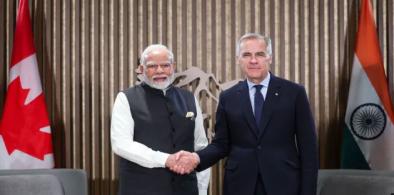
Modi’s Israel Visit and India’s Expanding Role in West Asia

The broader geopolitical implications of Modi’s visit are equally significant. India’s expanding footprint in West Asia reflects its transition from a traditionally non-aligned actor to a proactive participant in regional affairs. Unlike major powers that often approach the region through rigid alliances, India seeks flexible partnerships rooted in strategic autonomy. Its engagement spans Israel, the Gulf monarchies, and Iran, allowing it to maintain a diversified diplomatic portfolio. 

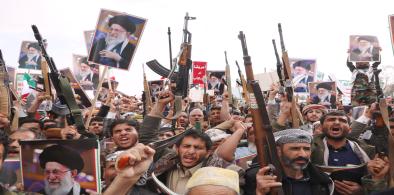
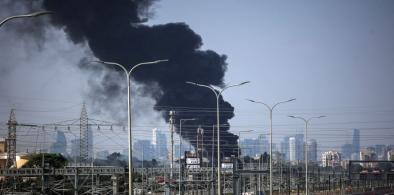
Pakistan’s Afghan Blowback: Strategic Depth Turns Strategic Liability

The larger lesson is sobering. Pakistan’s experience illustrates the perils of instrumentalising militant proxies for short-term strategic gain. Strategic depth, once viewed as a force multiplier, has become a source of strategic vulnerability. As Islamabad turns to air power to manage a problem decades in the making, the deeper fracture lies not just along the Durand Line—but within the logic of proxy warfare itself.

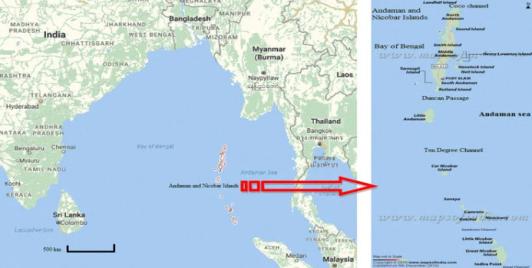
India’s Global Power Trajectory: Strategic Implications for Bangladesh and Region

However, a balanced assessment suggests that India’s superpower trajectory could also generate opportunities for Bangladesh. Enhanced regional connectivity, expanded market access, greater investment flows, and improved regional stability could benefit Dhaka—provided cooperation and mutual respect remain central to bilateral engagement. Ultimately, the impact on Bangladesh will depend not only on India’s power trajectory but also on how both countries manage diplomacy, trust-building, and regional cooperation in an evolving geopolitical landscape.

More on Spotlight

US Tariffs, Remittances and Regional Ripples: India's External Balance Management Being Closely Watched

Many in the Global South as well as key South Asian allies—including Nepal and Sri Lanka—are closely observing India’s approach towards macroeconomic stability. How India moves forward in the months and years to come will signal whether it emerges as a resilient regional rule-shaper or a reactive follower in the evolving financial system.

India’s Dogged Pursuit of Strategic Autonomy: Yielding to US demands would damage both India’s global ambitions and Modi’s domestic standing

Much of Washington’s tough posture stems from India’s reluctance to deepen its role in the Quadrilateral Security Dialogue (Quad). During his October 2024 visit to Tokyo, Jaishankar rejected Japanese Foreign Minister Shigeru Ishiba’s proposal for an “Asian NATO,” reaffirming India’s non-aligned stance. This slowed efforts to create a NATO-style architecture in the Indian Ocean, frustrating Washington.

Bangladesh’s Justice on Trial: When Victims Become Criminals

The stakes extend far beyond a single disrupted meeting or a dozen wrongful arrests. They concern whether Bangladesh will continue down the path of political mimicry, repeating the sins of the Awami League era under a different banner, or whether it can genuinely chart a new course—one in which dissent is not criminalized, mobs are not emboldened, and courts are not politicized.

Climate-Induced Devastation Poses Non-Traditional Security Threats for Pakistan

Regionally, Pakistan is face-to-face with water insecurity, that too at a time when strained ties with India have led to abeyance of the Indus Water Treaty and Pakistan’s dependence on those waters continues. To the northwest, Afghanistan also keeps pressing for its increasing dependence on the Indus waters due to its landlocked geographic location. This keeps ties with Afghanistan strained.

India Can Be The Balancer In Reshaping Global Governance

If India is treated as an independent balancer, global multipolarity becomes stable. If the West instead tries to “arm-twist” India, it only drives India closer to Russia–China alignment. A respected, autonomous India helps prevent both Western hegemony and China-centric hegemony — creating a truly balanced order.

Rising Youth Unemployment in India a Cause for Concern: Skill Development Will Need to Factor Global Shifts

Two demographic shifts are increasingly seen to be transforming global economies and labour markets: aging and declining working-age populations, predominantly in the developed  economies, and expanding working-age populations, predominantly in the less developed  economies.

Digital Farming is the Future: South Asian Governments Need to Connect Climate Proposals with Digital Inclusion Plans

Digital agriculture offers a path towards farm practice transformation in addition to increased adaptive capacity and mitigation of extreme climate shocks. The strategy involves a package of tools from satellite-based weather forecasting to artificial intelligence-based diagnosis of pests, mobile-based market access platforms, precision irrigation equipment, and monitoring of the health of soil through cloud-based services.

Pakistan’s Forgotten Daughters: The Silent Suffering of Hindu Women in a Theocratic State

According to Amarnath Motumal, former vice chairperson of the Human Rights Commission of Pakistan (HRCP), 20 or more Hindu girls are abducted and converted monthly in Pakistan. The number of documented cases of non-Muslim girls being compelled to marry Muslim men and convert to Islam as a result of forced marriage has increased noticeably. Girls are forbidden to contact their families after being forced to convert.

Bridging Gulf Investment Power and India’s Tech Talent: UAE–India Collaboration Can Redefine Future of AI Innovation

The UAE’s financial muscle and India’s AI talent base can together create an ethically grounded, globally competitive AI ecosystem. This collaboration can become a blueprint for cross-regional partnerships that strengthen innovation, digital sovereignty, and sustainable growth across the Middle East, South Asia, and Southeast Asia.

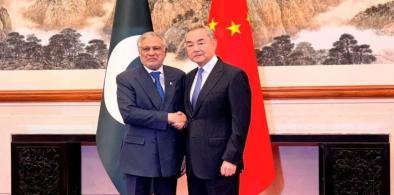
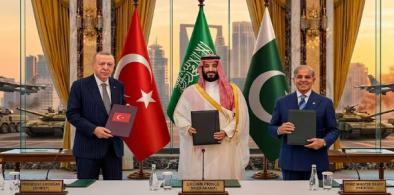
Strange Bedfellows: Why Pakistan’s Munir and Bangladesh’s Yunus Are Rekindling Ties

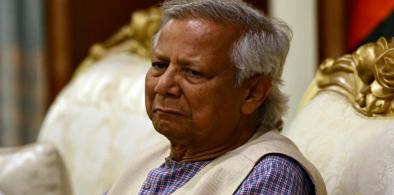
From a realistic perspective, the prospect of a Pakistan-Bangladesh axis does not herald a serious economic or strategic bloc. Instead, it signals the re-emergence of revisionist politics in South Asia. In seeking to rewrite history and align against India, both countries risk ignoring their own domestic crises. 

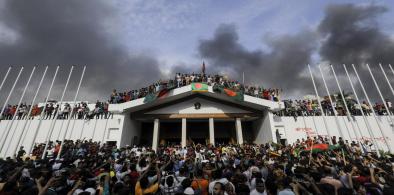
An Assault on Democracy in Bangladesh: Need to Have an Inclusive Electoral Process

Bangladesh now stands at a perilous crossroads. Either the nation allows this unelected regime to continue dismantling democratic institutions, silencing dissent, and rewriting history—or its citizens rise to reclaim their rights. Democracy cannot endure without inclusivity

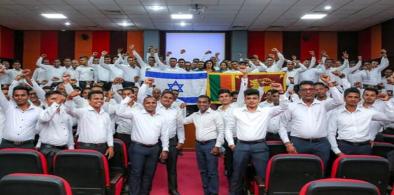
Sri Lanka Needs to Find a ‘Political Common Ground’ in Its Foreign Policy

Championing a rules-based maritime order in the Indian Ocean, which Sri Lanka has long called for since its 1971 ‘Indian Ocean Peace Zone’ (IOPZ) proposal and ensuring strict adherence to the provisions of the ‘UN Convention on the Law of the Sea’ (UNCLOS), will reinforce Sri Lanka’s credibility and also encourage cooperative stability in the Indian Ocean.

Trump's Tariffs and India's Strategic Dilemma: Acid Test for Modi Government

For Modi, the political cost of appearing to bow to American pressure may be almost as high as the economic cost of resisting it. In the end, the tariffs are not just about commerce. They are a test of whether India can still straddle the fault lines of great-power rivalry—whether the world’s most populous democracy is being forced into the uncomfortable role of choosing sides.

US Positioning on Crypto Currency has implications for BRICS and South Asia

With the  Ukraine war  and  the resulting sanctions making it difficult for Russia to trade with its allies, being  barred from using SWIFT or the US dollar, it resulted in Russia resorting to local currencies to trade that resulted in the BRICS currency drawing adverse attention in Washington and gaining global imprtance.

From Laureate to Liability: The Unraveling of Yunus’s Interim Rule

In the end, Yunus may find that his greatest failure is not the scandals that have already emerged, but the corrosion of hope that followed him into office. A nation that once believed it had found a principled steward now sees another operator in the same tired political theater—just with better English and a Nobel medal.