

With BRICS Presidency, India Will Have To Walk A Fine Balance
There is a difference between a BRICS common currency and de-dollarisation. While trade in local currencies is a compulsion due to sanctions and other changes in the global economic landscape, a BRICS common currency is not feasible due to economic and geopolitical reasons. India’s presidency of BRICS will be important, since it will have to walk a fine balance. While voicing the concerns of the Global South it would not want to get caught in a zero-sum geopolitical wrangling.
 Jan 07, 2026
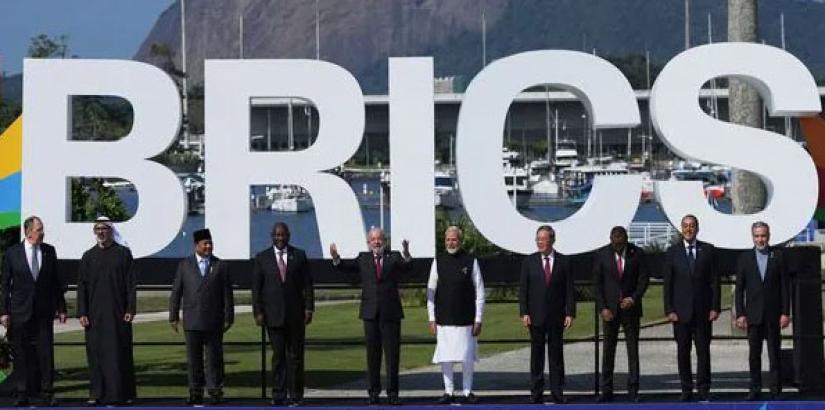
Recent months and years have witnessed several discussions pertaining to the future of the US dollar, the controversy over de-dollarisation and the prospects of a BRICS common currency. India has taken over the presidency of BRICS+ on January 1, 2026 and while categorically distancing itself from the idea of a BRICS common currency -- on more than one occasion -- India has also sought to reduce its dependency upon the US dollar in recent years as a result of the massive economic and geopolitical changes taking place globally.
India first began to explore trade in local currencies -- like several other countries -- due to the imposition of US sanctions on Russia in the aftermath of the Russia-Ukraine war. It was not just with Russia, another BRICS founding member, but also with other countries like the UAE with which India was seeking to strengthen non-dollar trade in the wake of Trump's sanctions. In 2024, Bank Indonesia and the Reserve Bank of India had signed a memorandum of understanding (MoU) regarding settlement of trade in local currencies. This issue was discussed during the India visit of Indonesian President Prabowo Subianto in January 2025 and the joint statement issued after the meeting between Indian Prime Minister Narendra Modi and Subianto also made a mention of the same.
During its presidency of BRICS, India is likely to follow a similar line and support a common payment system. New Delhi is likely to promote its UPI (United Payment Interface) which will be part of BRICS pay. While speaking at the BRICS 2024 Summit held at Kazan, Russia, Modi had said: “We welcome efforts to increase financial integration among BRICS countries. Trade in local currencies and smooth cross-border payments will strengthen our economic cooperation. The Unified Payments Interface [UPI] developed by India is a huge success story and has been adopted in many countries,”
Indian Presidency Will Have Challenges
As India takes over the presidency, it is tough to ignore a few developments.
First, BRICS members have reduced their US Treasury exposure significantly. Between October 2024 and October 2025, China’s holdings declined from $760.1 billion to below $700 billion ($688.7 billion). For the same period, India reduced its holdings from $241.4 billion to less than $200 billion ($190.7 billion), while Brazil’s holdings fell significantly from $228.8 billion to $167.7 billion.
Second, Intra-BRICS trade in non-dollar currencies has risen significantly. This is evident in the context of trade between Russia and China, Russia and India and several other countries. During his India visit, Russian President Vladimir Putin highlighted the growth in rupee-rouble trade, while also highlighting the benefits of trade in local currencies. In August 2025, Russia’s First Deputy Prime Minister had said: “Ensuring smooth reciprocal payments is no less important, especially under current conditions. We have successfully transferred more than 90% of payments between Russia and India into national currencies,”
Third, there is talk of a BRICS Unit, a proposed digital payment for settling transactions which is backed by a fixed reserve basket of 40% gold (by weight) and 60% in BRICS+ currencies. BRICS countries and their allies also control 20% of global gold reserves.
Common Currency Is Not De-Dollarisation
Finally, Russian President Vladimir Putin as well as senior Brazil officials have said that it is important to be cautious regarding the idea of a BRICS common currency. While Putin made this point during an India visit, Brazilian officials have stated that due to geopolitical and economic changes developing countries need to look for alternatives to the US dollar. This in no way implies that they are seeking to challenge the US dollar in any way.
It is important for policymakers, commentators in the developing world as well as the Global South to adopt a more nuanced approach towards all the above issues. First, while BRICS+ is important and members are looking at diversifying trade relations, this in no way means that they do not consider ties with the US as important. Many countries, including India and several of the recent entrants into BRICS+ like Indonesia and UAE, share robust trade ties with the US.
Second, there is a difference between a BRICS common currency and de-dollarisation. While trade in local currencies is a compulsion due to sanctions and other changes in the global economic landscape, a BRICS common currency is not feasible due to economic and geopolitical reasons.
India’s presidency of BRICS will be important, since it will have to walk a fine balance. While voicing the concerns of the Global South it would not want to get caught in a zero-sum geopolitical wrangling.
(The writer is a New Delhi-based policy analyst associated with OP Jindal Global University, Sonipat, India. Views are personal. He can be reached at tsmaini@jgu.edu.in)








Post a Comment