

Power In A Fragmented World: India Needs To Master Torque
India’s challenge, and opportunity, lies in mastering torque rather than seeking a mythical centre of gravity. In a world defined by flux, leverage matters more than alignment, and agility matters more than allegiance. Strategic autonomy will not be preserved through rigid doctrines, but through continuous recalibration anchored in national interest, economic resilience, and confidence in India’s civilisational depth.
 Jan 16, 2026
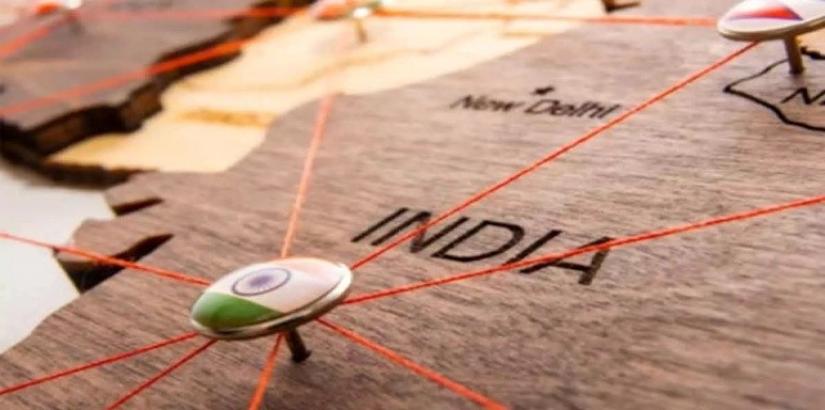
In a multipolar, multi-disciplinary, multi-source, and multi-requirement world, torque, rather than a fixed centre of gravity will play a predominant role in maintaining stability in international relations. Power today is no longer concentrated; it is applied, resisted, redistributed, and counterbalanced across multiple axes simultaneously.
India views the global order as being reshaped by an intensifying clash between liberal internationalism and resurgent nationalism. The rules-based world order is visibly crumbling. Shifts in Western, especially U.S., values, exhibited blatantly in both rhetoric and action, have created new dynamics for countries like India. This has compelled India to continually reassess how it positions itself within the international system. The volatility and oscillations in U.S. domestic and foreign policy have had significant implications for India’s strategic calculations.
India’s Multipolar Aspiration
India aspires to contribute to a multipolar Asia and, by extension, a multipolar world, competing with China while maintaining a distinct identity from the West. This requires India to skilfully balance relationships among the world’s leading powers, particularly the United States and China, against a backdrop of intensifying rivalry. To achieve this, India must also revamp and deepen coalitions with other middle powers such as Brazil and like-minded developing nations. What is required is a gravity-defying balancing act as an exercise in deft statecraft. This is a tall order, and India is not in an enviable position.
Strategic autonomy After Non-alignment
India’s place in the emerging world order is shaped by a complex interplay of historical legacies, contemporary challenges, and strategic choices. With the absence of the Soviet bloc as a counterweight, India no longer has the luxury of aligning decisively with either the United States or China; either choice would be detrimental, if not suicidal, to genuine sovereignty. By carefully balancing its options, building alliances with other developing nations, and leveraging its growing economic and military strength, India can assert influence in evolving global dynamics. The key lies in prioritising national interest, promoting inclusive growth, and fostering regional and global cooperation rather than taking rigid sides.
This shift necessitates a reevaluation of India’s foreign policy framework. Non-alignment once provided stability and strategic autonomy, but the contemporary multipolar world demands a more dynamic and pragmatic approach. India now faces the challenge of redefining its global role while preserving its core interests.
The Perils Of Alignment
Publicly aligning with China is not an option for India, for obvious historical and strategic reasons. Moving wholesale into the Western, read U.S., bloc also carries negative connotations, most notably the erosion of strategic autonomy. India therefore has little choice but to adopt a balanced approach; selectively aligning with the United States where interests converge, while simultaneously pursuing self-reliance.
This includes building strategic partnerships that facilitate foreign investment, encouraging technology transfer alongside domestic industrial capacity, promoting economic diversification, and fostering inclusive growth through policies that ensure equitable distribution of benefits while addressing social and environmental sustainability.
Coalition-building With Middle Powers
India can further strengthen its position by building alliances with other developing nations. Such partnerships can contribute to regional stability, shared development objectives, and critically, collective bargaining power in global forums. Active participation in organisations such as BRICS, the G20, and the South Asian Association for Regional Cooperation (SAARC) can help foster these alliances and promote a more inclusive and equitable global order.
Economic-Military Synergy
India’s growing economic and military strength is a crucial asset in asserting its place in the new world order. The two are complementary; a strong military-industrial base supports economic growth, while a thriving economy sustains military capability, research and development, and technological innovation. This virtuous cycle also promotes trade and strengthens international relationships.
Disruption As New Normal
Disruption has been the defining theme of 2025. Shifting geopolitical alliances, fractured supply chains disrupting global trade, and rapidly advancing technologies such as artificial intelligence are transforming uncertainty into a near-permanent condition. Unlike earlier episodes of disruption which were often crisis-driven, the current phase is transformational. Economies are recalibrating rather than merely responding.
India’s Economic Resilience
Yet amid this flux, India continues to stand out, retaining its position as the world’s fastest-growing major economy. This momentum is supported by domestic measures and structural drivers, particularly accelerating digitisation. To fully exploit its favourable demographics, India must now push through deeper structural reforms, especially in labour, land, the judiciary, policing, and most importantly, in ease of doing business.
India has emerged as a frontrunner in this recalibration, adapting swiftly and strategically to the changing global landscape. India has to accelerate.
Strategic Recalibration In Transactional World
This is not accidental. India’s evolving approach to trade, energy security, labour mobility, and geopolitical engagement signals a willingness to absorb short-term friction in pursuit of long-term national interest. The global system India is navigating today is markedly different from the one that shaped its earlier economic diplomacy. The erosion of multilateralism, rising protectionism in advanced economies, and the emergence of transactional geopolitics have created both risks and opportunities.
In response, India has recalibrated its posture to remain open to multiple centres of power without becoming overly dependent on any single partner. This recalibration does not imply ideological neutrality or strategic ambiguity for its own sake. Rather, it reflects a clear-eyed recognition that economic growth, energy security, and employment generation demand flexibility. India’s diplomacy in 2025 demonstrated a willingness to make calculated departures from established expectations when those expectations conflict with domestic economic priorities.
Narrative Warfare: Western Media Challenge
Another challenge India faces is a section of the Western media that has traditionally been condescending and at times openly inimical towards India. Periodically, articles and commentaries appear that are critical of India’s governance, often ill-informed, selectively sourced, or deliberately malicious. These narratives shape foreign public opinion and reinforce long-standing biases. Over the decades since Independence, various Indian governments and public figures have been frequent targets of such reporting.
More damaging, however, is how sections of Indian opinion, often for local political reasons, uncritically amplify these narratives, lending them credibility by parroting them for domestic audiences.
There is now a visible fight-back.
Mastering Torque Without Losing Balance
India’s challenge, and opportunity, lies in mastering torque rather than seeking a mythical centre of gravity. In a world defined by flux, leverage matters more than alignment, and agility matters more than allegiance. Strategic autonomy will not be preserved through rigid doctrines, but through continuous recalibration anchored in national interest, economic resilience, and confidence in India’s civilisational depth.
The emerging world order will be shaped not by those who align fastest, but by those who can absorb shocks without fragmenting, apply pressure without breaking, and influence outcomes without surrendering sovereignty. India’s path is difficult, often lonely, and frequently misunderstood as much as it is increasingly clear that it is also the only path consistent with sovereignty in its truest sense.
(The author is an Indian Army veteran and a contemporary affairs commentator. The views are personal. He can be reached at kl.viswanathan@gmail.com )







Post a Comment