

India Will Remain Immune To Protest Waves Engulfing Neighbourhoo
So long as Indians do not find a true watchdog for the government, people will have to keep choosing the lesser evil. Youth are well aware of the situation of Arab countries post-revolution. In South Asia, although Sri Lanka and Nepal have been able to consolidate power to some extent, Bangladesh remains in a frenzy with rampant human rights violations, religious persecution and no legitimate government in sight. Hence, Indian youth prefer to seek reform from within rather than a full-blown revolution without any vision for the future
 Jan 12, 2026
When the Arab Spring erupted in 2010, it was not just a wave of protests; it swept from Tunisia to Egypt, from Libya to Yemen. Ordinary people armed with little more than conviction stood against authoritarian regimes, demanding bread, freedom, and social justice. Beneath this cry for democracy lay deep-rooted economic and cultural fractures. Decades of wealth inequality had created vast divides between ruling elites and struggling citizens, where oil wealth and state privilege remained concentrated in few hands while millions faced joblessness and rising food prices.
The United Nations Development Programme had noted that in the years before 2010, unemployment among Arab youth exceeded 25 percent, one of the highest rates in the world, despite enormous national wealth. This economic frustration was intertwined with cultural discontent, as traditional hierarchies and conservative social orders restricted freedom of expression, particularly for women and young people who felt suffocated by both poverty and patriarchy. The Arab Spring was thus not only a political outcry but also a cultural rupture, a generational demand for dignity, equality, and participation in societies that had long silenced them.
It was a coordinated revolution but a spontaneous awakening, a reminder that even the most entrenched powers cannot silence the cry for justice forever. The Arab Spring promised democracy but left behind both hope and disillusionment. Yet more than a decade later, its spirit seems to have found new soil, not in the deserts of Arabia but across the crowded, restless streets of Asia.
Asian Spring?
From Colombo to Dhaka, from Kathmandu to Manila, discontent simmers once again. Across Sri Lanka, Bangladesh, Nepal, the Maldives, Indonesia, and the Philippines, the air is thick with the same frustration that once ignited the Arab world. These countries, though diverse in language and faith, are bound by a shared story of economic inequality, political fatigue, and social awakening.
In Sri Lanka, the 2022 uprising that forced President Gotabaya Rajapaksa to flee his palace was a direct revolt against corruption, inflation, and years of mismanagement that left citizens without food, fuel, or faith in leadership. In Bangladesh, the student-led movements of 2024 have transformed into a broader outcry against entrenched authoritarianism. Nepal has seen repeated waves of protests driven by youth disillusionment, unemployment, and inflation. In Indonesia and the Philippines, student and labor movements have protested controversial laws and inequality perpetuated by dynastic politics. Meanwhile, the Maldives faces a quieter, yet persistent crisis shaped by climate vulnerability, elite dominance, and the economic marginalization of island communities.
At the root of this wave lies inequality. Asia’s economic rise has created billionaires but also deep resentment among the excluded majority. According to Oxfam’s Global Inequality Report, the richest one percent in Asia now hold more wealth than the poorest ninety percent combined. This inequality is reinforced by stagnant wages and limited access to welfare, despite impressive GDP growth rates.
Failure Of Democracy
In the case of both the Arab Spring and the unrest sweeping Asian countries one after the other, social media has played a crucial role. Platforms such as X (formerly Twitter), Facebook, and TikTok have become the new battlegrounds of dissent. During Sri Lanka’s protests, live streams from Colombo’s Galle Face Green galvanized global solidarity. In Bangladesh, viral videos of police violence against student protesters mobilized national outrage. Similar online activism was seen in Indonesia’s #ReformasiDikorupsi and the Philippines’ campaigns for accountability. Social media, while often dismissed as performative, has in many cases become the only space where citizens can express dissent without immediate suppression. It has blurred the lines between local protests and global movements, transforming isolated frustrations into collective uprisings.
These uprisings are not only about governance but about the failure of democracy to deliver fairness. Across these Asian nations, legislatures have grown complacent, executives increasingly authoritarian, and judiciaries hesitant to check power. Whether in presidential systems like Indonesia and the Philippines or parliamentary systems like Sri Lanka and Nepal, institutional decay has weakened accountability. This vacuum has forced citizens to seek justice in the streets and on screens, reclaiming democracy as an act of participation rather than procedure.
So, can we call this an Asian Spring? Perhaps cautiously, yes. Like the Arab Spring, these movements are driven by youth, inequality, and the yearning for dignity. Yet they differ in tone and intent. The Arab Spring sought to change regimes; the Asian revolts aim to reclaim democracy from within. If the Arab Spring was a storm, the Asian Spring may be a tide, slower but no less transformative.
India’s Remains Insulated
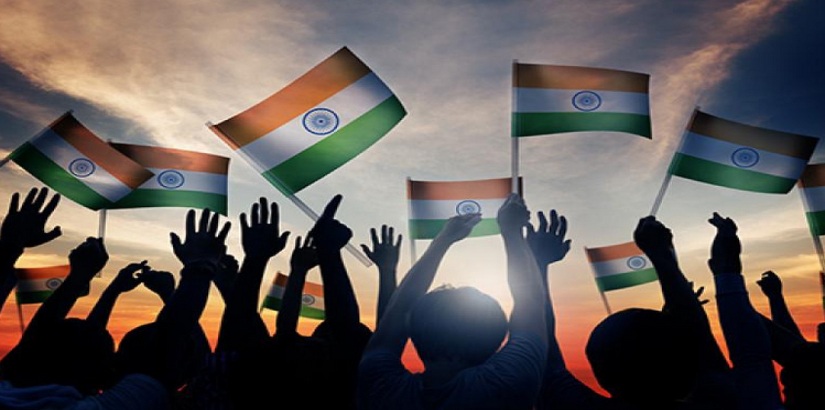
The most populous democracy of today, India remained immune to the developments in its neighborhood. Challenging conflict environment theory, contagion theory, India appears to be quite insulated to our bare eyes. India exhibits almost all reasons that were present in her neighbors who suffered political turnovers. There is a complete legislature overtake by the executive, decay of independent political institutions, and suppression of dissent. Media landscape is heavily criticized for supporting the majoritarian rhetoric. To top it all, Gen Z makes up over 377 millions of Indian population and almost all of them are smartphone users. In the protests and revolutions surrounding India, Gen Z was the most important factor.
But India did not witness similar upheavals like her neighbors, except a few sporadic skirmishes for farm laws, abrogation of Article 370 in Jammu & Kashmir, or the Citizenship (Amendment) Act. Many reasons cited by pundits are fear of crackdown by government, facing punishments for criticizing government, anti-national branding, divided interests of youth, disillusionment with politics, their own future plans, etc. India, while grappling with economic disparity and social polarization, remains anchored by the safety valve of electoral democracy. Its GDP per capita stands at around 2,700 USD, yet its democratic institutions, periodic elections, and federal diversity absorb discontent through political participation rather than revolution.
Another important reason is the missing opposition. Although the last general elections of 2024 ushered in an opposition in the form of INDIAlliance and Rahul Gandhi as its leader, this opposition is anything but a government-in-waiting. The opposition alliance at the center severely lacks a vision for the future of the country. Besides the Congress party, other alliance parties are all regional parties catering to local interests. Past one year or so, parliament sessions have been full of mudslinging between ruling and opposition, rather than any constructive discussion on alternatives. The Opposition completely failed to stall any bill tabled by the ruling alliance, except for walking out and disrupting sessions. Consequently, they have not been able to generate much support and respect from the populace either.
So long as Indians do not find a true watchdog for the government, people will have to keep choosing the lesser evil. Youth are well aware of the situation of Arab countries post-revolution. In South Asia, although Sri Lanka and Nepal have been able to consolidate power to some extent, Bangladesh remains in a frenzy with rampant human rights violations, religious persecution and no legitimate government in sight. Hence, Indian youth prefer to seek reform from within rather than a full-blown revolution without any vision for the future, thereby still expressing faith in established political institutions.
India can and will remain immune from these protest waves engulfing her neighbors so long it is delivering. The Viksit Bharat and Make in India agenda of Prime Minister Narendra Modi has been able to draw the attention of both foreign and domestic investors which, in turn, will create jobs in almost all sectors of the economy. These policies are bound to affect the youth directly. Not to forget, India’s Gini Index stands at 25.5, making it the fourth most equal country of the world today.
Geopolitics is important and also a potent driver of domestic politics in today’s world. But its effects cannot be over exaggerated. With sound economic policies and no political alternative available, India will swim through any conceivable Asian Spring comfortably.
(Swetasree G. Roy is a professor of Political Science at Jindal School of Government and Public Policy, Jindal Global University, Sonipat, India. Wusaut Mansoor is a research analyst at Jindal Policy Research Lab. Views expressed are personal. They can be contacted at swetasree@jgu.edu.in)





Post a Comment