

Argumentative Indian: Aiyar-Tharoor Debate Should Provoke Conversation Rather Than Separation
The Aiyar-Tharoor exchange has at least offered something rare in contemporary Indian politics: disagreement expressed in elegant prose rather than television shouting, screaming and even fistfights. In an age dominated by hashtags, studio debates and instant outrage, two politicians exchanging carefully argued letters feels almost like a throwback to a more civilised era. If Indian politics produced more such literary duels, readers/viewers might even begin to look forward to disagreements.
 Mar 15, 2026
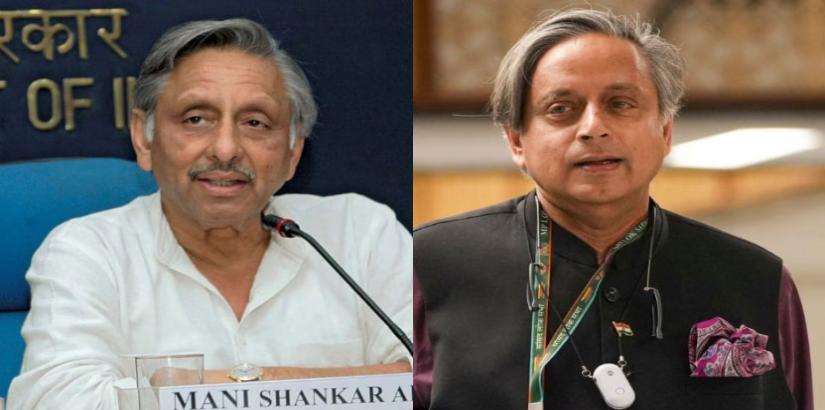
Two prominent political leaders, intellectual titans in fact of the Indian National Congress, but who have been virtually sidelined by the party, have clashed openly. Such disagreements are not uncommon amidst political parties and usually concern mundane matters. Rarely, however, does a disagreement sound less like a policy debate and more like a literary duel conducted in polished English. The recent exchange of open letters between Mani Shankar Aiyar in Frontline and Shashi Tharoor on the NDTV website belongs squarely in that rare category.
Reading their correspondence, one might be reminded of the celebrated intellectual falling-out between Jean-Paul Sartre and Albert Camus, two of the most celebrated intellectuals of the twentieth century. The 1952 feud ended their friendship over politics and became a cultural event that polarised Parisian intellectual life. The present dispute, though, is unlikely to assume such lofty proportions.
Aiyar and Tharoor are not really arguing about whether India should defend its national interest. They are debating how best to do so. Despite the pyrotechnics, the two gentlemen remain remarkably close in outlook. They are essentially two peas in a pod.
Different Instincts About World Affairs
Fifteen years older than Tharoor, Aiyar’s open letter reads like a dispatch from the moral universe of the freedom struggle. It summons the spirits of Mahatma Gandhi, Jawaharlal Nehru and Rabindranath Tagore as guiding stars of India’s diplomatic conscience.
His complaint is characteristically direct. Tharoor’s measured stance regarding India’s response to crises linked to Operation Sindoor, Operation Epic Fury and the wider West Asian conflict, he argues, risks sounding overly cautious in the face of American power.
The prose bears the hallmarks of vintage Aiyar: impassioned, historical and deeply personal. There are recollections of childhood encounters with Gandhi, reflections on Nehru’s influence and a reminder that a fifteen-year difference in age can produce different instincts about world affairs.
Tharoor’s reply, by contrast, is cool, precise and analytical. If Aiyar writes like a moral philosopher addressing the republic’s conscience, Tharoor responds like a diplomat weighing consequences.
His argument rests on what he calls “principled pragmatism”. Foreign policy, he suggests, cannot rely solely on moral indignation. It must also account for trade, diaspora welfare, energy security and the unpredictable behaviour of global powers. In short, one voice emphasises moral clarity, the other strategic caution.
Moral Language and Strategic Calculations
Viewed through a longer historical lens, this disagreement is almost reassuringly familiar. The Congress has always been a big tent. During the freedom struggle itself, disagreements were plentiful. Gandhi and Nehru sparred over economic policy. Nehru and Subhas Chandra Bose differed sharply about strategy and alliances. Such debates were not crises but features of democratic politics.
Even after independence, the tension between idealism and realism shaped India’s foreign policy thinking. Nehru himself combined both instincts with notable dexterity, championing anti-colonial solidarity while quietly making pragmatic choices when India’s interests required it.
India’s restrained response to certain Soviet actions during the Cold War, an example Tharoor invokes, illustrates this balance. Moral language remained present, but strategic calculations influenced how loudly it was expressed.
The Aiyar-Tharoor debate therefore represents not a rupture in the Congress tradition but almost a family heirloom. Aiyar’s argument draws strength from India’s moral inheritance. For much of the twentieth century India’s voice carried considerable authority among newly independent nations. Nehru’s doctrine of non-alignment sought not merely neutrality but autonomy, the freedom to criticise injustice wherever it occurred.
For many diplomats of Aiyar’s generation that moral voice remains central to India’s identity. Silence in the face of perceived violations of international law feels less like prudence than abandonment of a proud legacy.
Tharoor does not reject that legacy. He suggests that the modern world requires careful navigation. India’s economic ties with the Gulf region, its dependence on imported energy and the presence of millions of Indian workers abroad create a complex web of interests.
Agreement Beneath the Disagreement
The most striking aspect of the exchange is how much agreement lies beneath the disagreement. Neither of them supports the ongoing war in West Asia. Both stress the importance of international law. Both value India’s strategic autonomy and its independent voice in world affairs. Both place themselves within the intellectual lineage of Gandhi and Nehru.
The dispute therefore concerns emphasis rather than principle. Aiyar fears excessive caution could dilute India’s moral authority. Tharoor worries excessive rhetoric might harm national interests without changing events.
The Aiyar-Tharoor exchange has at least offered something rare in contemporary Indian politics: disagreement expressed in elegant prose rather than television shouting, screaming and even fistfights. In an age dominated by hashtags, studio debates and instant outrage, two politicians exchanging carefully argued letters feels almost like a throwback to a more civilised era. If Indian politics produced more such literary duels, readers/viewers might even begin to look forward to disagreements.
Products of a Congress Tradition
The larger truth is that India’s foreign policy has always rested on a delicate balance between moral aspiration and pragmatic calculation. Without moral conviction, diplomacy risks degenerating into cynical power politics. Without strategic prudence, it becomes eloquent sermonising delivered to an indifferent world.
In that sense the voices of Mani Shankar Aiyar and Shashi Tharoor are not opposing camps but complementary instincts within the same national conversation. One reminds India of its moral inheritance, the other of the realities of twenty-first century geopolitics.
Both reminders are useful. It would therefore be unfortunate if this episode were remembered as a permanent rupture, a “parting of ways”. Both men inhabit the same intellectual universe. Both defend constitutional nationalism, pluralism and India’s independent diplomatic voice. Both remain products of the Congress tradition of argument and debate.
In a country as argumentative as India, as Amartya Sen has often observed, differences should provoke conversation rather than separation. After a brief exchange of scholarly thunderbolts, the wiser course would be to bury the hatchet and resume the far more enjoyable business of arguing together about the world.
History offers a final caution. When Camus died suddenly in a car accident in 1960, Sartre wrote a generous obituary praising his humanism and calling his death an “unbearable absurdity”. Sartre had waited too long to say whatever he might have cherished of their friendship.
Let that not be the case here. Bury the hatchet now, gentlemen. Let bygones be bygones.
(The writer is a former UN spokesperson and a contemporary affairs commentator. Views expressed are personal. He can be reached at edmathew@gmail.com/ tweets @edmathew)





Post a Comment